



NAIROBI, Kenya- The Kenya Meteorological Department has issued a fresh warning of intensified heavy rainfall across several parts of the country from March 19 to March 24, raising fears of renewed flooding, infrastructure damage, and displacement.
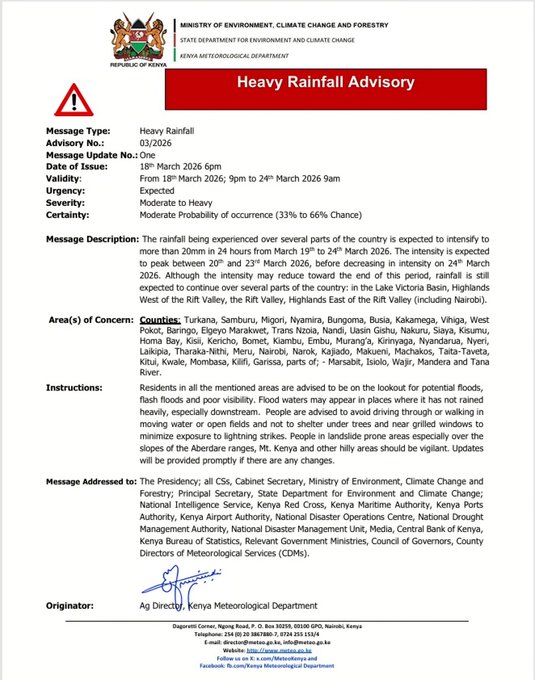
According to the advisory, rainfall exceeding 20 millimetres within 24 hours is expected in multiple regions, with peak intensity projected between March 20 and March 23 before gradually easing on March 24.
So far, more than 70 people have been killed by the floods across the country, according to police reports.
Rising risk as long rains intensify
The forecast comes as Kenya enters the peak of the March–May “long rains” season, which is historically associated with heavy downpours, flash floods, and landslides.
Recent weeks have already demonstrated the destructive potential of the rains. Severe flooding earlier in March has killed dozens of people, displaced thousands of families, and caused widespread damage to infrastructure across the country.
Authorities warn that the anticipated intensification could worsen the situation, particularly in flood-prone areas and urban centres with poor drainage systems.

⚠️⛈️ Heavy rainfall is expected to intensify across several parts of the country from March 19–24, 2026, exceeding 20mm in 24 hours. Peak intensity is forecast between March 20–23 before gradually reducing on March 24.
Areas likely to be affected
The Kenya Meteorological Department has previously indicated that heavy rainfall episodes during this period typically affect:
- The Lake Victoria Basin and Western Kenya
- Central Highlands, including Nairobi and the surrounding counties
- Parts of the Rift Valley
- Coastal and Southeastern regions
These areas are at heightened risk of flash floods, rising river levels, and reduced visibility, which could disrupt transport and economic activity.
Expected impacts
Experts warn that rainfall exceeding 20mm in 24 hours can trigger:
- Flash floods in low-lying and urban areas
- Landslides in hilly and highland regions
- Damage to roads, bridges, and homes
- Disruptions to air and road transport
- Increased risk of waterborne diseases due to contaminated water
Earlier this month, torrential rain overwhelmed drainage systems in Nairobi, submerging roads, sweeping away vehicles, and disrupting flights at Jomo Kenyatta International Airport.
Government and public urged to prepare
Authorities are now urging counties, emergency responders, and the public to remain on high alert and take precautionary measures.
Residents in vulnerable areas have been advised to avoid flooded roads, relocate where necessary, and follow official updates. Meanwhile, disaster response teams are expected to be on standby to handle emergencies.
The latest advisory underscores growing concerns about the increasing frequency and intensity of extreme weather events in Kenya, with experts linking the trend to climate variability and broader environmental changes.
As the rains intensify in the coming days, the focus will be on preparedness, early warning systems, and coordinated response to minimise loss of life and property.


