



NAIROBI, Kenya – Kenyans, especially those with a family history of thyroid disease, are now being urged to get screened for thyroid disease.
Thyroid disorders occur when the thyroid gland, a small butterfly-shaped gland in the neck, produces too much or too little hormone. These imbalances can lead to conditions like hypothyroidism, hyperthyroidism, and goitre.
Symptoms often go unrecognised, particularly in low-awareness regions. Early diagnosis and treatment are critical for managing the condition and improving quality of life. Once hypothyroidism has been diagnosed, treating it usually requires life-long hormone therapy
Early detection and treatment of thyroid conditions like hyperthyroidism can prevent serious complications.
According to Dr. Roselyne Ngugi, a consultant physician and endocrinologist, a majority of healthcare practitioners in the country don’t understand thyroid disease very well, of which the prevalence is about 5%.
“The other problem is the cost implications. When you screen, if your average patient is being charged Sh4000 to Sh6000, then I will talk about it. I will encourage the patients to come and test, but they will not be able to afford it even if you do a forward. Is the medication available?” She posed.

World Hormone Day! Hormones are biological chemical messengers that travel throughout the body, telling cells and tissues what to do. There is need to increase awareness of the vital role hormones play in overall health. #WorldHormoneDay #BecauseHormoneMatter #TDAKFoundation
Dr. Ngugi, the president of the Kenya Diabetes Study Group, said there is no need for someone to take a full thyroid test even though it gives one a lot of information.
The Kenya Diabetes Study Group is a society established almost four years ago and is involved in training healthcare practitioners.
Why the Kenya Diabetes Study Group has recruited opinion leaders
Dr. Ngugi said that her society plans to conduct a series of trainings countrywide by focusing more on the counties.
“Because we are about 39 endocrinologists, it doesn’t mean that I need to go there personally. So, we have identified key opinion leaders who are masters in endocrinology, and they will be able to conduct the training for the healthcare practitioners,” added Dr. Ngugi.
According to Dr. Ngugi, one of the other things they are also doing is actively engaging the media.
“If we can be able to invite you to cover some of our events, then we can broadcast that, and what we are going to do is have our podcasts and other forms of social media like YouTube, which will continue running concurrently on our websites so that we can be able to raise awareness, and it starts with us,” she explained.
The medic insisted that they are trying to raise awareness about the disease.
“Whether it is a nurse, a doctor, or a clinical officer, they should be able to understand how to screen, and once they do, understand whom to screen and then whom to treat and how to follow up,” said Dr. Ngugi.
Dr. Ngugi spoke when she presided over the launch of ThyroAfrica in Kenya, a thyroid awareness program aimed at raising awareness of thyroid disorders in Africa.
The launch that united global medical experts, including global pharmaceutical company Merck, provided a platform for discussions on the future of thyroid care, addressing critical challenges and innovative solutions to improve patient outcomes.
What is the sole purpose of the ThyroAfrica disease awareness campaign
The ThyroAfrica disease awareness campaign, initiated by Merck, addresses the significant burden of thyroid disorders, particularly altered thyroid-stimulating hormone (TSH) and hypothyroidism, across Africa.
Built on three foundational pillars—patient awareness, health care provider (HCP) diagnosis excellence, and partnership—this initiative aims to improve thyroid health.
Patient Awareness focuses on educating the public about hypothyroidism and its symptoms through targeted social media campaigns and community engagement, empowering individuals to seek timely medical advice.
HCP Diagnosis Excellence enhances the diagnostic capabilities of healthcare professionals by providing educational resources, webinars, and case studies. The free T-Lab mobile application supports HCPs in providing accurate dosages for treatment.

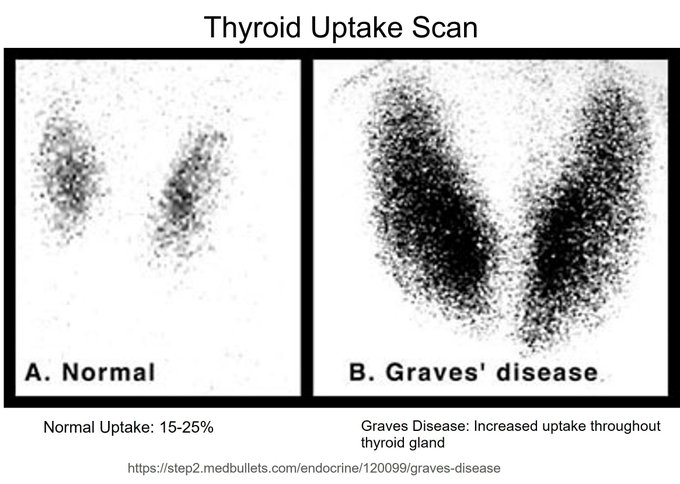
The diagnosis of Graves’ disease in patients with too much thyroid hormone can be confirmed by a thyroid uptake scan, a lab test, or exam in the doctor’s office with enlarged thyroid, bulging eyes, and rapid heart rate. @GDATF @AmThyroidAssn @TheAACE #GravesDisease #GDAM2024
Joan Amimo, a thyroid disease patient, urged the government to recruit and train more endocrinologists.
“There is a dire need to have more endocrinologists so that they can give us the special care, because when you go to the general physicians, they just take us off medication after medication, and it is not like there are results. So, the government needs to conduct more research in this particular field,” said Amimo, who was first diagnosed with the condition about five years ago.
What are some of the visible symptoms of thyroid disease
Some of the symptoms of thyroid disease, according to Amimo, are fatigue, muscle weakness, memory loss, brain fog, hair loss, and constipation.
Mwende Musunga, the East Africa managing director for Cerba Lancet Kenya, disclosed that they launched the awareness of thyroid disease and the partnership so that the patients and doctors can get access to quality diagnostic care.
“We also want to ensure that the patient can get information about the disease, something that they shall be able to trust with good information, and to be able to track on their own and be able to be in the management of their diseases and treatment alongside their doctors,” explained Musunga.
The diagnosis of Graves’ disease in patients with too much thyroid hormone can be confirmed by a thyroid uptake scan, a lab test, or exam in the doctor’s office with enlarged thyroid, bulging eyes, and rapid heart rate. @GDATF @AmThyroidAssn @TheAACE #GravesDisease #GDAM2024
Musunga, however, noted that one of the biggest challenges they face is the awareness of the patient.
“But with this particular partnership, we are giving out the information directly to the patient so that they can take charge of their healthcare,” she said.
Dr. Ngugi said that her main hurdle is raising the awareness of the Ministry of Health officials by telling them that the disease is contributing to an economic burden.
“Think of the missed days; people are not productive; they don’t report to work, and this is how I will be able to inform policy going forward. It is a long journey, but we must start from somewhere,” she added.
Why is there a need to launch the thyroid disease screening campaigns
She went on: My advice to everyone out there is that thyroid disease is here and it is here to stay. It is a crying shame that quite a number of our patients are suffering, but they are not aware of it, which is primarily the problem.”
Dr. Ngugi reiterated that there is a need to launch the screening campaigns because there are several patients already struggling with the condition, which can be managed better.
Dr. Ngugi — who also served as the keynote speaker — emphasised that ThyroAfrica marks a pivotal step toward uniting efforts to enhance healthcare systems and foster long-term progress in thyroid care across the continent.
“ThyroAfrica is more than just an awareness initiative — it’s a call to action,” said Dr. Ngugi. “By coming together as health professionals, policymakers, and communities, we can build a future where thyroid disorders are no longer overlooked and every patient gets timely, accurate care.”
This new development comes when the globe is warming up for World Thyroid Day, which is observed annually on May 25th to raise awareness about thyroid health. In 2025, World Thyroid Day will be celebrated on May 25th.
It’s a global initiative spearheaded by the European Thyroid Association (ETA) and aims to highlight the impact of thyroid diseases and promote prevention, diagnosis, and treatment.
Meanwhile, experts believe that with the backing of Merck and the commitment of regional health leaders, ThyroAfrica is poised to make thyroid health a public health priority across the continent. The initiative underscores the need for continued investment in endocrine health and sets the foundation for long-term partnerships that will benefit millions.
This is just the beginning,” Dr. Ngugi added. “Our goal is to ensure that thyroid health becomes an integral part of Africa’s broader non-communicable disease agenda — and that no one is left behind.




