



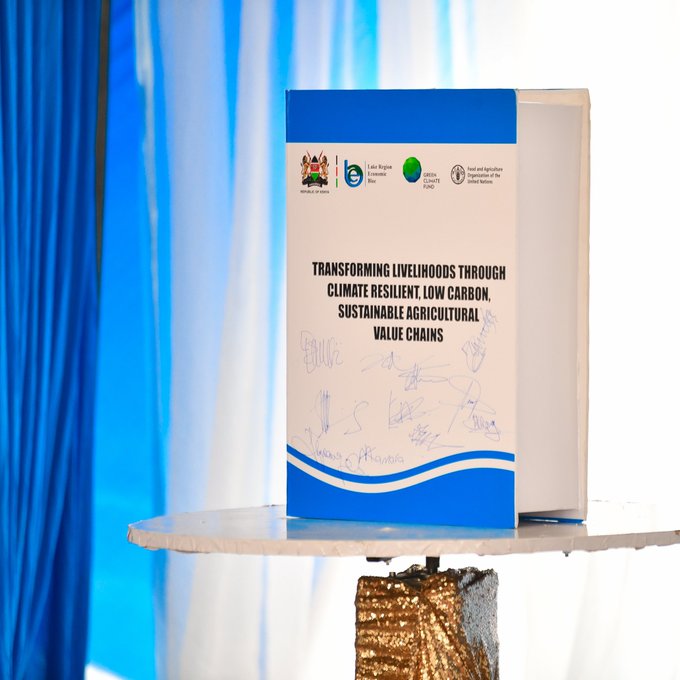
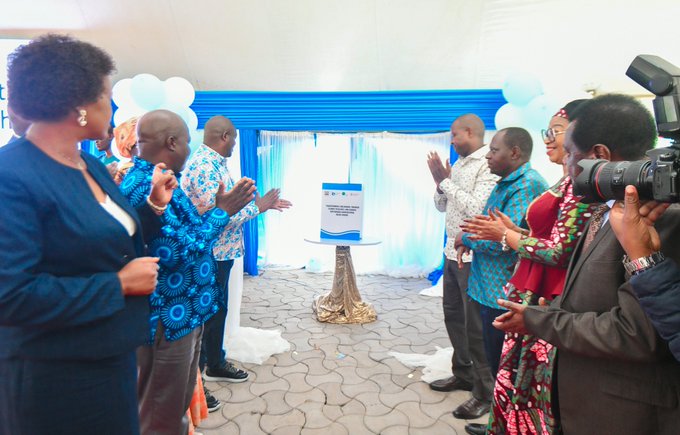
KISUMU, Kenya – Farmers in the larger Western Kenya region have a reason to smile after the Lake Region Economic Bloc (LREB) unveiled a groundbreaking Sh6.4 billion project aimed at transforming agricultural value chains through climate-resilient, low-carbon farming practices.
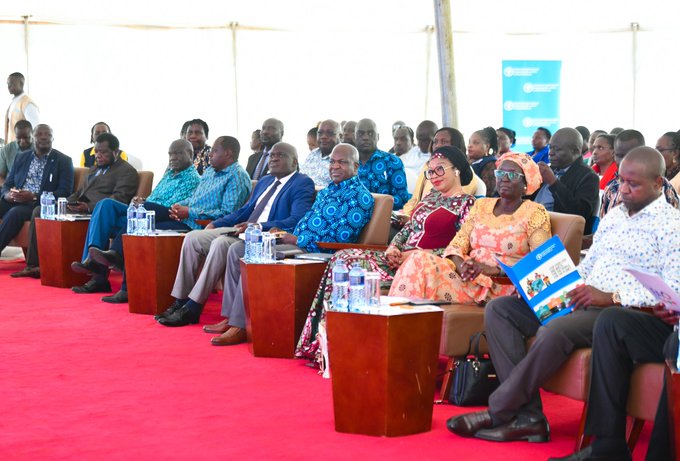
The initiative, which is expected to benefit over 2.7 million people, was unveiled on Friday, March 28, 2025, during a high-profile event in Kisumu City.
Speaking at the launch, Bungoma Governor Kenneth Lusaka, who also serves as the Vice Chair of LREB, hailed the project as a game-changer for the region’s agricultural sector.
“We are taking a bold step towards ensuring food security and economic stability for millions of farmers in this region,” said the county boss.
The project, funded through a joint contribution by the Green Climate Fund (GCF), the Government of Kenya (FLoCCA), the Danish Government, and the Food and Agriculture Organization (FAO), will focus on six key agricultural value chains: dairy, poultry, coffee, tea, fruit trees, and African leafy vegetables.
“This initiative is more than just a farming project—it is about securing the livelihoods of our people in the face of climate change. By embracing climate-smart technologies, we are ensuring that agriculture remains viable and profitable,” Governor Lusaka emphasized.
How many LREB farmers will benefit from the project
The project will equip over 143,000 farmers with the skills and resources needed to adopt climate-smart agricultural practices.
It will also foster collaboration between the government and private sector players, including banks, to improve access to markets and finance.
Additionally, the initiative is expected to create 3,000 jobs and enhance sustainable land management across 30,000 hectares.

The Lake Region Economic Bloc (LREB) is advancing climate-resilient agriculture with a $50M FAO & IFAD-backed project under the Green Climate Fund. Honored to join discussions on boosting productivity while cutting emissions. #SustainableFarming #ClimateAction

Governor Lusaka further urged stakeholders to embrace technology-driven solutions to combat climate risks.
“Artificial intelligence, precision agriculture, and climate risk analytics should be at the forefront of our efforts. We must leverage technology to predict extreme weather events, optimize resource use, and enhance food security,” he said.
How was the Lake Region Economic Bloc (LREB) developed
The LREB Secretariat will oversee the coordination of the project across its member counties, ensuring seamless implementation and monitoring.
“This project marks a turning point for our region. By working together, we can attract more investments, enhance collaboration, and optimize resource allocation,” Lusaka concluded.
LREB was developed with the support of Deloitte Africa and the Ford Foundation in partnership with the County Governments of the respective 14 member counties.
It was established to bring together all available resources, identify opportunities and take an integrated approach to have all policies and activities in the Lake Region aligned towards a sustainable quality of life.
The bloc’s 14 member counties include Migori, Nyamira, Siaya, Vihiga, Bomet, Bungoma, Busia, Homa Bay and Kakamega.
Other counties under LREB include Kisii, Kisumu, Nandi, Trans Nzoia and Kericho.
Which is another similar project being implemented in LREB
The National Treasury Cabinet Secretary, John Mbadi, declared in February 2025 that a climate resilience project valued at Sh 4.7 billion ($36 million) would help more than 2.7 million people in the area.
According to Mbadi, the project would help producer cooperatives and smallholder farmers, who are among the groups most at risk from the negative consequences of climate change.
“The project’s objective is to encourage low-carbon and climate-resilient techniques in six value chains in the Lake Region Economic Bloc, which include fruit trees, coffee, tea, poultry, dairy, and African green vegetables. Farmers will receive training and assistance through the project to use climate-smart practices and technology for better output, market accessibility, and higher profits, he stated.
A delegation from the Kenyan government, led by the CS, participated in the signing ceremony of this project. In his remarks, Mbadi noted that the agriculture sector in Kenya is highly vulnerable to the impacts of climate change.
The successful implementation of these projects underscores LREB’s commitment to sustainable agriculture and economic growth, positioning the region as a leader in climate-resilient farming in Kenya.




