



A Trade Setback for Kenya
NAIROBI, Kenya—Kenya’s trade relationship with the United States just got a lot more complicated.
On Wednesday, US President Donald Trump signed an executive order imposing a 10pc baseline tariff on all Kenyan exports, dealing a major blow to the country’s Sh109.7 billion (USD 784 million) trade with the US.
The new tariff disrupts key sectors that have long benefited from duty-free access under the African Growth and Opportunity Act (AGOA), including textiles, tea, and coffee.
Pharmaceutical products such as vaccines and blood derivatives, valued at around Sh22 billion (USD 157 million), are also affected.

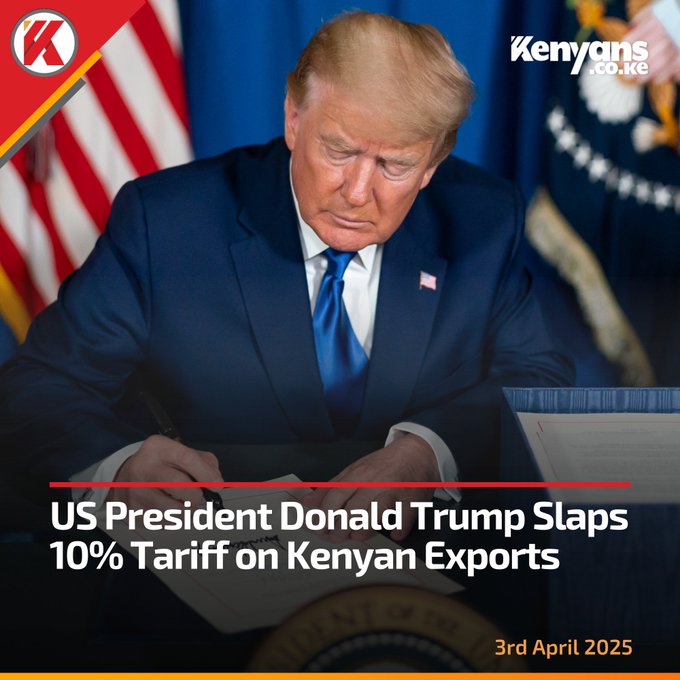
US President Donald Trump slaps 10% tariff on Kenyan exports
Trump’s Justification: A Push for Trade “Fairness”
Announcing the new tariffs, Trump defended his decision as a necessary step to protect American interests.
He argued that Kenya’s tax structure—specifically its 16pc Value Added Tax (VAT) on imports—creates an unfair disadvantage for US goods while allowing Kenyan exports to enter the American market at lower costs.
“When American goods are sent to countries with VAT, they become more expensive. That’s not fair. Today, we are standing up for the American worker and putting America first,” Trump declared.

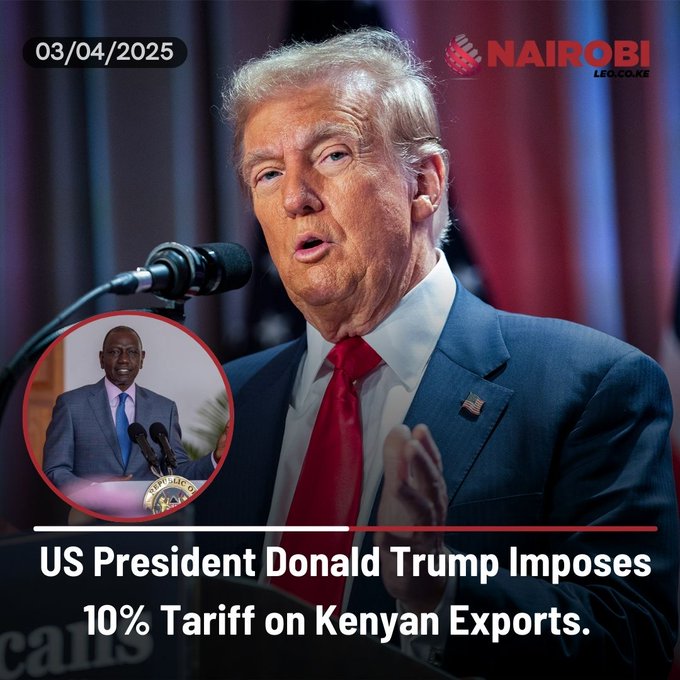
US President Donald Trump imposes a 10% tariff on Kenyan exports.
He further instructed key officials, including the Secretary of State, the Secretary of Commerce, the Treasury Secretary, and the US Trade Representative, to explore additional measures to address what he termed “imbalances” in trade.
What This Means for Kenya’s Economy
With the US being a major trade partner, the tariffs pose significant risks for Kenyan businesses reliant on American buyers.
The textile industry, which has thrived under AGOA, now faces rising costs that could lead to reduced exports, job losses, and lower revenues.
Similarly, coffee and tea exporters may struggle to compete in the US market with the added price burden.
On the import side, Kenya brings in approximately Sh113.03 billion (USD 807.35 million) worth of goods from the US, including machinery, mineral fuels, and aircraft parts.
The new tariffs could strain the economic ties between the two nations, particularly with Kenya and the US negotiating a new trade deal.
Kenya isn’t the only country feeling the heat—Tanzania and Uganda are also facing the same 10pc reciprocal tariff, signaling a broader shift in US-Africa trade policies.
As the dust settles, Kenyan officials will have to navigate this new trade landscape carefully, either by renegotiating terms with the US or seeking alternative markets to cushion the impact of Trump’s latest trade policy shift.




