



NAIROBI, Kenya — Non-transparent procurement of power purchase agreements (PPAs), long-standing dominance by state utilities, and slow implementation of open-access rules are driving Kenya’s high electricity costs, a new report by the World Bank and CAK has found.
The study argues that Kenya has not consistently used competitive tenders to procure new generation capacity, leading to inefficiencies that ultimately raise consumer tariffs. It also identifies preferential treatment of specific generators and weak incentives for public utilities to improve performance.
“Lack of transparency in power procurement increases system costs and reduces investor confidence,” the report states, calling for full disclosure of PPA terms and competitive bidding for all new capacity.
Kenya Power’s monopoly over distribution and retail supply—combined with single-buyer arrangements—has also come under scrutiny.
While open-access rules theoretically allow large consumers to source power from alternative suppliers, implementation has been slow and hampered by unclear regulations.

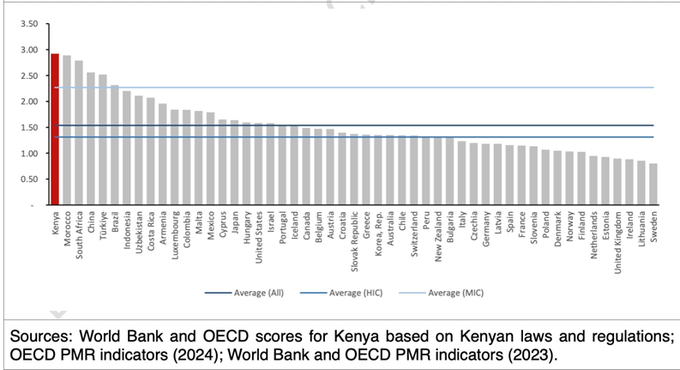
Kenya has a legal and regulatory environment that is much more restrictive to competition than the ‘frontier’ of advanced economies with more open markets. #KenyaEconomicUpdate
Industries have repeatedly complained that high energy costs are undermining competitiveness.
The Kenya Association of Manufacturers says electricity accounts for up to 30 P.c of production costs in some sectors.
The report recommends the ring-fencing of public service obligations, such as rural electrification, to ensure they do not mask commercial inefficiencies within KPLC.
It also urges publication of clear rules enabling private participation in transmission and distribution.
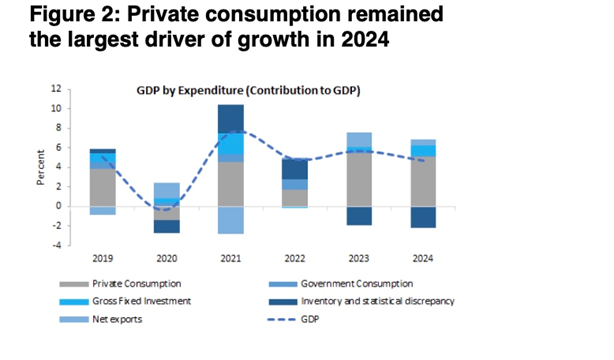
Private consumption remains Kenya’s biggest growth driver but momentum is slowing as access to credit tightens. 💳📉 In 2024, it was still the largest contributor to growth, though its pace moderated due to stricter credit conditions. #KenyaEconomicUpdate
Energy policy expert George Wachira described the findings as “a long-overdue recognition that Kenya’s electricity system remains structurally uncompetitive”, adding that reforming procurement and strengthening EPRA’s independence are essential.
With the government targeting industrialisation under the Bottom-Up Economic Transformation Agenda, analysts say lowering electricity prices is critical for job creation and export competitiveness.



