



NAIROBI, Kenya – Electric vehicles (EVs) in Kenya will now be issued with distinctive green number plates, marking a major policy shift aimed at boosting public awareness of e-mobility and accelerating the country’s transition away from fossil fuels.
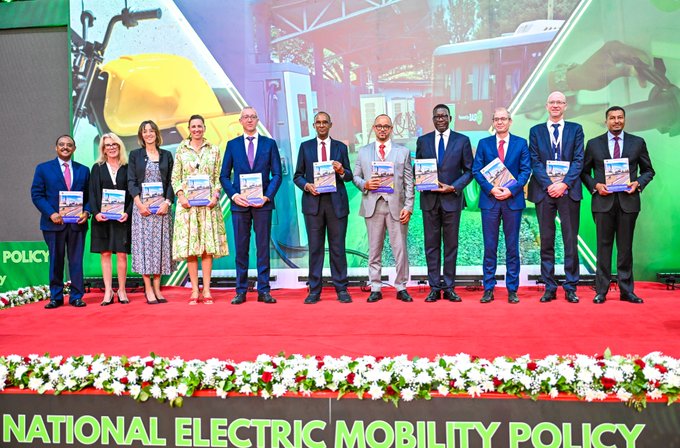
The green plates were officially launched on Tuesday during the unveiling of the National Electric Mobility Policy at the Kenyatta International Convention Centre (KICC) in Nairobi.
Transport Cabinet Secretary Davis Chirchir said the plates will serve as the official identifier for electric vehicles on Kenyan roads and take effect immediately.
“This will be the new kid in town. All electric vehicle number plates will now be green,” Chirchir said. “This will be the signature for those of us supporting the reduction of carbon footprints.”

Represented H.E. President @WilliamsRuto at the launch of Kenya’s National Electric Mobility Policy, a major milestone in our transition to a cleaner, more resilient transport system.Electric mobility is crucial to reducing greenhouse gas emissions, decreasing reliance on



Under the new framework, petrol and diesel-powered vehicles will continue using the existing reflective plates, even as the government works to gradually reduce the number of fuel-powered vehicles on Kenyan roads by 2030.
The rollout of green number plates coincides with the launch of the National Electric Mobility Policy, which outlines Kenya’s roadmap for transitioning its transport sector—across road, rail, air and maritime systems—away from fossil fuels.
Kenya has recorded steady growth in electric vehicle adoption in recent years, particularly in electric motorcycles. Government officials say the new rules are designed to support local assembly, reduce fuel imports, create jobs and cut transport-related emissions.
“We reaffirm the government’s unwavering commitment to building a cleaner, smarter, affordable and more sustainable transport system,” Chirchir said, adding that Kenya will also engage neighbouring countries to harmonise regional e-mobility standards and enable seamless cross-border movement.
The policy sets a target for electric vehicles to account for at least five per cent of all newly registered vehicles by 2025, with a long-term goal of full electrification and net-zero emissions by 2050.
To support adoption, the government has introduced a range of fiscal incentives, including reduced import duty on electric vehicles, tax relief on batteries and charging equipment, and a dedicated electricity tariff for EV charging.
The Energy and Petroleum Regulatory Authority (EPRA) has already rolled out a special e-mobility tariff with lower off-peak rates to make charging more affordable.
Officials noted that Kenya is well positioned to support large-scale EV adoption, with about 90 per cent of its electricity generated from renewable sources such as geothermal, wind and hydropower.
Kenya Power has committed to expanding public charging infrastructure in Nairobi, Mombasa and Kisumu, while new building guidelines encourage commercial developments to include EV charging bays.
The government also plans to gradually electrify its own fleet, adding approximately 1,000 electric vehicles annually for public service use.
Chirchir urged swift and disciplined implementation of the policy, saying electric mobility presents a rare opportunity to build a new industry while improving livelihoods.
“If we do this well, Kenya will not only adopt electric mobility, but we will build an industry, create jobs, strengthen our currency position and deliver cleaner air for our people,” he said.
The green number plates, which are reflective and displayed on both the front and rear of electric vehicles, had initially been scheduled for rollout in 2024 but were delayed.




