



NAIROBI, Kenya- President William Ruto has announced that the Mandera Border Post with Somalia will be officially reopened in April, ending a closure that has kept communities and traders cut off from their neighbours for nearly 15 years.
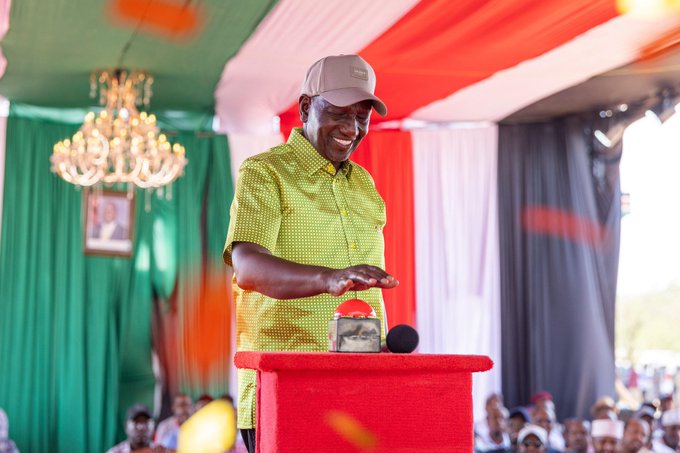
The announcement was made during a public address at Mandera Stadium as part of the National Youth Opportunities Towards Advancement (NYOTA) capital disbursement event.
“It is unacceptable that fellow Kenyans in Mandera remain cut off from their kin and neighbours in Somalia due to the prolonged closure of the Mandera Border Post,” President Ruto said.
He stressed that resuming border operations is vital for restoring connectivity and revitalising cross‑border trade for mutual prosperity.
“We cannot trade with closed borders,” he added.
Why the Border Was Closed
The border between Kenya and Somalia was officially shut in October 2011 amid repeated attacks by the militant group al‑Shabaab, which has waged a long‑running insurgency in Somalia and carried out cross‑border attacks on Kenyan soil.
The closure was aimed at strengthening national security and preventing militants from using the porous frontier to infiltrate Kenya.
Previous efforts to reopen the frontier have been attempted but thwarted. A phased reopening was agreed in 2023 but was halted following a surge in al‑Shabaab activity and deadly attacks near the border.
Earlier plans in 2022 and negotiations involving former President Uhuru Kenyatta and Somali President Hassan Sheikh Mohamud similarly failed to materialise.

It is unacceptable that fellow Kenyans in Mandera remain cut off from their kin and neighbours in Somalia due to the prolonged closure of the Mandera Border Post. Accordingly, we will reopen the border post in April, restoring connectivity and revitalising cross-border trade


Security and Economic Implications
To ensure the reopening does not compromise safety, President Ruto said the government will double the number of police officers deployed along the border, particularly in Mandera and Garissa counties, while continuing robust counter‑terrorism operations.
“We will deploy adequate security to ensure that criminals and insurgent groups do not infiltrate, while giving traders from both regions the freedom to operate,” Ruto said, urging residents to assist authorities with intelligence sharing.
The combined 680‑kilometre Kenya‑Somalia border has been a flashpoint for security challenges due to militant threats and illegal crossings, but reopening it is seen as a landmark step toward normalising cross‑border movement and boosting socio‑economic ties.
The closure heavily impacted Mandera County’s economy, where residents previously relied on Somali markets for cheaper goods and supplies.
Local traders have historically used unofficial routes to ferry merchandise, often at higher costs and without regulatory oversight, a situation that hampered commerce and deprived both governments of revenue.
Boost for Trade and Community Reconnection
The reopening is expected to restore family and cultural ties, enhance regional trade, and support sectors such as agriculture and small‑scale commerce.
In early February, before the full reopening announcement, the government had already partially reopened the border for miraa (khat) exports, a move welcomed by traders and farmers who suffered losses due to the closure.
President Ruto said he will personally return to Mandera in April to officiate the formal reopening ceremony.
Regional leaders and business groups have hailed the move as a major milestone in Kenya‑Somalia relations and a boost to the local economy.
As Kenya prepares to reopen the Mandera Border Post, authorities are keen to balance economic opportunity with security imperatives, ensuring that legitimate cross‑border movement flourishes while safeguarding national interests.




