




NAIROBI, Kenya — The Kenya Tourism Fund has upgraded its eLevy portal, easing compliance for hotels, restaurants, and short-term rental operators required to remit the mandatory 2pc Tourism Levy.
In a statement issued March 3, the Tourism Fund urged all registered hospitality businesses to log into the revamped system, update their details, file returns, and make payments.
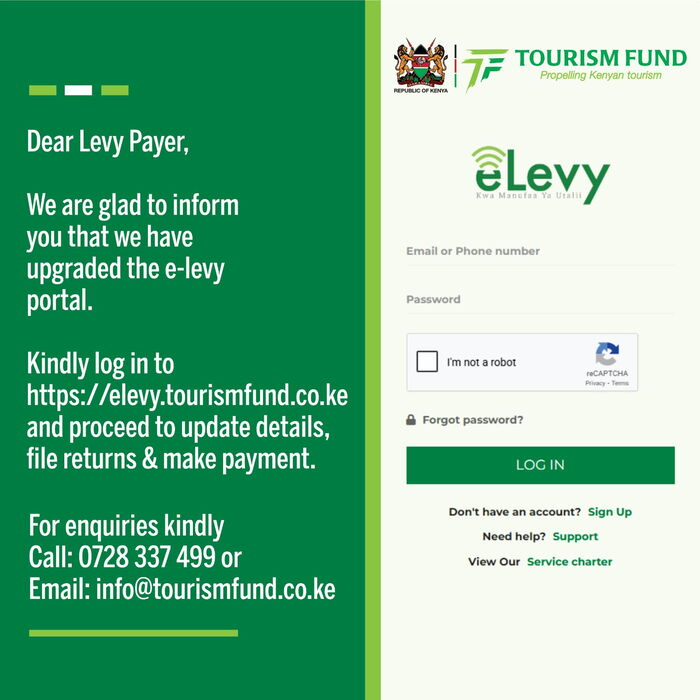
“We are glad to inform you that we have upgraded the e-levy portal. Kindly log into the eLevy portal and proceed to update your details, file returns, and make payments,” the Fund said.
The upgraded portal features automated levy calculations, improved record-keeping tools, and remote payment capability, eliminating the need for business owners to physically visit government offices.
Officials say the changes are designed to reduce errors, enhance transparency, and streamline monthly remittance processes.
The 2pc Tourism Levy applies to gross sales from accommodation and food services. It targets a wide range of hospitality operators, including hotels, restaurants, Airbnbs, and online booking platforms operating within Kenya.
Under the Hotels and Restaurants Act, all regulated establishments must remit the levy by the 10th day of the following month.
Failure to comply attracts penalties of Sh5,000 or 3pc of the outstanding amount — whichever is higher, underscoring the financial risks of delayed payment.
The Tourism Fund said the upgrade addresses long-standing concerns over delays and system inefficiencies that previously complicated filings.
By digitising the process further, the agency aims to enhance compliance while expanding the revenue base, supporting tourism promotion and development initiatives.
The move aligns with the government’s broader strategy to widen the tax net through digital platforms.
In recent reforms, the Kenya Revenue Authority introduced a 5pc withholding tax on digital content creators effective January 2026, targeting income from advertising, sponsorships and online subscriptions.

Additionally, the 1.5pc Digital Services Tax was replaced with a 3pc Significant Economic Presence tax applied to gross turnover of non-resident digital platforms serving Kenyan users, including global streaming and ride-hailing firms.
Business owners without accounts have been encouraged to register through the Tourism Fund portal.
The Fund also provided a customer support contact line for operators experiencing technical challenges.


