


Pilates may look slow, controlled, and almost effortless but don’t be fooled. This low-impact workout is quietly becoming one of the most effective ways to build strength, improve posture, and achieve a lean, defined body without putting the body under extreme strain.
With high-intensity workouts dominating fitness culture, Pilates offers a different approach, one that prioritizes control, precision, and long-term results over speed and exhaustion.
What Pilates really is
Pilates is a form of exercise developed by Joseph Pilates, built around slow, deliberate movements designed to target deep muscles in the body especially the core.
Unlike traditional gym workouts that often focus on lifting heavier or moving faster, Pilates flips the script. It emphasizes: control over speed, proper breathing, alignment and posture
Every movement is intentional. Every muscle is engaged. And instead of rushing through repetitions, the goal is to move with precision.
How Pilates works
At its core (literally), Pilates is all about strengthening the body from the inside out.
It primarily targets the core, (abs and lower back), glutes and hips, posture muscles, flexibility and mobility
Think of it as a blend of strength training and stretching, working muscles while also lengthening them.
This combination is what gives Pilates its signature result of a body that is not just strong, but also balanced and flexible.
Why people are choosing Pilates
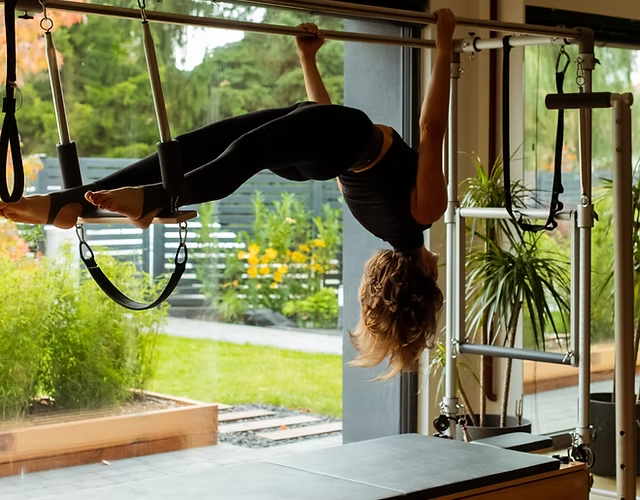
One of the biggest draws of Pilates is its ability to deliver visible results without the harsh impact of intense workouts.
Among its key benefits are:
- Improved posture (less slouching, more alignment)
- Stronger core (leading to a flatter, more defined midsection)
- Increased flexibility
- Reduced risk of injury
- Ideal for recovery and rehabilitation
It’s especially popular among people who want a toned, lean physique, rather than bulky muscle mass.
Types of Pilates
There are two main ways people practice Pilates, depending on their level and preference.
Mat Pilates
This is the most common and accessible form. It’s done on the floor using body weight, making it ideal for beginners or those working out at home.
Reformer Pilates
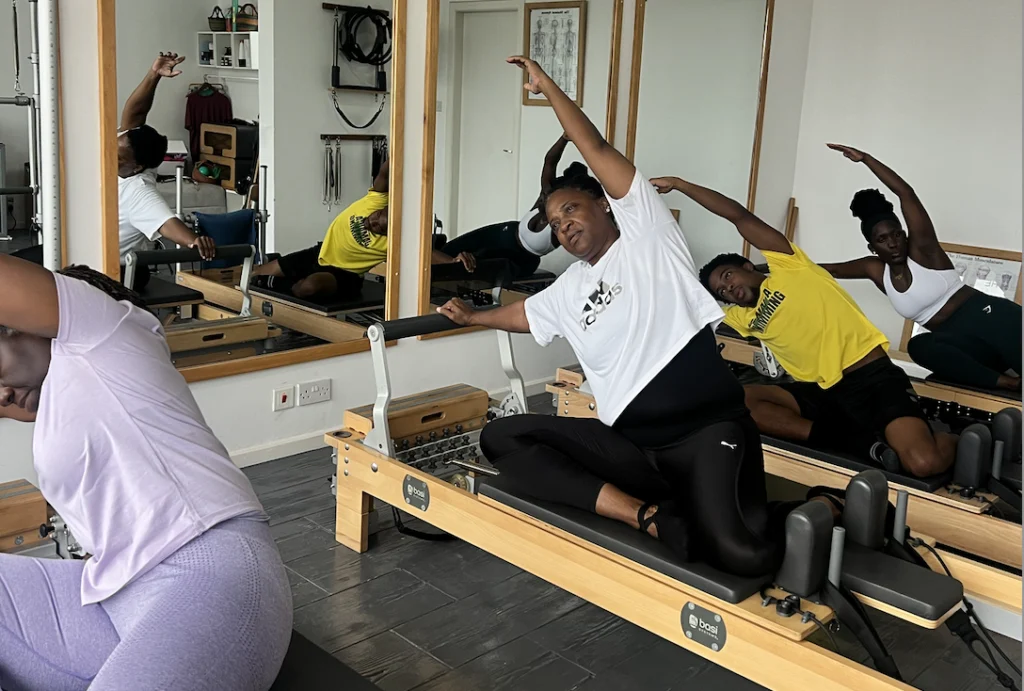
This version uses a specialized machine with springs and resistance. It adds intensity and structure to the workout, often making it more challenging and targeted.
Both forms follow the same principles. Controlled movement, breathing, and alignment but offer different levels of resistance and experience.
Who Pilates is for
One of the reasons Pilates has grown in popularity is how adaptable it is.
It works for: beginners starting their fitness journey, athletes recovering from injury, people dealing with back pain and anyone looking for a lean, defined body
Because it’s low-impact, it puts less strain on joints while still delivering effective results, making it suitable for a wide range of people.

It’s harder than it looks
Pilates often gets underestimated because of how calm it appears.
But the truth is, it can be more challenging than high-intensity workouts. Holding controlled positions, engaging deep muscles, and maintaining proper form requires focus and endurance.
There are no shortcuts. No momentum to rely on. Just your body, your control, and your ability to stay engaged.
Pilates is more than just a workout. It’s a different way of approaching fitness. One that values precision over speed, strength over strain, and consistency over intensity.

