



MWEA, Kenya – The Ministry of Agriculture has announced an emergency intervention to purchase the entire rice stock from farmers under the Mwea Irrigation Scheme, in a bid to cushion growers and stabilize the local market.
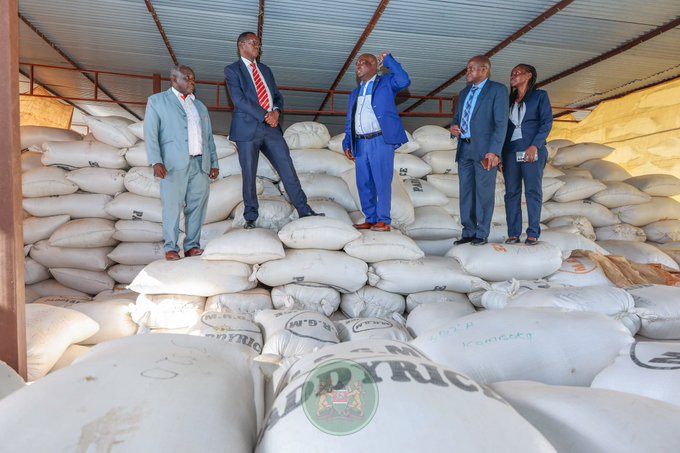
In a statement on Thursday, Agriculture and Food Authority (AFA) Director General Bruno Linyiru said the Kenya National Trading Corporation (KNTC) will mop up over 5,000 metric tonnes of rice—valued at approximately Ksh.500 million—with farmers expected to receive payments within a month of delivery.
The move follows growing pressure from rice farmers who urged the government to temporarily suspend rice imports to give locally grown stock a chance in the market.
Agriculture Cabinet Secretary Mutahi Kagwe responded by dispatching AFA to assess the situation in Mwea.
During the tour, officials acknowledged the challenges faced by local farmers and committed to long-term reforms, including reducing rice imports by half.
“Kenya can only produce 191,000 metric tonnes of rice in the 2024/25 season, which is sufficient for just two months. Imports are necessary to fill the gap, but we are now scaling efforts to expand irrigation and introduce high-yield rice varieties,” Linyiru said.

KSH 500M FOR MWEA FARMERS AS STATE LAUNCHES MASSIVE RICE MOP-UP AND REFORM DRIVEFollowing the concerns raised by farmers under the Mwea Irrigation Scheme regarding the negative impact of rice importation on the sale of locally produced rice. We proposed the following measures:



In addition to boosting production, AFA pledged to crack down on retailers repackaging imported rice as local brands—an unethical practice that farmers claim has undercut prices and eroded consumer trust.
“The Ministry reaffirms its commitment to safeguarding the interests of Kenyan farmers and promoting local agricultural value chains as part of the national food security agenda,” the statement read.
The Mwea Irrigation Scheme, located in Kirinyaga County, is the country’s largest rice-growing region and a critical pillar in Kenya’s food security strategy.
However, farmers there have repeatedly voiced frustration over poor prices, delayed payments, and unfair competition from imported rice.




