





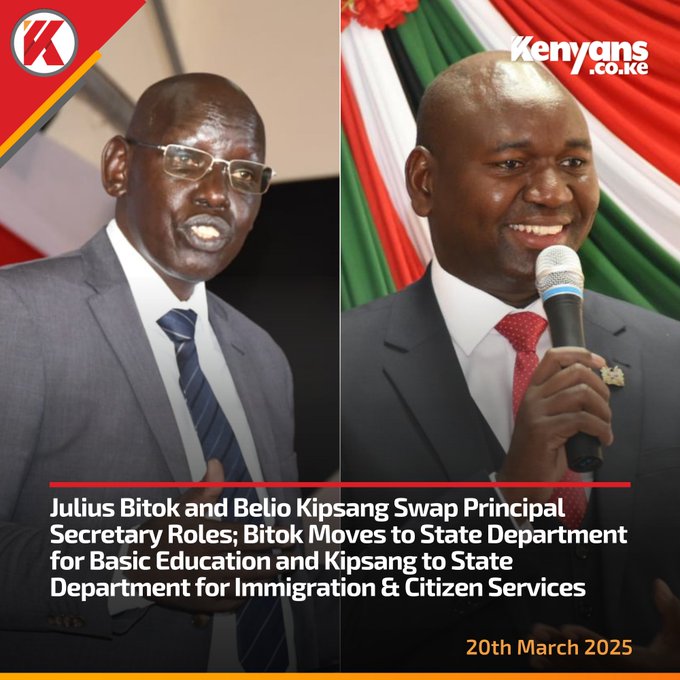
Nairobi, Kenya- President William Ruto has reshuffled his administration, moving Basic Education Principal Secretary (PS) Belio Kipsang to Immigration and Citizen Services.
In a direct swap, Julius Bitok, who previously held the immigration role, will take over Basic Education.
According to a government statement, the changes are designed to “harness opportunities within emerging sectors of the economy” while addressing key social and economic challenges.
The reshuffle also aims to accelerate the implementation of Ruto’s Bottom-Up Economic Transformation Agenda (BETA), a key blueprint for his administration.

Julius Bitok and Belio Kipsang swap Principal Secretary Roles in latest PS shuffle
Kipsang’s New Role: Fixing Immigration Woes
With delays in passport issuance, digital ID rollout, and border security concerns, Kipsang steps into a department that has struggled with inefficiencies.
His experience in government administration will be crucial in improving service delivery and streamlining the e-citizen digital platform.
His appointment also comes as Kenya looks to fast-track the integration of Maisha Namba, the country’s latest attempt at a universal digital identity system. This shift is expected to make it easier for citizens to access government services.
Bitok’s Return to Education
Julius Bitok’s return to the Basic Education docket places him at the center of key reforms, particularly the Competency-Based Curriculum (CBC).
The education system is undergoing a transition, and Bitok will be tasked with ensuring a smooth rollout while addressing concerns from parents, teachers, and students.
One of the biggest challenges ahead? Funding. The government is under pressure to provide adequate resources for school infrastructure, teacher recruitment, and capitation for public schools.
The government emphasized that these changes are strategic, aiming to improve efficiency in key ministries.
With Kenya’s education system evolving and immigration services facing growing demands, placing experienced leaders in these roles is part of Ruto’s broader plan for governance and service delivery.
This move follows a series of government realignments as Ruto looks to strengthen his administration ahead of major policy implementations.


