



LONDON, United Kingdom – Seven Kenyan citizens have won a historic case at the Family Court in London after successfully proving they were fathered by British men who served in the British Army Training Unit in Kenya (Batuk).
The ruling, delivered this week, marks the first time a UK court has recognized paternity using commercially available DNA databases, paving the way for the claimants to apply for British citizenship.
The case involved six men who served with the British Army in Nanyuki, Laikipia County, and one contractor attached to the base.
The claimants were represented by British lawyer James Netto, working alongside leading geneticist Professor Denise Syndercombe Court, as part of a broader project collecting DNA samples and testimonies from residents around Batuk — the largest British military base in Africa.
Netto said the decision represented justice long overdue. “For many families, today’s hearing marks the end of an incredibly difficult journey that for so long felt impossible. Children and young people who previously only had questions now have answers,” he told the BBC.
Investigators used publicly accessible DNA databases to trace the fathers and match their genetic profiles with those of the claimants. The technique proved decisive in confirming paternal links that would otherwise have remained unresolved for decades.
One of the claimants, Peter Wambugu, a 33-year-old chef from Nanyuki, said the ruling brought him immense relief after years of stigma and emotional pain.
“I grew up knowing my father was a British soldier, but we never met. I was bullied as a child for being mixed-race. My mother always told me he said he would come back one day, but he never did,” Wambugu recounted.

Seven people from Kenya have won a case at the Family Court in London to prove they were fathered by British men working at an army base in their country. Commercially available DNA databases were used to identify otherwise unknown fathers. bbc.in/4nvZUP9
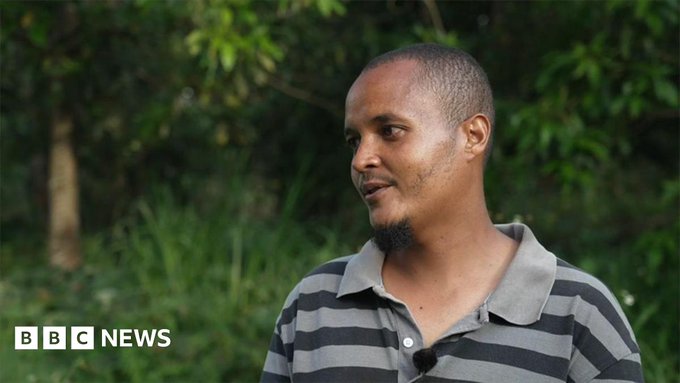
He has since been reunited with his father, who said he had been unaware of Peter’s existence. “All the pain that I’ve been carrying for 30 years, all the discrimination I faced — that pain has now turned into joy,” Wambugu said.
Another claimant, who could not be named for legal reasons, told the court she met her father once when she was four years old and never saw him again.
“Growing up without him was very tough. I felt extremely abandoned,” she said.
The court’s ruling is being hailed as a breakthrough in both family law and international justice, offering new hope to many others in Kenya’s Nanyuki region who believe they are children of former Batuk servicemen.
Lawyer Andrew Macleod, who helped coordinate the DNA project, urged the UK Ministry of Defence to take greater responsibility for such paternity claims.
“We hope this case encourages the government to proactively engage with families rather than waiting for litigation,” he said.
In response, the Ministry of Defence said that while paternity matters are “private life issues,” it continues to cooperate with local child support authorities where relevant claims arise.
The landmark decision now opens the door for dozens of similar cases to proceed, and for the seven successful claimants, it represents long-awaited validation of identity and belonging.
As Wambugu reflected after the verdict: “For the first time, I feel complete.”



