




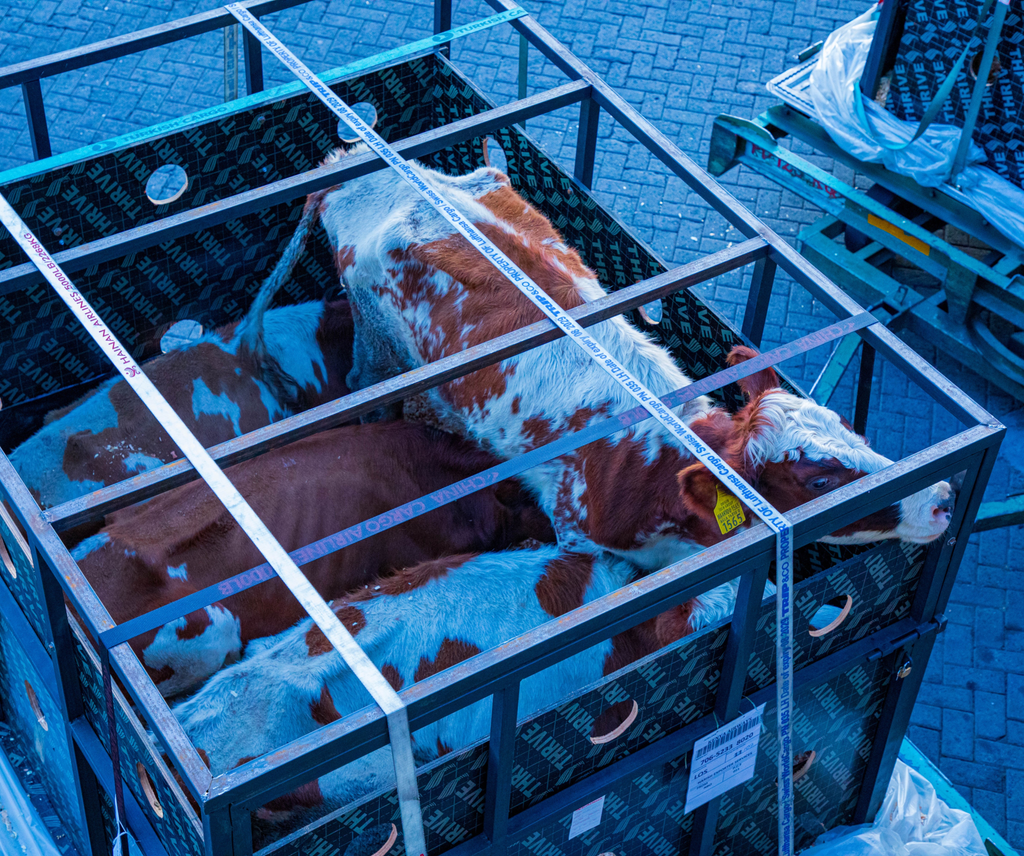
NAIROBI, Kenya – Forget passengers rushing to board or parcels being loaded into cargo holds. More than 50 cows have taken to the skies after a customer chartered a Kenya Airways cargo flight to transport the livestock from Nairobi to Lagos, Nigeria.
Kenya Airways announced the unusual shipment on Tuesday, October 27, 2026, through its cargo division, offering a glimpse into the specialised side of aviation logistics that extends far beyond conventional freight.
“Moo-ve over, traffic! Our VIP cattle are taking to the skies in search of greener pastures,” the airline said in a statement.
The carrier confirmed that its KQ Cargo team had facilitated the transportation of the cattle through its charter services, thanking the unnamed client and other stakeholders who coordinated the operation.
The shipment immediately stands out for its unusual cargo, but it also illustrates how aircraft can be deployed to move live animals across long distances when specialised transport arrangements are required.
Why the cows needed a special flight
Kenya Airways did not disclose the identity of the customer, the charter fee, the cattle’s breed or their intended use in Nigeria.
It also did not specify the aircraft used, whether the charter involved an entire freighter or the precise arrangements made to accommodate the livestock.
However, the airline already offers a dedicated live-animal transportation service known as KQ Live, which provides specialised handling for animals transported by air.
According to the airline, the service prioritises safety, comfort and hygiene, with trained personnel providing care before, during and after flights. Its published requirements include appropriate containers, ventilation, feeding and watering instructions, as well as the necessary shipping documents.
For cattle travelling internationally, veterinary certification and compliance with the destination country’s import rules are also important. Kenya Airways Cargo’s published guidance, for example, specifies health documentation and testing requirements for cattle entering Kenya. The applicable requirements for this shipment would depend on the route and Nigerian import regulations.
Nairobi to Lagos: A cargo route with room for unusual shipments
The flight connected Nairobi, Kenya’s principal aviation hub, with Lagos, one of Nigeria’s major commercial centres.
Lagos is already part of Kenya Airways Cargo’s freighter network. In April 2024, the airline announced the arrival of its second Boeing 737-800 freighter, saying the additional aircraft would expand its cargo fleet to four aircraft and support operations to destinations including Lagos.
The latest charter demonstrates the flexibility of cargo operations, where transport arrangements can be tailored to specialised customer requirements rather than limited to standard shipments.
Live-animal transport is a highly regulated part of the air-freight industry. The International Air Transport Association’s Live Animals Regulations set out procedures intended to ensure animals are transported safely and humanely, with requirements varying according to species and circumstances.
How much did it cost to fly 50 cows?
That remains one of the biggest unanswered questions surrounding the shipment.
Kenya Airways has not revealed how much the customer paid to charter the flight, the total weight of the cattle or the specific aircraft and handling arrangements involved.
The cost of such an operation can depend on aircraft capacity, shipment weight and dimensions, specialised loading and handling, veterinary documentation and destination requirements. Without the commercial details, the price of the Nairobi-to-Lagos charter cannot be reliably estimated.
The airline’s announcement also did not explain why the customer chose air transport instead of moving the cattle by road or sea.
For now, the identity of the client, the destination of the animals beyond Lagos and the commercial purpose of the shipment remain undisclosed.


