




There is an uncomfortable truth about journalism.
A hungry journalist armed with a pen is not inherently dangerous, but a newsroom that cannot meet payroll, fund reporting or invest in verification is vulnerable to the very pressures that weaken independent journalism.
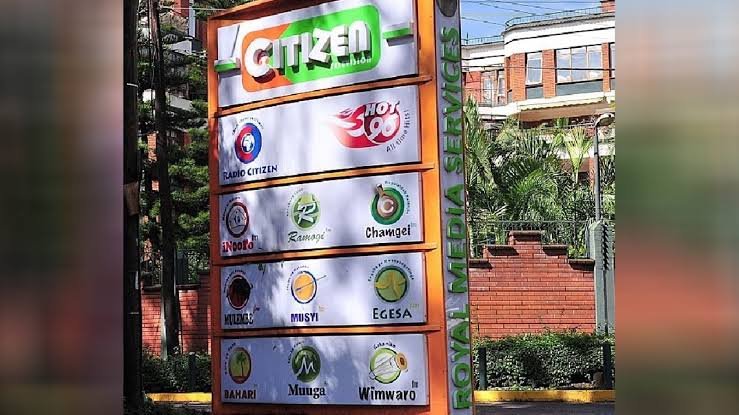
That is why I view Citizen TV’s decision to charge Sh350 a month for YouTube livestream access to Citizen TV, Inooro TV and Ramogi TV as a legitimate and necessary experiment, not a betrayal of its audience.
Journalism does not become cheap simply because it appears on a phone screen.
Behind a live bulletin are reporters in the field, camera crews, editors, producers, fact-checkers, lawyers, studio staff, data bundles, equipment and the costly work of staying live when news breaks.
Viewers rightly value free access, but they should also understand that quality journalism needs reliable income if it is to remain courageous, accurate and independent.
The numbers tell the story.
The Media Council of Kenya says 74% of Kenyans use social or digital platforms for news, with social media now the main news source for 39%, ahead of television at 31%.
Yet Citizen TV remains the country’s most-watched station, reaching 56% of respondents.
News consumption has moved online and the money that once sustained broadcast journalism has not moved with it in equal measure.
In its recent monetisation study, MCK found that 31.1% of media organisations use advertising as a monetisation tool, while only 2.4% use paywalls.
That tells us this is still new territory, not evidence that the model is wrong.
It is a reason to innovate carefully.
Globally, media houses are testing subscriptions, memberships, events, branded content and specialist products because advertising alone can no longer carry the full cost of public-interest reporting.
Of course, the public’s concerns are valid.
The same MCK study found that 27.4% of consumers would pay less than Sh100 monthly for digital content and 23% would pay between Sh100 and Sh299; just 15.6% put their ceiling between Sh300 and Sh499.
And 85% prefer mobile money.
The Sh350 model must be easy to pay for and clear about the value it delivers.
A flexible daily or weekly option, simple M-Pesa payments, ad-free viewing, catch-up access or added diaspora value would make the experiment stronger.
But we cannot demand fearless journalism, fairly paid journalists and reliable live coverage, then insist every digital product must cost nothing.
At Y News, we know that editorial independence is strengthened when a newsroom has diverse, ethical revenue streams rather than an unhealthy dependence on advertisers, politicians or patrons.
Monetisation should never shut Kenyans out of essential public-interest information. It should help fund the journalism that holds power to account and tells our stories with depth.
Citizen TV’s move should be judged by how it evolves, not dismissed because it asks viewers to contribute.
Media innovation will involve mistakes, adjustments and resistance.
But the alternative, underfunded newsrooms and a compromised public-interest press, would cost Kenya much more than KSh350.