




NAIROBI, Kenya – President William Ruto has issued a personal apology to the family of Rex Kanyike Masai, who was fatally shot during the June 2024 anti-Finance Bill protests, more than two years after his death became a rallying point for demands for justice and police accountability.
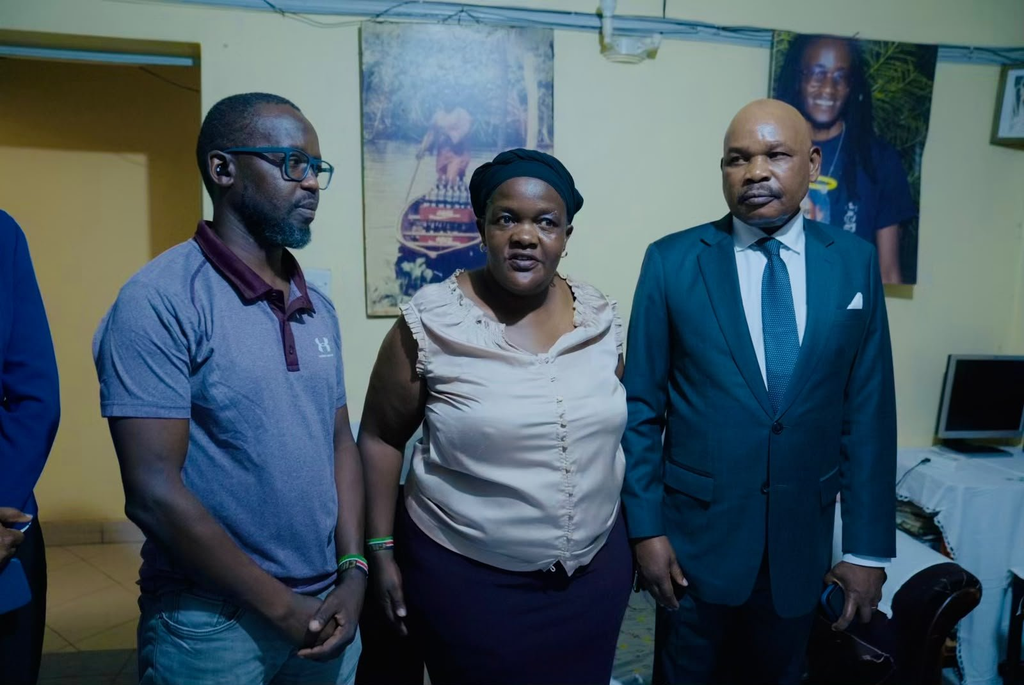
The apology was delivered on Thursday, October 29, by a delegation from the Panel of Experts on Compensation of Victims of Protests and Riots, led by its chairperson, Professor Makau Mutua, during a visit to Masai’s mother at her home in Kayole, Nairobi.
The panel said it conveyed both the President’s personal apology and an apology on behalf of the State for the family’s loss.
“Prof. Makau Mutua, Chair of the Panel, and the Panel members paid a visit to Mama Rex Masai in Kayole today, delivering the President’s personal apology as well as the State’s to the family for their loss,” the panel said in a statement shared on X.
Representatives of the Independent Policing Oversight Authority (IPOA) and the Kenya National Commission on Human Rights (KNCHR) also attended the visit.
The panel said the engagement reaffirmed the importance of justice, healing, national reconciliation and the ongoing compensation process.
However, the statement did not indicate whether the family had received compensation under the government programme or whether the apology came with any new commitment on accountability for Masai’s death.
Rex Masai’s death and the search for accountability
Masai was shot dead on June 20, 2024, during demonstrations in Nairobi against the Finance Bill 2024. His death became one of the most prominent cases associated with the Gen Z-led protests, which triggered widespread demands for investigations into police conduct and the deaths and injuries suffered by demonstrators.
IPOA launched investigations into the fatal shooting, examining witness accounts and video footage to establish the circumstances surrounding the incident.
The case subsequently proceeded to an inquest at Milimani Law Courts, where the prosecution presented evidence aimed at establishing what happened and whether anyone should bear responsibility.
In September 2026, the prosecution closed its case after calling 30 witnesses and presenting 48 exhibits. An IPOA forensic expert told the court that the CCTV footage examined showed no evidence of deletion, alteration or editing.
The closure of the evidentiary phase did not itself determine responsibility for Masai’s death. The parties were expected to file written submissions before the magistrate made a determination on the circumstances surrounding the shooting.
The apology therefore comes as the judicial process moves towards its next stage, with the family’s pursuit of answers remaining a central issue.
Government compensation programme
The apology was delivered as the government continues implementing a compensation framework for people killed, injured or otherwise affected by demonstrations and riots.
The programme was established under a presidential proclamation issued in August 2025, with Mutua appointed to lead the panel overseeing the initiative. In June 2026, the government announced a Sh2 billion framework for victims of human rights violations linked to protests and public demonstrations between 2017 and 2025.
On Thursday, the panel said more than 1,000 victims had received compensation, with approximately Sh1.2 billion disbursed from the Sh2 billion allocation. The programme covers eligible claims involving deaths, bodily injuries and other losses arising from protests and riots.
The compensation initiative has been presented as part of broader efforts to promote healing and reconciliation. However, human rights advocates and victims’ families have continued to emphasise the importance of investigations and accountability alongside financial redress.
For Masai’s family, the President’s apology represents an official acknowledgement of their loss. It does not, by itself, settle the outstanding questions surrounding the fatal shooting or replace the court’s determination following the inquest.
The magistrate’s eventual findings will be important in establishing the circumstances of Masai’s death, while the compensation programme addresses the separate question of redress for victims and their families.

