




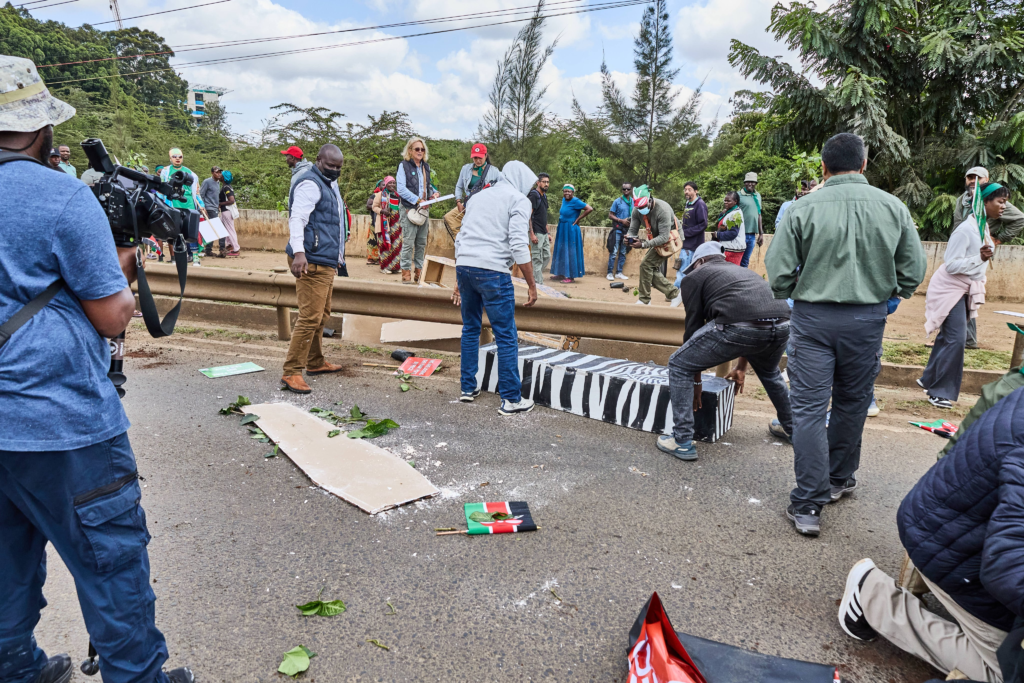
NAIROBI, Kenya — Activist Boniface Mwangi has criticised police conduct during recent protests against the proposed development of infrastructure within Nairobi National Park, alleging that officers selectively targeted Black protesters for arrest while allowing other demonstrators to leave unhindered.
In a lengthy statement issued following Monday’s demonstrations, Mwangi claimed the arrests highlighted deeper concerns about discrimination, inequality, and policing practices in Kenya.
The protests were sparked by opposition to plans that include the construction of a new animal orphanage, a parking facility, and related infrastructure linked to the proposed expansion of the Bomas International Convention Centre.
Claims of Selective Arrests
Mwangi alleged that the police response disproportionately affected Black protesters despite the demonstration involving Kenyans from diverse racial and ethnic backgrounds.
“Yesterday’s protest had white, Indian and Black people — all citizens of this country. Yet, when the police decided to arrest the protesters, they went for the kind of people the Kenyan police is trained to beat, shoot and sometimes arrest,” he said.
The activist argued that the incident reflected broader societal questions about race, privilege and the exercise of state power.
Concern Over Nairobi National Park Development
Beyond the arrests, Mwangi expressed concern about the future of Nairobi National Park, arguing that the protected area is already under pressure from infrastructure projects, urban expansion and the loss of wildlife migration corridors.
He criticised plans to clear part of the park to accommodate a relocated animal orphanage and an eight-acre parking facility intended to serve visitors and users of the proposed convention complex.
Conservation groups have similarly raised concerns over the environmental impact of the project, arguing that the development could undermine the ecological integrity of one of Kenya’s most iconic wildlife habitats.
Supporters of the project, however, maintain that the new facilities will improve wildlife care, conservation education and visitor experience.
Call for Greater Civic Participation
Mwangi also challenged wealthy and influential Kenyans, including members of minority communities and business leaders, to become more actively involved in campaigns for accountability, environmental protection and constitutional governance.
He cited historical contributions by prominent Kenyan Asians and white Kenyans to the country’s independence, human rights and pro-democracy movements, including figures such as Makhan Singh, Pheroze Nowrojee and Richard Leakey.
According to Mwangi, citizens across all communities share a responsibility to defend democratic values and public institutions.
“The protest was about protecting Nairobi National Park. A national park belongs to the people — all people, of all colours,” he said.
Debate Continues
The remarks come as debate intensifies over the proposed development within Nairobi National Park and the government’s broader infrastructure agenda.
Environmental activists, lawyers and civil society organisations have questioned the project’s approval process, public participation measures and long-term ecological consequences.
The government and project proponents maintain that the planned facilities will support conservation, tourism and economic development while enhancing wildlife management infrastructure.


