




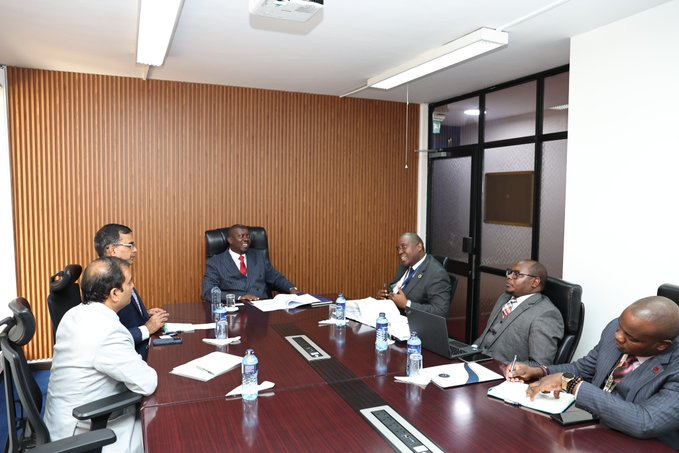
NAIROBI, Kenya — Director of Public Prosecutions Renson Ingonga on Tuesday held high-level talks with India’s Deputy High Commissioner to Kenya, Sushil Prasad, focusing on strengthening extradition and mutual legal assistance (MLA) frameworks between the two countries.
The consultative meeting, convened at the Office of the Director of Public Prosecutions, forms part of ongoing efforts to enhance interagency and international collaboration in the administration of justice.
Both parties underscored the importance of seamless legal cooperation in addressing cross-border and transnational crimes, noting that delays and jurisdictional gaps often undermine prosecutions involving multiple countries.
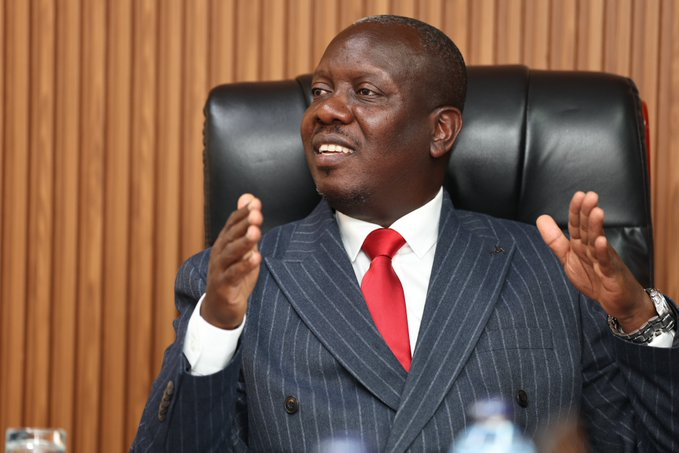
Speaking during the meeting, Ingonga reaffirmed the ODPP’s commitment to building strong institutional linkages to enhance prosecutorial effectiveness.
“Our agenda is clear — to build strong institutional linkages that support the rule of law and ensure that offenders do not exploit jurisdictional gaps to evade justice,” he said.
The discussions explored ways of expediting extradition and MLA requests, streamlining communication channels between Kenyan and Indian authorities, and ensuring strict compliance with international legal standards and domestic laws.
A key outcome of the meeting was a proposal to undertake joint capacity-building initiatives for prosecutors from both jurisdictions.
The planned trainings will focus on emerging trends in transnational organised crime, including increasingly sophisticated financial and cyber-enabled offences.
Prasad welcomed the engagement, noting that Kenya and India share longstanding diplomatic relations and a mutual interest in strengthening cooperation within the criminal justice sector.
“India values its partnership with Kenya, and we look forward to deepening collaboration in legal and prosecutorial matters. Strengthening our cooperation in extradition and mutual legal assistance will significantly enhance our collective ability to combat transnational crime,” he said.
Kenya’s extradition processes are governed by the Extradition (Commonwealth Countries) Act and the Extradition (Contiguous and Foreign Countries) Act, while mutual legal assistance is anchored in the Mutual Legal Assistance Act, 2011.
These legal frameworks facilitate the surrender of suspects and the sharing of evidence across borders in line with international conventions.
The meeting aligns with the DPP’s broader strategy to reinforce collaboration with international partners, strengthen institutional capacity, and promote coordinated responses to complex criminal networks operating across jurisdictions.
Through sustained engagement and shared expertise, Kenya and India aim to ensure their justice systems remain efficient, responsive, and capable of addressing the evolving nature of transnational crime.

