




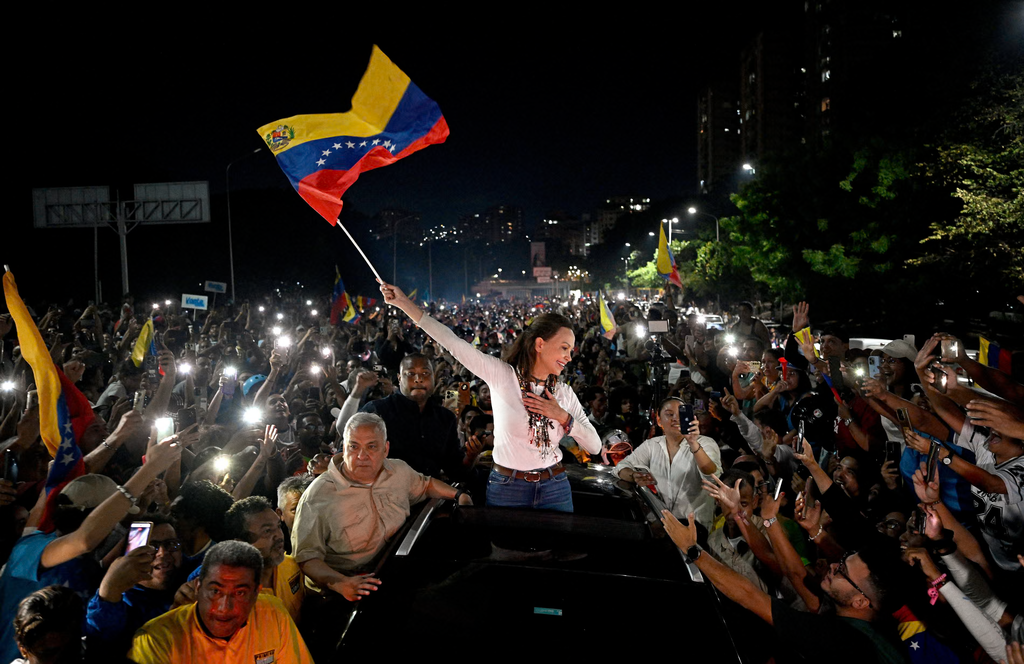
CARACAS, Venezuela – Venezuelan opposition leader and Nobel Peace Prize laureate María Corina Machado has returned home after nearly a year abroad, drawing tens of thousands of supporters and re-entering a political transition in which she has so far been largely sidelined.
Machado announced her return on Sunday, October 25, with a brief message on social media: “I’m here. With you.”
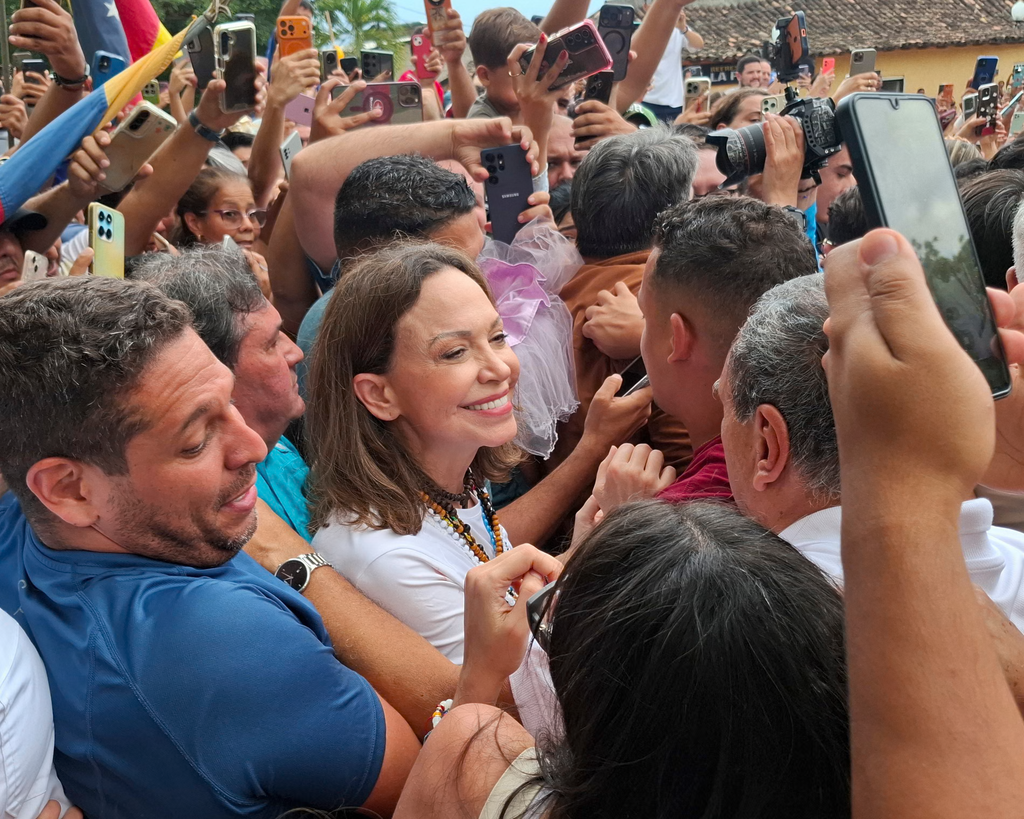
Her arrival in Venezuela’s western Lara state was confirmed by opposition ally Edmundo González, who said the movement’s leader was back on Venezuelan soil. Images showed Machado surrounded by supporters at a church in Barquisimeto before travelling towards Caracas, where crowds gathered along the route to welcome her.
Her return comes at a critical moment for Venezuela, where interim President Delcy Rodríguez is governing with Washington’s backing following the capture of former president Nicolás Maduro by US forces in January. Machado’s reappearance could complicate efforts by the Trump administration to manage the country’s transition while pursuing economic and oil-sector agreements with Rodríguez’s government.
Machado returns as Venezuela prepares for possible elections
Machado spent much of 2025 in hiding before leaving Venezuela in December to receive the 2025 Nobel Peace Prize in Norway. She had been barred from challenging Maduro in the 2024 presidential election, in which opposition candidate González ran with her support.
The opposition has maintained that González defeated Maduro in that disputed election, despite the authorities declaring Maduro the winner. Machado’s movement has since continued to demand a democratic transition and fresh presidential elections.
Her return followed several unsuccessful attempts to get back into the country, according to reports. The precise route she took and the arrangements that enabled her arrival were not initially disclosed publicly.
The homecoming was met with emotional scenes as supporters gathered at the Sanctuary of the Divine Shepherdess in Barquisimeto. Machado later travelled towards Caracas, where crowds lined roads and highways to catch a glimpse of the opposition leader.
She said her return was connected to the struggle for political freedom, the release of prisoners and the reunion of Venezuelan families separated by the country’s crisis.
Washington says it backed her right to return
The Trump administration’s position on Machado has been a central source of uncertainty surrounding Venezuela’s political future.
Although Machado has repeatedly praised Trump for the operation that removed Maduro, the US president has backed Rodríguez, Maduro’s former vice-president, as the country’s interim leader.
Trump told reporters he did not know Machado had returned but described her as a “very nice woman” and said he hoped she was safe. He also referred to the Nobel Peace Prize medal Machado had given him.
US Secretary of State Marco Rubio said on Monday that Washington had told Venezuelan authorities weeks earlier that Machado should be allowed to return. According to Rubio, Rodríguez’s government had assured the United States that Machado was free to enter the country.
Rubio said Washington would use its influence to ensure that Venezuela’s political process moved towards credible elections. He also pointed to the need for reforms to the country’s courts and electoral council, as well as greater political freedom and media access.
The US position suggests that Machado’s return was not necessarily opposed by Washington, despite earlier reports of tensions over the timing. However, the administration’s continued support for Rodríguez leaves unresolved how much influence Machado and her political movement will have in negotiations over the country’s future.
Rodríguez opens door to dialogue but talks exclude Machado’s movement
Rodríguez responded to the political developments by saying she hoped negotiations with sections of the opposition would create room for different voices.
Speaking on Monday, she said dialogue should provide space for political participation, while criticising those she accused of harming Venezuela through calls for sanctions and foreign intervention.
The talks underway between the interim government and opposition factions are intended to reform the electoral council and the country’s highest court ahead of eventual elections. However, Machado’s Vente Venezuela movement has not been included in the process.
That exclusion raises questions about whether the negotiations can secure broad opposition participation, particularly now that Machado has returned and is seeking a role in shaping the transition.
Rubio said the United States expected a new supreme judicial tribunal to be in place by the end of 2026, followed by a new electoral council. He did not announce a date for a presidential election, while Machado has called for a vote by mid-2027.
Oil deals and democracy remain competing priorities
The political dispute is unfolding alongside a growing US economic role in Venezuela, particularly in its oil industry.
Trump has promoted agreements involving Venezuelan oil production and American business interests, while Rodríguez’s government has cooperated with Washington on economic arrangements.
Machado has argued that lasting stability requires a legitimate democratic government, raising questions about whether economic cooperation can advance alongside a political process that leaves her movement outside formal talks.
The Trump administration has said Venezuela must rebuild institutions and establish conditions for a credible vote, but Trump has previously questioned whether the country is ready for nationwide elections.
Machado’s return therefore places renewed pressure on both Caracas and Washington to clarify the timetable for elections and the role opposition groups will play in determining Venezuela’s future.

