




NAIROBI, Kenya — President William Ruto has said the planned Nairobi Metropolitan Mass Rapid Transport (MMRT) system will provide a long-term solution to chronic traffic congestion in the capital by introducing an integrated public transport network centred on an underground railway.
In a statement on Friday after receiving a progress briefing at State House, Nairobi, the President said the Nairobi City County Government has already approved the first phase of the project.
The initial phase will comprise a 30-kilometre underground railway line linking densely populated areas of Eastlands with the Central Business District (CBD), featuring 25 stations.
“Our plan for the Nairobi Metropolitan Mass Rapid Transport system is the perfect solution to the traffic congestion and gridlock that face our capital city and the environs,” Ruto said.
The President said the metro line will mark the beginning of a broader multi-modal transport system designed to improve mobility across the Nairobi Metropolitan Area.
According to Ruto, the wider transport network will integrate the underground railway with Bus Rapid Transit (BRT) and commuter rail services to provide seamless movement for millions of residents.
He noted that nearly five million people living in Nairobi make more than 12 million trips every day, underscoring the need for an efficient, modern public transport system.
“This will be the beginning of the establishment of a multi-modal transport system, featuring bus rapid transit and commuter rail, to move nearly five million city residents who make more than 12 million trips to and fro every day,” he said.
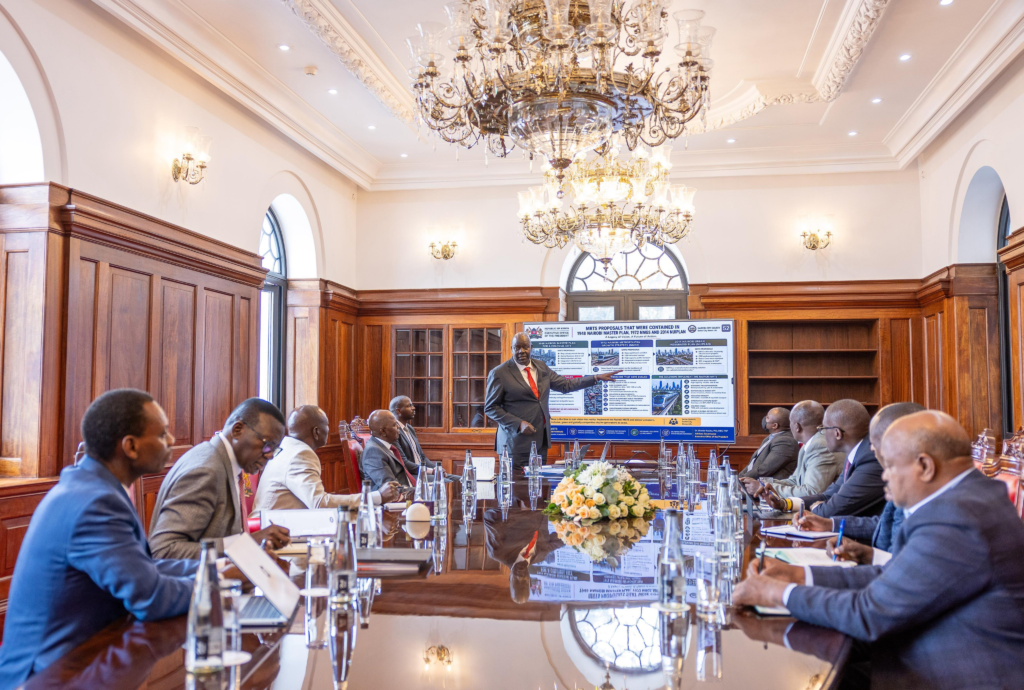
The President received a briefing on the project’s progress from officials from the Ministry of Roads and Transport and the Nairobi City County Government.
The meeting was attended by Roads and Transport Cabinet Secretary Davis Chirchir, Nairobi Governor Johnson Sakaja and other government officials overseeing implementation of the proposed transport system.
The Nairobi Metropolitan Mass Rapid Transport project is part of the government’s broader strategy to modernise urban transport infrastructure, reduce travel times, improve connectivity and support economic growth in the capital.


