




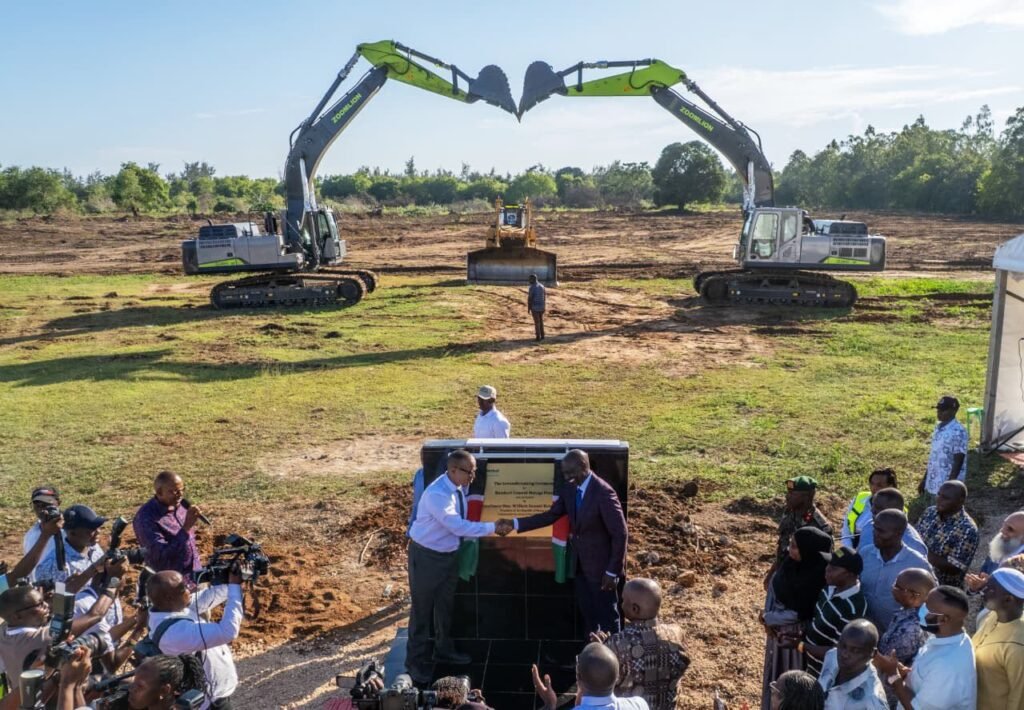
MATUGA, Kenya — President William Ruto has broken ground on a Sh32 billion Bamburi Cement clinker plant in Matuga, Kwale County, in an investment expected to more than double the manufacturer’s production capacity and create thousands of employment opportunities along the Coast.
The US$250 million project, being developed by Bamburi Cement under Tanzania’s Amsons Group, will produce 5,000 tonnes of clinker daily, translating to approximately 1.6 million tonnes annually.
Once operational, the facility will increase Bamburi’s annual clinker production capacity from one million tonnes to 2.6 million tonnes, while raising its cement manufacturing capacity from 1.8 million tonnes to four million tonnes.
Ruto, who presided over the groundbreaking ceremony on Tuesday, November 24, said the investment would strengthen local manufacturing by reducing Kenya’s dependence on imported clinker, a key ingredient in cement production.
He argued that producing the material locally would help retain foreign exchange, lower exposure to international supply disruptions and create opportunities for Kenyan businesses.
The President also pledged continued government incentives to attract industrial investments, saying local production would help retain more economic value within the country.
10,000 jobs expected from the project
The plant is expected to generate more than 10,000 direct and indirect jobs during construction and operation, according to the project announcement.
The opportunities are expected to extend beyond factory employment to transporters, suppliers, quarrying businesses, equipment maintenance firms and other local enterprises.
Bamburi Cement and Amsons Group also expect the project to support skills transfer by providing local workers with technical experience in industrial manufacturing.
Amsons Group Managing Director Edha Nahdi described the investment as a demonstration of the company’s long-term confidence in Kenya’s manufacturing sector.
The project is being undertaken by Chinese engineering firm Sinoma CBMI Construction Co. Ltd under a US$250 million construction contract signed in December 2025.
How the plant could change cement production
Clinker is produced by heating limestone and other raw materials at high temperatures. The resulting material is ground with other ingredients to manufacture cement.
Because it accounts for a substantial share of cement production costs, securing reliable clinker supplies is important for manufacturers seeking to control production expenses.
Bamburi’s new facility is intended to reduce its reliance on imported clinker while strengthening its ability to serve Kenya’s construction market and regional customers.
The investment comes as cement manufacturers expand production capacity to tap demand from housing, infrastructure and other construction projects.
Last month, Devki Group also launched a Sh70 billion cement and clinker plant in Ngaaie, Kitui County, with an annual clinker production capacity of three million tonnes.
The developments point to growing competition among manufacturers to strengthen domestic production and capture demand in the construction sector.

Coast communities to benefit from cleaner production plans
Beyond production and employment, the Matuga project is expected to incorporate alternative fuels and raw materials, including coconut and cashew nut husks and municipal solid waste sourced from the Coast region.
According to information released during the groundbreaking, up to 50 per cent of the plant’s fuel is expected to come from recycled waste collected in Kwale, Kilifi and Mombasa counties. A solar power installation is also planned as part of the company’s cleaner-production strategy.
The company has additionally outlined community support measures linked to the project.
Bamburi’s board chairman, John Simba, said the company was implementing a Sh250 million Mwachome Village relocation project, with 112 people from 42 households having received financial literacy training ahead of a second compensation phase.
The company says the investment’s success will depend partly on ensuring surrounding communities benefit from employment, business opportunities and improved skills.