




NAIROBI, Kenya – Konza Technopolis is seeking to build a city that can keep businesses running around the clock while allowing residents and workers to move between homes, offices and public facilities without depending entirely on private cars.
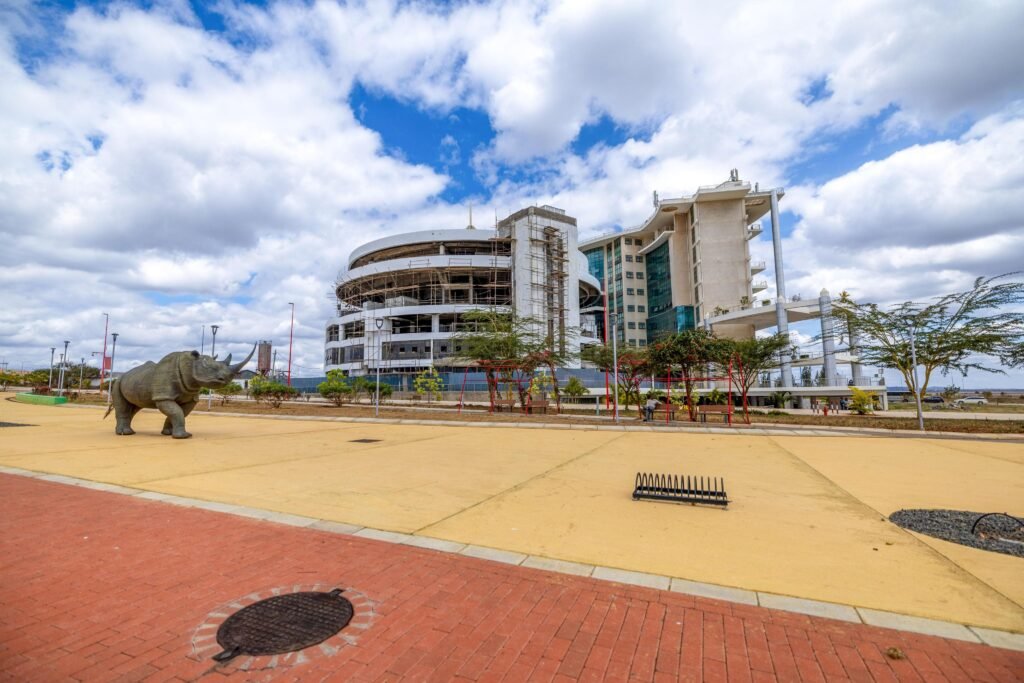
The 5,000-acre development is incorporating cycling lanes, pedestrian walkways, electric transport and public green spaces into its master plan, as it moves beyond basic infrastructure towards creating an environment for businesses, research institutions and residential communities.
At the centre of the plan is a 15-minute neighbourhood concept, under which everyday services and amenities are intended to be within walking distance. The approach is designed to reduce unnecessary vehicle journeys while making the city more accessible to people who walk, cycle or use public transport.
John Paul Okwiri, chief executive officer of the Technopolis Development Authority, said alternative transport options had been considered from the early stages of the city’s planning.
“We are also looking at using electric vehicles, electric bikes. That is what has been encouraged from the planning of the city,” he said.
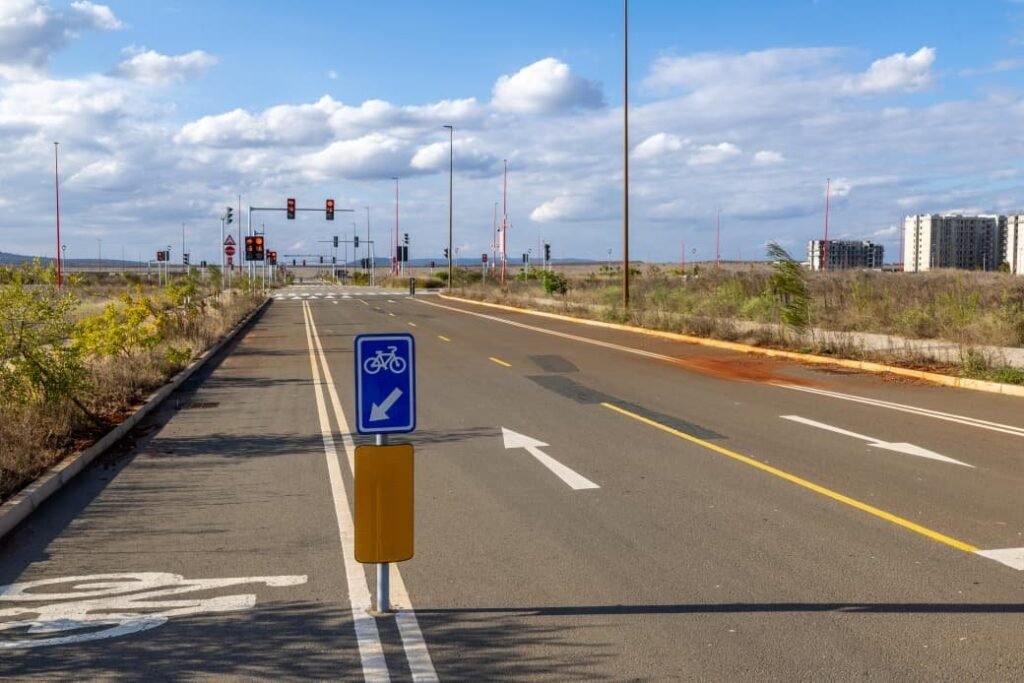
The transport network includes more than 40 kilometres of internal roads, with walking paths, dedicated cycling lanes and a corridor intended for electric buses to move people around the development.
Brian Chage Mwaura, a quantity surveyor at the authority, said the road system had been structured to serve the different activities planned for the technopolis, including commercial, residential and industrial zones.
The transport strategy is part of a wider attempt to make Konza a functioning urban centre rather than a collection of technology facilities and commercial buildings.
Konza’s green-city model meets national transport debate
The focus on walking and cycling comes as Kenya considers changes to its road infrastructure laws to improve conditions for non-motorised transport users.
The National Assembly passed the Kenya Roads (Amendment) Bill, 2024, sponsored by Samburu West MP Naisula Lesuuda. The proposed legislation seeks to require road agencies, including the Kenya National Highways Authority, Kenya Rural Roads Authority and Kenya Urban Roads Authority, to provide facilities such as pedestrian walkways, crossings and cycling lanes on designated roads.
The Bill also proposes clearer definitions for cycling lanes, pedestrian walkways and non-motorised vehicles, as well as provisions for enforcing the use of dedicated facilities.
However, the Bill has not yet become law. It has proceeded to the Senate for consideration, meaning the proposed national requirements remain subject to the legislative process.
At Konza, the green transport ambition is complemented by restrictions on building coverage. Developers are required to limit buildings to no more than 60 per cent of their allocated plots, leaving the remaining space for landscaping, trees and other open areas.
Public parks and recreational spaces are also incorporated into the master plan, with the intention of balancing commercial development with the environmental and social needs of future residents.
Infrastructure designed to attract round-the-clock investors
Beyond its urban design, Konza is positioning itself as a destination for businesses capable of operating continuously.
Okwiri said a 24-hour operating environment would be necessary to support investors and maintain the pace of development as the city expands.
“We are building Africa’s Silicon Savannah, so it means that we have to operate 24-7 in order to facilitate our investors, in order to ensure that the development of the technopolis continues until when we’ll be able to reach full build-out,” he said.
The government is seeking private investors to establish factories, commercial facilities and other enterprises that can take advantage of infrastructure already installed at the site.
These include internal roads, electricity distribution, solid-waste management and wastewater reclamation systems. The allocation of land for specific uses is also intended to give investors a clearer framework for setting up operations.
One of the major selling points is the existing electricity distribution network.
Vincent Oyola, an engineer supporting Konza’s daily operations, said the development had installed a 66 kV sub-distribution station equipped with gas-insulated switchgear and transformers to lower voltage for distribution across the city.
The system feeds 56 distribution cabins serving different sections of the development.
“So once an investor buys a parcel, it is plug-and-play,” Oyola said.
He added that Phase One had adequate electricity capacity to meet its projected demand, reducing the need for incoming investors to begin by establishing basic power distribution infrastructure.
Research institutions and factories expected to drive jobs
Konza’s economic model also relies on connecting research, education and manufacturing to commercial activity.
The National Data Centre is operational and has received Tier III certification from the Uptime Institute, supporting the government’s digital transformation agenda.
The Kenya Advanced Institute of Science and Technology has also been completed and operationalised as a graduate-level research institution focusing on science, technology, engineering and mathematics.
The Open University of Kenya and Riara University are among the institutions operating within the technopolis, creating opportunities for collaboration between academia, government and industry.
Manufacturing is expected to provide another major source of economic activity.
Investor Lucky DJX is establishing an export processing zone whose initial manufacturing focus includes textiles and electronics, with planned production also covering solar products and accessories.
According to Okwiri, the investor intends to recruit up to 10,000 workers. The figure is a projected employment target and does not represent jobs already created.
The authority is also working towards expanding the city’s residential capacity to support the expected growth in its workforce and population.
Okwiri said there was a commitment for 10,000 housing units, with the first 1,000 expected to be ready by November 2026.
The housing programme is intended to accommodate workers, students, researchers and other people expected to live and work in the technopolis.
The test will be turning infrastructure into a living city
Konza’s development is moving from the early phase of preparing land and installing underground utilities towards constructing facilities and attracting businesses that can generate sustained economic activity.
Okwiri described the shift as a natural progression in building a city, noting that underground infrastructure had to be established before major above-ground development could take place.
“You know, before you go up, you must go down when you are developing. So you go down first, you establish the foundation, and then now you start going up,” he said.
The next stage will depend on whether the government can attract enough private investment to turn the roads, power systems, research facilities and planned industrial zones into active economic and residential spaces.

