


LAS VEGAS, United States — Sean “Diddy” Combs could face renewed scrutiny and potentially criminal charges over the 1996 murder of rapper Tupac Shakur if prosecutors secure a conviction against Duane “Keffe D” Davis, legal sources have suggested.
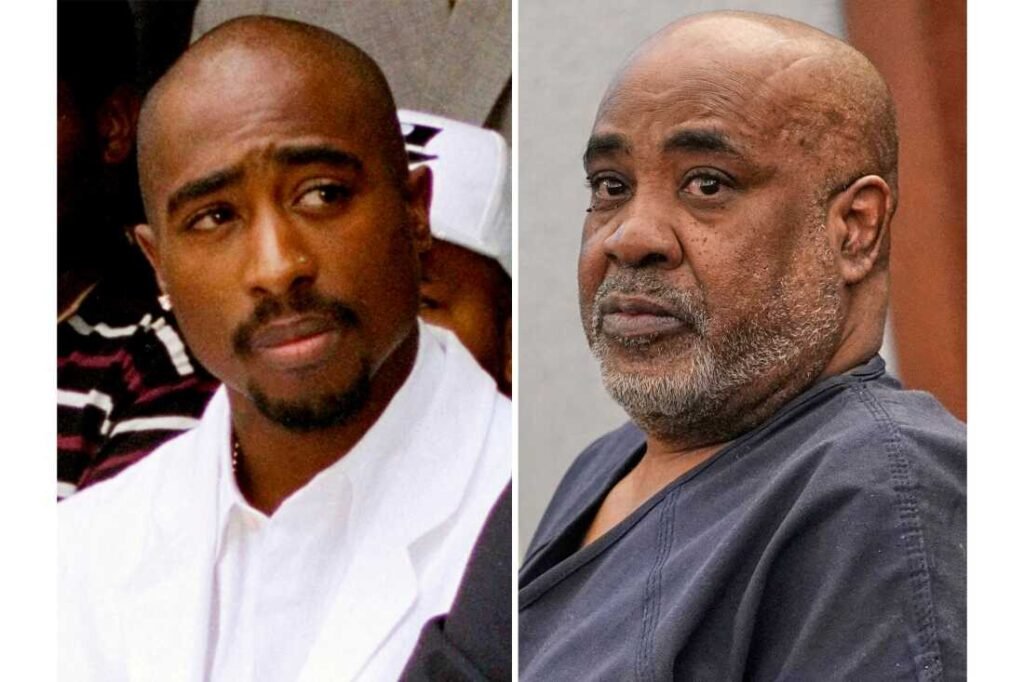
Davis is currently on trial in Las Vegas over allegations that he helped orchestrate the drive-by shooting that killed Shakur nearly three decades ago.
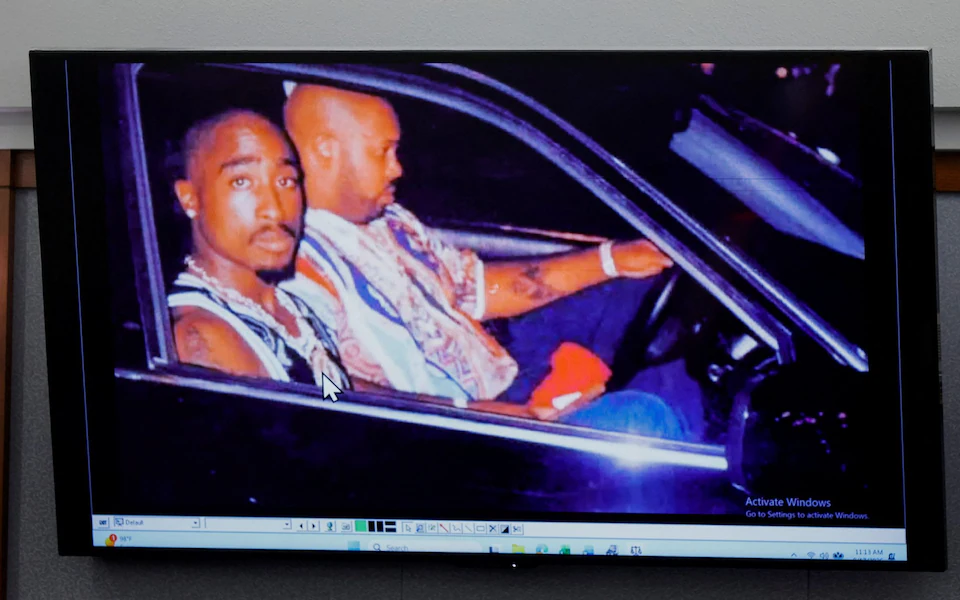
Prosecutors allege that Davis was involved in a plot to retaliate against Shakur after the rapper and members of his entourage assaulted Davis’s nephew, Orlando Anderson, during a confrontation in Las Vegas on the night of September 7, 1996.
The case has remained one of the most notorious unsolved murders in American music history.
Allegations involving Diddy
A potentially significant element of the prosecution’s case is Davis’s previous statements about the killing.
Prosecutors are relying partly on statements Davis made to police, in documentary interviews and in a memoir. They allege that he was inside the Cadillac involved in the shooting and later handed the gun to the person who fired the fatal shots.
A secret police recording made in 2008, which has been admitted as evidence, allegedly captures Davis describing how members of the South Side Compton Crips hunted down Shakur following the earlier confrontation.
During the recording, Davis also allegedly claimed that Combs offered him $1 million to kill Shakur.
Combs has previously rejected the allegation, describing claims that he was involved in the killing as “pure fiction and completely ridiculous.”
The prosecution has not charged Combs in connection with Shakur’s murder, and authorities have not publicly identified him as a suspect in the case.
A Davis conviction could change the picture
Legal sources cited in reports say a conviction could give prosecutors greater grounds to investigate Davis’s allegations against Combs.
A source close to the Clark County District Attorney’s Office told The Telegraph that a conviction would potentially “give a green light” to investigate or take action against Combs.
The source also said prosecutors had deliberately avoided bringing Combs’s alleged role into the current proceedings because doing so could confuse jurors and distract from the case against Davis.
Clark County District Attorney Steve Wolfson has not publicly confirmed whether prosecutors intend to pursue charges against Combs following the trial.
For now, the allegations remain allegations, and a Davis conviction would not by itself establish Combs’s criminal liability.
Defence challenges Davis’s credibility
Davis’s defence team has strongly disputed his previous accounts of the murder.
During opening arguments, defence attorney Michael Sanft argued that Davis had repeatedly exaggerated his involvement in the killing and that investigators had not charged him earlier because they knew he was not telling the truth.
Sanft reportedly highlighted the issue of credibility during his opening statement, arguing that Davis had made sensational claims to enhance his notoriety.
The defence maintains that Davis’s statements should not be treated as reliable evidence of what happened on the night Shakur was shot.
The prosecution, however, contends that Davis’s accounts are consistent with his involvement in the conspiracy.
The jury will ultimately have to determine whether prosecutors have proved the allegations against him beyond a reasonable doubt.
Tupac and Biggie killings defined hip-hop rivalry
Shakur’s murder occurred during an intense rivalry between artists and record labels associated with the US East and West Coast hip-hop scenes.
Shakur was closely associated with Suge Knight’s Death Row Records, while Combs headed New York-based Bad Boy Records, which represented Christopher Wallace, better known as The Notorious B.I.G. or Biggie Smalls.
The rivalry escalated following a 1994 robbery and shooting involving Shakur in New York. Shakur subsequently accused Combs and associates of knowing about or being involved in the attack, allegations Combs denied.
The release of Wallace’s song Who Shot Ya? further intensified tensions, although Combs and Wallace denied that the song was intended as a response to Shakur’s shooting.
Shakur was killed in Las Vegas in September 1996. Wallace was murdered in Los Angeles approximately six months later.
The two deaths became defining tragedies of 1990s hip-hop and remained unresolved for decades.
Witnesses linked to Combs expected in court
Although Combs is not expected to testify, people connected to him are expected to feature during Davis’s trial.
The witness list reportedly includes a former Bad Boy Records business associate and a former Combs bodyguard.
Suge Knight, who was a central figure in Death Row Records and was with Shakur when the shooting occurred, is also expected to feature in the proceedings. Knight is currently serving a 28-year sentence following a fatal hit-and-run conviction.
The prosecution has already referred to Combs in court in the context of the relationship between the music industry figures, although the allegation that he offered Davis money to kill Shakur was not raised during the prosecution’s opening statement.
Combs already serving prison sentence
The renewed attention on Combs comes after his high-profile federal criminal case.
Combs was prosecuted in 2025 on charges including racketeering and sex trafficking. He was acquitted of the most serious charges but convicted on lesser prostitution-related offences.
He was subsequently sentenced to four years and two months in prison.
Legal experts cited in reports have suggested that his existing legal troubles could make any new investigation particularly significant.
Las Vegas attorney Sam Mirejovsky said a prosecutor could see an investigation involving Combs as an attractive high-profile case, while acknowledging that the available evidence concerning his alleged involvement in Shakur’s murder currently appears limited.
Former FBI agent Phil Carson, who worked on the investigation into Wallace’s murder, has also suggested that people previously close to Combs could potentially provide new information as his legal circumstances change.
Evidence remains the key question
Despite the renewed speculation, significant legal hurdles would have to be overcome before Combs could face charges over Shakur’s murder.
A conviction against Davis would establish his criminal liability only if prosecutors prove their case against him. It would not automatically prove that Combs participated in the killing or commissioned it.
Prosecutors would need independent evidence establishing probable cause and, ultimately, enough admissible evidence to prove any charges against Combs beyond a reasonable doubt.
Defence attorney Sam Bassett said trials can sometimes produce information that was not available during an initial police investigation, particularly when witnesses are questioned under oath.
For nearly 30 years, the murder of Tupac Shakur has generated theories, allegations and conflicting accounts. Davis’s trial could now provide prosecutors with their clearest opportunity yet to test one of the most consequential claims surrounding the case — and potentially determine whether the investigation extends beyond the man currently in the dock.

