


NAIROBI, Kenya — When a mother asked her 10-year-old son to read an inscription on a car a few metres away, she expected an easy answer.
Instead, the boy squinted, leaned forward and blinked repeatedly. He could not make out the words.
His mother could read them clearly from the same distance.
The discovery prompted her to take him for an eye examination at a clinic in Nairobi. The diagnosis was myopia, commonly known as short-sightedness, with a prescription of -3.00 in both eyes.
The child, then in Grade Five, had also been experiencing itchy eyes.
The family had not previously considered eyesight a major concern. Like many children his age, he had been using a phone from an early age, partly for entertainment and partly because it kept him occupied while his mother worked.
The family cannot say whether screen use caused his myopia, but his experience reflects a growing concern among eye specialists: more Kenyan children are presenting with short-sightedness, eye fatigue and dry eyes.
Another parent noticed similar changes in a teenage daughter after she moved to an international school where computers and screens were extensively used.
Although there was already a family history of eye problems, the teenager began complaining that she could no longer clearly see projections from the back of the classroom.
Her teacher eventually advised the family to seek an eye examination. She was diagnosed with dry eyes and later required glasses.
These are not isolated experiences.
Across homes, schools and public spaces, children are spending increasing amounts of time looking at phones, tablets, computers and televisions, often for hours without looking away.
And specialists say the consequences are increasingly showing up in eye clinics.
Thousands Of Kenyan Children Struggle To See Clearly
About 86,000 school-going children in Kenya live with uncorrected refractive errors, according to a report by the International Agency for the Prevention of Blindness and Seva Foundation released ahead of World Sight Day.
The report estimated that these children collectively lose the equivalent of about 25,000 full school years annually because they struggle to see clearly in class.
The consequences can include missed lessons, poor classroom performance and children repeating grades because their vision problems remain undiagnosed.
Research also points to significant differences between urban and rural children.
A 2024 study published in the African Journal of Empirical Research reported myopia prevalence of 15.6 per cent among children in urban Nairobi, compared with 1.7 per cent in rural Makueni.
In Kakamega, a screening of 3,343 schoolchildren found 1.45 per cent were myopic, while a study in rural Kajiado recorded a prevalence of three per cent.
An earlier Nairobi study found significant refractive errors in 10.2 per cent of children, with myopia accounting for 92 per cent of those cases.
Lions Clubs, which conduct free eye screenings in public schools, have also reported that a significant proportion of pupils screened have previously undetected vision problems.
Globally, myopia affects about 36 per cent of the population, with researchers warning that the proportion could rise substantially by 2050.
Specialists See More Children With Eye Problems
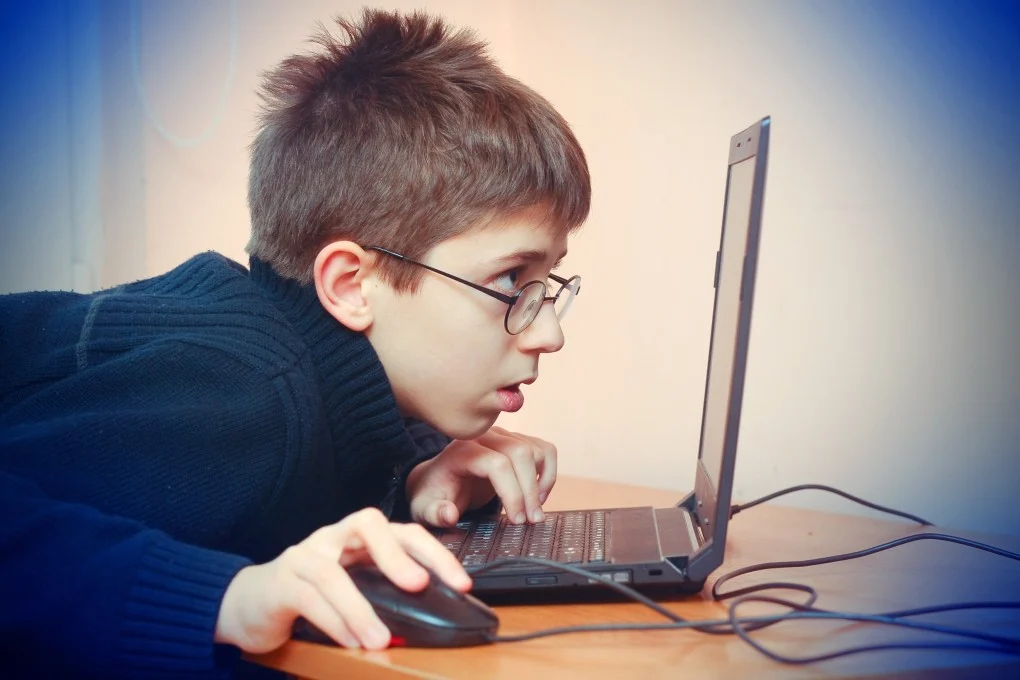
Paediatric ophthalmologist Dr Hellen Kirubi says there has been a noticeable increase in children presenting with eye fatigue, sensitivity to light and short-sightedness.
“Definitely there is a spike,” she says, comparing current cases with those seen about a decade ago, particularly before the Covid-19 pandemic.
She says prolonged screen use is associated with symptoms including eye fatigue and dryness, while recent international research has also found an association between screen exposure and the development of myopia.
Optometrist Dr Victor Opiyo, who specialises in myopia control among children and teenagers, says the problem is particularly noticeable in urban and peri-urban areas.
He attributes part of the difference to children’s lifestyles.
Children living in towns, he says, tend to spend more time indoors and therefore receive less exposure to natural outdoor light. At the same time, they increasingly spend their indoor hours using electronic devices.
How Outdoor Light Helps
Opiyo explains that the early years of childhood are particularly important for normal eye development.
During what he describes as the eye’s “plastic stage”, roughly from birth to eight years, the eye is developing and adjusting its length so that images can focus properly on the retina.
Most children are born slightly long-sighted, which is normal. As they grow, a process known as emmetropisation allows the eye to develop towards normal focus.
According to Opiyo, exposure to natural outdoor light plays an important role in this development.
Prolonged periods of close-up activity, including reading, scrolling and gaming, have been associated with an increased risk of myopia, particularly when children spend little time outdoors.
“When children play outside, sunlight triggers hormones at the back of the eye, dopamine and others, which stop that elongation,” he explains.
He recommends that children spend at least two hours outdoors each day as part of efforts to reduce the risk of excessive eye elongation associated with myopia.
The urban-rural difference, he says, may partly reflect these lifestyle patterns, with children in rural areas generally spending more time outdoors.
Why Girls May Face Higher Risk
Opiyo also points to differences in how boys and girls spend their time.
He says adolescent girls may be more likely to develop myopia because they can spend more time indoors, while boys may be encouraged to participate in outdoor activities more frequently.
Cultural expectations, he says, can therefore influence children’s exposure to outdoor light.
Screens Can Also Cause Dry Eyes
Myopia is not the only eye problem specialists are seeing.
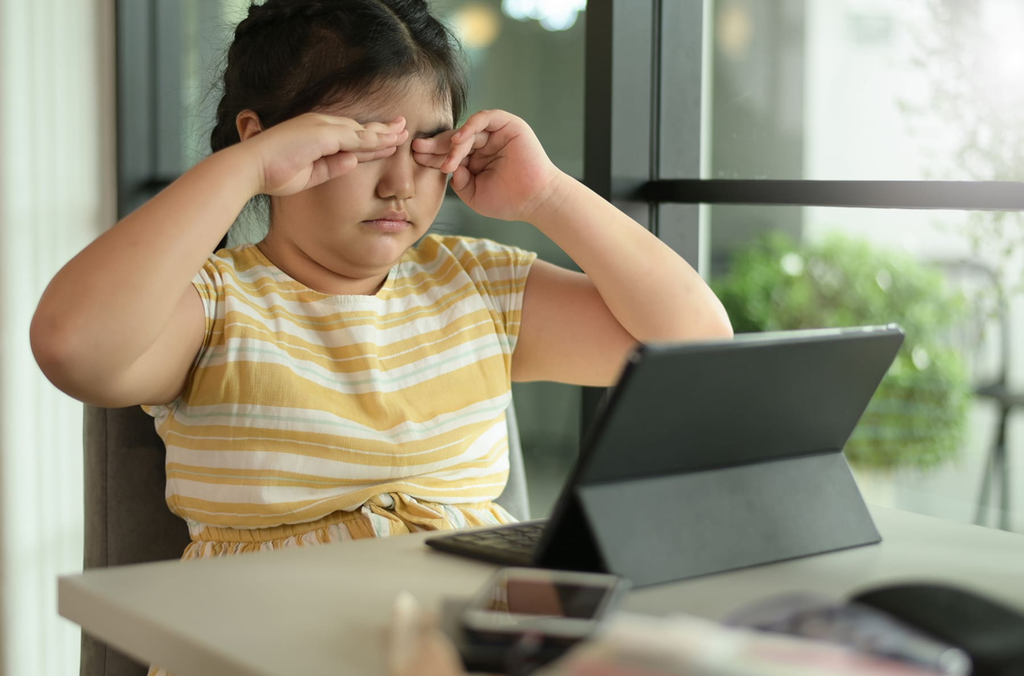
Dry eyes are also becoming increasingly common among children who spend long periods staring at screens.
The reason is simple: people blink less when concentrating on a screen.
Normally, a person blinks about 15 times a minute. During prolonged screen use, this can fall to around six or seven blinks a minute.
Reduced blinking means tears evaporate more quickly, leaving the surface of the eye less adequately lubricated.
Dr Kirubi says children may complain of burning eyes, sensitivity to light or tired eyes.
Some may simply become uncomfortable without being able to explain why.
“The reason is when they are on the screens, they tend to stare a lot, and this staring makes their tears evaporate faster than normal because they are not blinking as often as they need to,” she explains.
The 20-20-20 Rule
One simple measure recommended by eye specialists is the 20-20-20 rule.
For every 20 minutes spent looking at a screen, a child should look away for at least 20 seconds at an object about 20 feet, or six metres, away.
The break allows the eyes to relax and encourages normal blinking.
Parents should also pay attention to how children use their devices.
Phones and tablets are often held much closer to the face than televisions or desktop monitors, increasing the amount of near work the eyes perform.
Dr Kirubi recommends avoiding homework on a phone where possible and using a laptop or desktop computer instead.
How Much Screen Time Is Too Much?
For children younger than two years, Dr Kirubi recommends avoiding screen exposure altogether, including background television.
For children aged two to five, she recommends no more than one hour a day, preferably educational content divided into shorter sessions.
For children aged five to 12, she recommends keeping screen use to about one hour a day where possible.
She also advises parents to avoid screens for at least an hour before bedtime because exposure to blue light from electronic devices can interfere with melatonin production and delay sleep.
The distance from the screen matters too.
A television or desktop monitor positioned at an appropriate distance is generally preferable to a phone held close to the face for extended periods.
Watch For These Warning Signs
Children do not always know that their vision is abnormal.
That makes parents and teachers important in identifying problems early.
Dr Kirubi says parents should seek an eye examination if a child:
- Rubs their eyes frequently, particularly after screen use.
- Squints or closes one eye when trying to see.
- Moves unusually close to the television, books or phone.
- Copies work from classmates rather than the blackboard.
- Complains that bright light hurts, or frequently reports burning, tired eyes or headaches.
- Struggles to see things at a distance despite being able to read books or other objects up close.
Teachers can be particularly useful in identifying children with undiagnosed vision problems.
A pupil who copies correctly from a textbook but consistently makes mistakes when copying from the blackboard may simply be unable to see the board clearly.
Glasses Do Not Make Children’s Eyes Worse
Eye specialists also want to dispel a common misconception that children are too young to wear glasses.
Opiyo says spectacles are a medical tool used to correct vision and should not be avoided because of a child’s age.
He says children, including very young babies, may require glasses when prescribed by an eye-care professional.
“There is no age too young for glasses,” he says.
Early detection and correction can help children see clearly during crucial years of learning and development.
Outdoor Time May Be The Best Prescription
Reducing screen exposure is only part of the solution.
Dr Opiyo advises parents to encourage children to spend more time outdoors while maintaining healthy screen habits.
Parents should also consider lighting, viewing distance and posture because prolonged device use can contribute to neck and back pain, headaches and general discomfort.
Blue-light glasses may improve comfort for some users, he says, but they should not be viewed as a way of preventing myopia.
For children, the more fundamental measures are regular eye examinations, sensible screen habits and sufficient time outdoors.
For every 20 minutes of screen use, children should look away for 20 seconds. And, where possible, they should spend about two hours outdoors each day.
For parents, the lesson is increasingly clear: when a child squints, moves closer to the screen, complains of tired eyes or struggles to read the blackboard, it should not simply be dismissed as tiredness.
It may be time for an eye examination.

