


The Miss South Africa Organisation is facing mounting criticism following its November 14, 2026 finale, with viewers questioning the crown presented to new winner Tiyani Makamu, the revised prize package and the overall production of the competition.
Makamu, 27, from Bronkhorstspruit in Gauteng, won the title at the Sandton Convention Centre, succeeding Qhawekazi Mazaleni.
Cwenga Koyana Kotu-Rammopo finished as First Princess, while Lesego Khumo Nyathela took the Second Princess position.
Although the competition celebrated Makamu’s victory and showcased South African fashion, music and creative talent, conversations after the event focused largely on the organisation’s decisions and the presentation of the finale.
The most visible criticism centred on the gold-coloured crown placed on Makamu’s head. Viewers questioned its appearance, with some comparing it to a Burger King paper crown and an inexpensive novelty accessory. Others described the headpiece as homemade and questioned its craftsmanship.
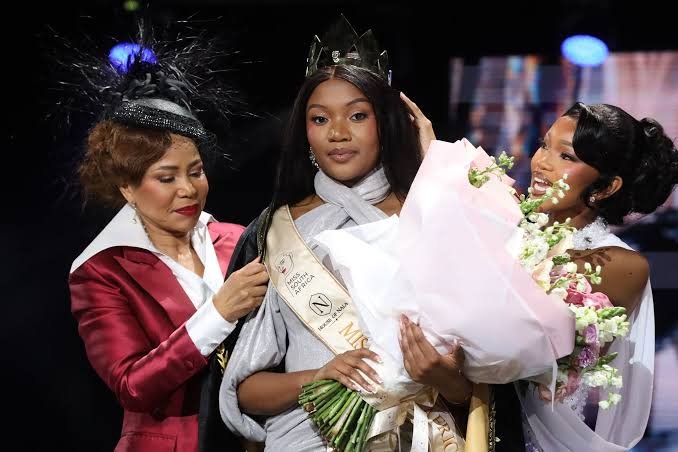
The reaction also revived questions about the absence of the Mowana Crown, the diamond-encrusted design that had become closely associated with Miss South Africa over the previous three years.
Natasha Joubert first wore the Mowana Crown after winning in 2023. Mia Le Roux wore it in 2024, followed by Mazaleni in 2025.
The jewellery house behind the design, Nungu Diamonds, confirmed that its sponsorship agreement with the Miss South Africa Organisation had not been renewed for 2026.
In a statement, the company said negotiations continued into the final days before the finale but the parties failed to reach a mutually beneficial agreement.
Nungu Diamonds also revealed that it had offered the organisation permission to use the Mowana Crown during the ceremony as a goodwill gesture, despite the sponsorship dispute.
However, the jewellery house said the decision not to use the crown rested solely with the Miss South Africa Organisation.
The revelation intensified criticism, with viewers questioning why organisers presented Makamu with a temporary headpiece when they could have used the familiar Mowana design.
Organisers Explain the Temporary Crown
The Miss South Africa Organisation responded to the criticism on November 15, clarifying that the headpiece presented during the finale was a temporary ceremonial crown.
Organisers said they were still preparing the official Miss South Africa crown and wanted to involve the public in the process of unveiling the permanent design.
They argued that the crown should reflect the identity, aspirations and values of the people represented by the reigning queen. The organisation also acknowledged that it should have communicated the arrangement before the finale.
“While we stand by the vision behind this decision, we accept that the lack of context created unnecessary uncertainty,” it said.
The temporary headpiece, named Imbokodo, represents women’s strength and forms part of the pageant’s theme, From Imbokodo to Diamond.
Speaking to Clement Manyathela on 702, spokesperson Zawadi Dlamini defended the decision but admitted that the organisation could have handled communication better.
“Could we have communicated it in a way that results in less uncertainty? Perhaps,” she said.
During the interview, Manyathela challenged the appearance of the headpiece, saying: “It seemed like you went into a crazy store and you bought like a crown for like R24 and you put it on a Miss SA.”
Dlamini insisted that the organisation was not abandoning the traditional appeal of the competition.
“We don’t want to divorce beauty from this platform,” she said, adding that the pageant wanted to place greater emphasis on the responsibilities that follow the crowning.
“The real work starts now,” she said.
Prize Changes Raise More Questions
The crown is not the only element of the 2026 finale that has attracted public scrutiny.
Viewers have also questioned the revised prize package, which no longer includes the luxury car and accommodation benefits associated with previous Miss South Africa winners.
In earlier editions, titleholders received the use of a sponsored Mercedes-Benz and a furnished luxury apartment during their reign.
Under the 2026 structure, Makamu will receive a guaranteed R1 million cash award and access to up to R500,000 through the organisation’s Impact Fund.
The organisation has clarified that the additional R500,000 is not a personal cash prize or an automatic payment to the winner. It is a programme fund administered by the organisation and released against approved projects, budgets and performance milestones.
The first princess will receive R250,000 and access to up to R150,000 through the Impact Fund, while the second princess will receive R150,000 and access to up to R100,000.
All 12 finalists will also receive cash awards and participate in leadership development and community-impact programmes.
Miss South Africa has defended the revised structure as part of its shift towards women’s leadership, entrepreneurship and social impact.
In its official statement, the organisation said its responsibility extended beyond crowning a woman who commands admiration on stage. It wants the titleholder to champion important causes and advance opportunities for women and young people.
However, the removal of the traditional luxury benefits has prompted questions about whether the new approach has reduced the glamour and material rewards historically associated with the title.
Production Complaints Overshadow the Finale
The criticism has extended beyond the crown and prize package to the execution of the event.
Viewers and commentators have raised concerns about sound quality, stage arrangements, contestants’ speeches and their preparation for the live show.
Some also questioned the visibility of the stage from sections of the Sandton Convention Centre, while others criticised aspects of the musical performances and the presentation of the finalists.
The organisation’s initial response addressed the crown, judging process and its broader vision, but did not comprehensively respond to the production complaints.
It nevertheless defended the judging panel, saying judges assessed the 12 finalists independently against established criteria.
The organisation also stood firmly behind Makamu, saying she deserved to begin her reign with dignity and support.
In her first remarks after winning, Makamu said her mandate would focus on empowering women entrepreneurs by improving access to business opportunities, development and funding.
“My mandate as Miss South Africa is to empower women entrepreneurs by bridging the gaps in access to opportunities, business development and funding,” she said.

