


NAIROBI, Kenya — TikTok has started asking Kenyan content creators to submit their tax and residency details as the platform moves to comply with Kenya’s withholding tax requirements for digital content income.
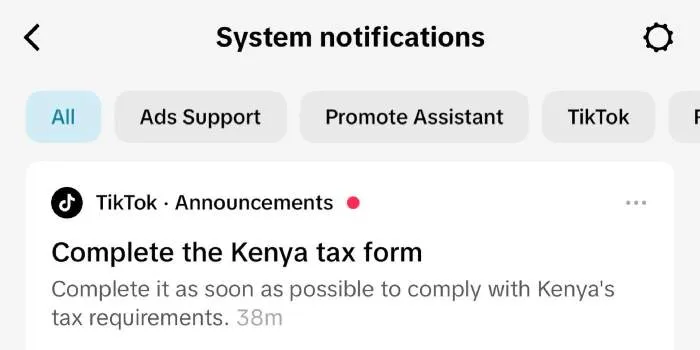
A notification sent through “TikTok Announcements” directs creators to complete a Kenyan tax form and says the information will help TikTok and local tax authorities verify their tax responsibilities.
The move could see eligible creator payouts subject to withholding tax, although TikTok has not announced when deductions will begin or specified which individual payout programmes will be affected.
TikTok Tax Form Asks for Residency Details
The form requires creators to provide their name, email address, country of residence and residential status.
Creators are asked to identify themselves as either residents or non-residents of Kenya. A residential address is also requested, although providing the address is reportedly optional.
The residency classification is significant because Kenya’s tax framework provides for different withholding rates for digital content monetisation.
The Kenya Revenue Authority (KRA) lists withholding tax on digital content monetisation at 5 per cent for residents and 20 per cent for non-residents, effective from July 1, 2023.
How the 5pc and 20pc Tax Works
Kenya introduced withholding tax on digital content monetisation through the Finance Act 2023, which amended the Income Tax Act to include digital content monetisation among payments subject to withholding tax.
The tax framework covers various forms of digital content income, including advertising, sponsorships, affiliate commissions, subscriptions, merchandise and logo licensing, membership programmes, licensing of photographs or music and crowdfunding commissions.
For resident creators, the applicable withholding rate is 5 per cent, while non-residents are subject to 20 per cent.
KRA says withholding tax is deducted at source by the payer and remitted to the tax authority. For resident taxpayers, withholding tax is generally an advance payment rather than the final income-tax liability.
This means a creator may receive a payout after the applicable withholding has been deducted but must still declare the income when filing the relevant annual tax return.
TikTok Has Not Given Start Date
While TikTok has begun collecting tax information, the platform has not publicly announced the date when withholding will start.
It has also not clarified the precise TikTok monetisation programmes or payout categories to which the deductions will apply.
The platform’s notification instead asks creators to complete the tax form as soon as possible.
That leaves questions over whether all TikTok monetisation income will be subject to the same withholding treatment and how different types of creator earnings will be classified.
What TikTok Creators Earn in Kenya
Kenyan creators currently have access to several TikTok monetisation options, including LIVE Gifts, Video Gifts, subscriptions and the Work With Artist programme, subject to platform eligibility requirements.
Other TikTok products, including the Creator Rewards Programme, TikTok Shop, Creator Marketplace and Pulse, have not been launched for Kenyan creators.
The distinction is important because not every form of income associated with a creator’s TikTok activity necessarily represents the same type of payment.
TikTok has yet to publicly explain how its reported tax-compliance process will treat each monetisation stream.
Digital Platforms Face Greater Tax Compliance Obligations
The TikTok notification comes after Kenya expanded obligations on digital marketplace and platform operators.
The changes were intended to make platforms responsible for collecting applicable taxes on payments covered by the law, including where the platform operator is based outside Kenya.
KRA’s withholding tax guidance states that the payer is responsible for deducting the applicable tax and remitting it to the Commissioner. A withholding certificate is issued after the tax has been remitted.
The development follows similar tax-compliance measures affecting other major digital platforms used by Kenyan creators.

PHOTO/Courtesy
Creators Face Questions Over Payouts
For creators, the immediate concern is how the new compliance process will affect the amount they receive from TikTok.
A withholding deduction reduces the amount paid out at the point of payment, although the treatment of the withheld amount depends on the creator’s tax status and applicable income-tax obligations.
Creators will therefore need to keep records of their TikTok earnings and any withholding certificates or payment statements issued by the platform or tax authorities.
The Digital Content Creators Association of Kenya (DCCAK) has separately raised concerns over the broader 5 per cent withholding-tax framework and has called for engagement between creators, the Treasury and KRA.

