




NAIROBI, Kenya – Political analyst Peter Kagwanja has credited the late former Prime Minister Raila Odinga with playing a decisive role in securing the passage of Kenya’s 2010 Constitution, recalling how he helped steer the referendum campaign while hospitalised at Nairobi Hospital.
Kagwanja said Raila remained actively involved in campaign strategy despite his hospitalisation, using opinion poll findings to guide political mobilisation and efforts to win support for the proposed Constitution, particularly in the Mount Kenya region.
Speaking during a local radio interview on Thursday, October 15, 2026, Kagwanja said he believed the country would not have secured the Constitution without Raila’s intervention.
“But then he was a man of power, as I said. And even the Constitution, and I can tell you this: without Raila Odinga, we would not have gotten this Constitution. And he did not get it when he was standing. He got it in his hospital bed. At Nairobi Hospital,” Kagwanja said.
He recalled meeting Raila at the hospital to discuss opinion poll results and possible interventions as the referendum campaign gathered momentum.
According to Kagwanja, Raila was willing to adjust his political preferences after considering public sentiment, particularly on the system of government Kenyans wanted.
Mount Kenya Support Prompted Fresh Campaign Strategy
Kagwanja said an opinion poll conducted during the referendum campaign showed support for the proposed Constitution in Mount Kenya stood at an average of 52 per cent, with Gatundu recording 47 per cent and Kangema 48 per cent.
The figures raised concerns among campaign strategists because of the region’s potential influence on the referendum outcome.
Kagwanja said Raila asked what could be done to improve support, prompting discussions on mobilising politicians, deploying campaign resources and reaching influential leaders in the region.
He said those discussions contributed to the formation of the Remuru One initiative, which sought to rally Mount Kenya behind the proposed Constitution.
The campaign also sought to bring on board political leaders who had been reluctant to support the proposed law. Then President Mwai Kibaki was persuaded to take a more active role in campaigning for its adoption.
Kagwanja said Kibaki’s decision to leave State House and participate in public campaigning was among the developments that followed the strategy discussions.
“Within a period of 20 days, the opinion poll had moved from that average of 52 per cent in Mount Kenya … to 70 per cent, Michuki had come to the movement, Kamau, Jamlick Kamau and all the rebels in Mount Kenya were in it,” he said.
He attributed the reported shift to political mobilisation, campaign resources and efforts to bring influential regional leaders into the campaign.
Why Raila Reconsidered His Preferred System Of Government
Kagwanja also recalled disagreements during the constitutional negotiations over whether Kenya should adopt a parliamentary or presidential system of government.
He said Raila strongly favoured a parliamentary arrangement, believing that a Prime Minister would better reflect the will of the people.
However, Kagwanja said the former Prime Minister eventually reconsidered his position after listening to close associates, including media proprietor S.K. Macharia, and weighing public opinion in favour of a directly elected president.
“He also listened to the mood of the people. People wanted to have a directly elected president, the sovereignty of the people. And it was put in the Constitution: ‘We the People’,” Kagwanja said.
He added that Raila was willing to reconsider his preferred arrangement despite his own political ambitions and support for a Prime Minister-led system.
Kagwanja described Raila as a pragmatist who could compromise when circumstances required it, saying the disagreements over the system of government were philosophical rather than ideological.
Constitution Reshaped Kenya’s Governance
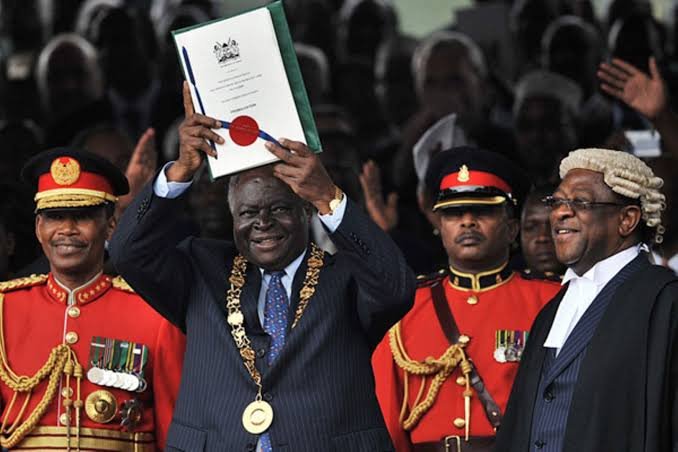
Kenya approved the Constitution in a national referendum held on August 4, 2010, ushering in a new governance framework that included devolved government, an expanded Bill of Rights and changes to the structure and accountability of state institutions.
The Constitution also established a presidential system in which the President is directly elected by voters.
His remarks add to the tributes and reflections on Raila’s political legacy as Kenya marks one year since his death, with renewed attention on his contribution to constitutional reform and the country’s democratic development.

