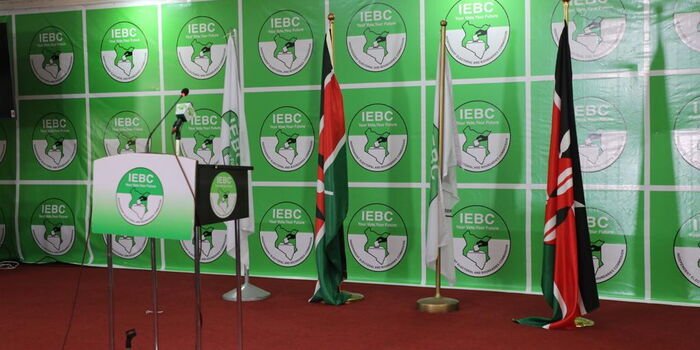
NAIROBI, Kenya – The Independent Electoral and Boundaries Commission (IEBC) has rejected allegations of corruption, tender manipulation and voter suppression raised by Democracy for Citizens Party (DCP) leader Rigathi Gachagua, insisting that the procurement of technology for the 2027 General Election remains open and transparent.
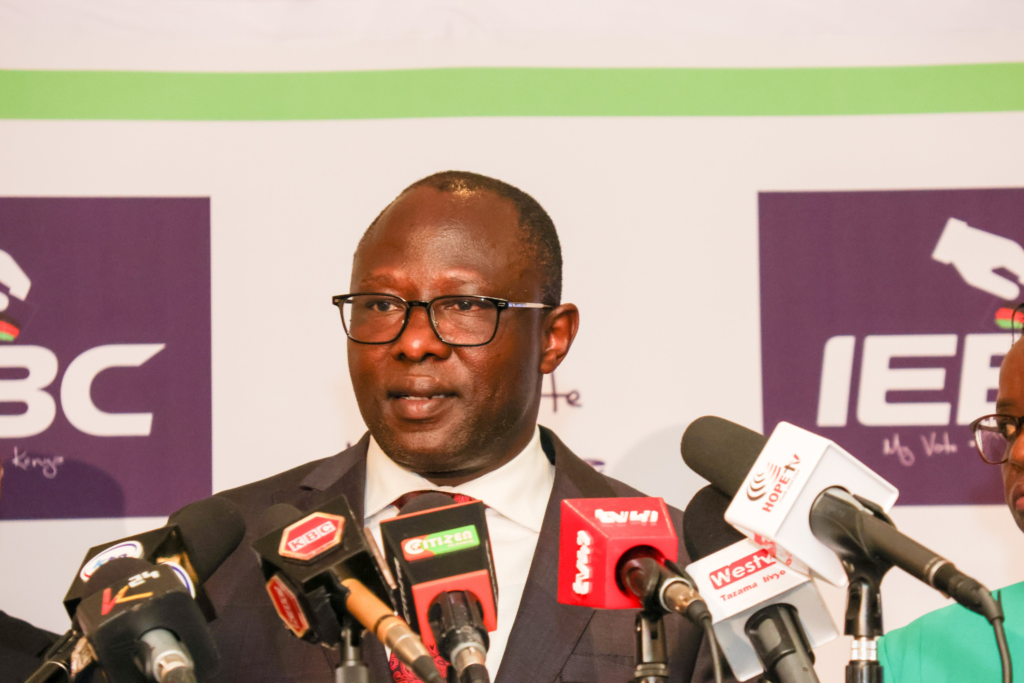
In a strongly worded statement issued on Thursday, August 27, 2026, IEBC Chairperson Erastus Edung Ethekon dismissed Gachagua’s allegations as false, unsubstantiated and politically motivated.
The Commission said it remains focused on preparing for the August 10, 2027 General Election and will not be influenced by political pressure, threats or what it described as malicious propaganda.
IEBC’s response came a day after Gachagua alleged that the procurement of the Integrated Elections Management System (IEMS) had been predetermined in favour of South Korean election technology company Miru Systems.
The Commission has previously denied that its specifications were designed to favour any particular supplier.
IEBC challenges Gachagua over house allegations
The Commission strongly rejected claims that politicians had purchased a house for Ethekon to influence his decisions.
IEBC said the allegation initially placed the value of the alleged property at Sh80 million, before the figure was later raised to Sh200 million.
The electoral body challenged Gachagua to provide evidence and submit it to the Ethics and Anti-Corruption Commission (EACC) for investigation.
IEBC said the evidence should include the alleged property’s location, sale and transfer documents, payment receipts and details of both the buyer and seller.
The Commission warned that allegations against its leadership should be supported by evidence and raised through the appropriate legal channels.
It accused Gachagua of attempting to undermine the credibility of the electoral body through what it described as misinformation and a smear campaign targeting the Chairperson, Vice Chairperson, commissioners and staff.
No company has won the 2027 election technology tender
IEBC also rejected claims that the tender for the new election management system had already been awarded to a particular company.
The Commission said the procurement process for Tender No. IEBC/OIT/01/2026–2027, covering the supply, delivery, installation, testing, commissioning, support and maintenance of the IEMS, hardware equipment and accessories, is still at an early stage.
“No award has been made to any company,” the Commission said, adding that it does not yet know which companies will ultimately compete for the tender.
The tender documents were uploaded to the IEBC website and the Public Procurement Information Portal on August 11, 2026. Contemporary reporting also confirms that the Commission says the procurement had not reached the award stage.
IEBC said the technical specifications are generic, performance-based and open to any qualified supplier.
The requirements, according to the Commission, were developed with reference to Supreme Court directives, lessons from previous elections and feedback from election officials in the field.

IEMS tender temporarily halted
IEBC disclosed that the procurement of the IEMS and a separate tender covering ballot papers and other election materials has temporarily been halted.
The suspension follows requests for review filed before the Public Procurement Administrative Review Board (PPARB).
The Commission said the procurement process will proceed in accordance with Article 227 of the Constitution and the Public Procurement and Asset Disposal Act.
It urged prospective bidders to compete on merit and avoid attempting to influence the process through political connections.
IEBC said any party with concerns about the tender should use the dispute-resolution mechanisms provided by law.
Commission denies Miru Systems favouritism
The electoral body rejected allegations that its technical specifications were written to favour Miru Systems, the South Korean company at the centre of Gachagua’s claims.
IEBC said the tender is open to qualified suppliers and that the final decision will only be made after a rigorous evaluation process.
The Commission described attempts to declare the procurement predetermined before the conclusion of the process as premature.
IEBC rejects claims of staff manipulation
The Commission also dismissed claims that recent changes involving its employees were part of a scheme to manipulate the 2027 election.
IEBC said staff deployment and redeployment are normal administrative functions carried out under its human-resource policies and applicable public-service guidelines.
The Commission said such changes are intended to improve service delivery and should not be politicised.
It also rejected allegations of misconduct involving Ethekon and Vice Chairperson Fahima Abdallah.
IEBC said similar allegations had previously been made against Abdallah during the Magarini by-election but remained unsubstantiated.
According to the Commission, the Magarini by-election was conducted freely and fairly, with no election petition filed challenging the result.
IEBC assures voters over register
The electoral body also moved to reassure Kenyans that the Register of Voters remains under its exclusive custody.
IEBC denied allegations that voter registration data is being shared with external parties or that there is a plan to suppress voters from particular regions during a planned system migration.
The Commission explained that voter registration involves several stages, beginning with in-person registration and verification of identity and eligibility.
Biographical and biometric information, including fingerprints and facial images, is captured before the data is securely transmitted to a central database.
The system then conducts biometric deduplication to identify duplicate registrations, conflicting records and other anomalies.
Flagged records are subjected to cleaning, validation and adjudication before being incorporated into the Register of Voters.
The validated register is subsequently subjected to a 30-day biometric verification exercise, allowing voters to confirm their information and raise claims or objections.
IEBC said the register will also undergo an independent audit before being finalised and certified for use during the election.
Commission invokes constitutional independence
IEBC invoked Article 249 of the Constitution, which establishes the independence of constitutional commissions and requires them to exercise their functions independently and impartially.
The Commission said its Chairperson, Vice Chairperson and commissioners would not be intimidated or influenced by political allegations.
It also urged politicians and other stakeholders to raise genuine concerns through established legal and accountability mechanisms.
“Constructive criticism and accountability measures” are welcome, the Commission said, but it warned against what it considers malicious allegations intended to damage public confidence in the electoral process.
IEBC says it is ready for 2027
Despite the political controversy surrounding the election technology tender, IEBC said it remains committed to delivering a free, fair, peaceful and credible election on August 10, 2027.
The Commission said its preparations will continue under its constitutional mandate and the applicable procurement laws.
The Commission said it will continue engaging Parliament, civil society, the media, development partners and the public as it implements its electoral roadmap.