




LYON, France – An international counter-terrorism operation has used artificial intelligence to analyse more than 100,000 facial images extracted from online content linked to jihadist groups, leading to the identification of 126 suspected Foreign Terrorist Fighters (FTFs).
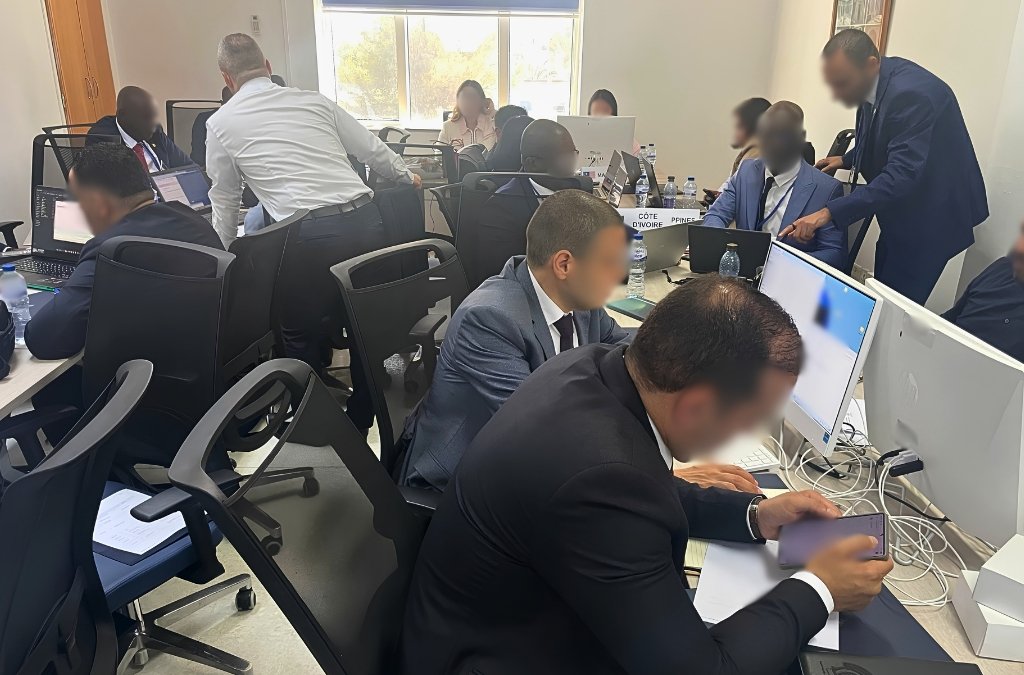
Operation Shams II, coordinated by INTERPOL from June 1 to 5, 2026, brought together 28 specialised officers and experts from 11 countries for a five-day operation in Tunis, Tunisia.
AI processes more than 108,000 images
During the operation, law enforcement officers extracted 108,076 facial images from visual content published by jihadist groups on online platforms.
AI agents and advanced AI-generated scripts were used to automate parts of the collection and investigative process.
The technology helped investigators identify duplicate images and conduct quality checks, reducing the dataset to 6,362 unique, high-quality facial images for processing through INTERPOL’s Facial Recognition System.
Officers verify AI-generated results
INTERPOL said AI-generated output was reviewed and verified by trained officers and analysts in accordance with its Rules on the Processing of Data.
The operation also received an intelligence dataset from INTERPOL’s National Central Bureau in Baghdad, Iraq, containing information relating to terrorism suspects and hundreds of additional images for processing.
According to INTERPOL, comparisons conducted so far have identified 126 Foreign Terrorist Fighters.
Matches to strengthen intelligence
INTERPOL said the matches will be used to enrich existing intelligence on the suspects, including information concerning potential locations and social networks.
The data is being integrated into INTERPOL databases to support international efforts to detect, track and disrupt suspected terrorist movements.
Investigative leads generated during the operation are already supporting judicial procedures in participating countries, including a case involving two detained suspected Foreign Terrorist Fighters.
Thousands of additional images remain to be processed, meaning further matches could emerge.
Cryptocurrency tools target terrorist financing
Operation Shams II also used cryptocurrency investigation tools to trace suspected illicit funding linked to terrorist activities.
The financial investigation resulted in three urgent requests to a Virtual Asset Service Provider for customer information, with the aim of disrupting suspected terrorist financing flows.
The operation therefore combined digital investigations, facial recognition and financial intelligence to target different aspects of terrorist networks.
Online gaming and youth radicalisation
Participating countries also engaged representatives from the online gaming industry to discuss the risk of youth radicalisation in digital environments.
The discussions focused on strengthening cooperation between law enforcement and the gaming sector and identifying opportunities to improve information sharing.
INTERPOL backs responsible AI use
INTERPOL Director of Counter-Terrorism María Carmen Muñoz González said the operation demonstrated the potential of combining international law enforcement cooperation with AI-assisted analysis.
She said the operational model could provide a foundation for future international cooperation targeting criminal actors.
Operation Shams II was conducted under the CT TECH+ Project, funded by the European Union’s Foreign Policy Instruments and supported by the United Nations Office of Counter-Terrorism (UNOCT).



