




MADRID, Spain – At least 30 people have been killed after two high-speed trains collided in central Spain, with rescue teams searching through wreckage and authorities warning that the death toll could rise.
The crash occurred shortly before 9am on Wednesday, October 28, near Urda in Toledo province, along the high-speed railway connecting Madrid with the southern region of Andalusia. The collision involved a Renfe-operated AVE train and a service operated by private rail company Iryo.
The regional government of Castilla-La Mancha raised the reported death toll from an initial 10 to at least 30 as the scale of the disaster became clearer. Some later media reports cited higher figures, but the number of fatalities remained subject to updates as rescue operations continued.
Carriages Derailed as Rescue Teams Reach Wreckage
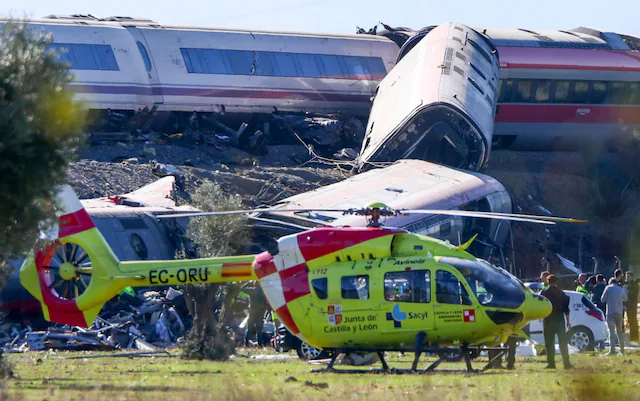
Images from the scene showed damaged train carriages, twisted metal and debris scattered down an embankment. Some carriages were left partly suspended above the slope after the collision, complicating the emergency response.
Passengers described a violent impact. One traveller told COPE radio that a prolonged, thunderous noise made it feel as though the train was about to derail. Another passenger said the force of the impact threw her forward and that she realised the seriousness of the crash after seeing injured people and being instructed to evacuate.
Emergency responders, including firefighters, police, ambulances and helicopters, were deployed to assist survivors and transport injured passengers to hospitals.
The regional authorities activated their emergency response plan and requested support from Spain’s Military Emergency Unit. A sports hall in Urda was prepared to accommodate affected passengers, while assistance points were organised for families seeking information.
More Than 500 Passengers Were on Board
Regional authorities said the two trains were carrying more than 500 passengers combined. The Renfe AVE service had 397 people aboard, while the Iryo train was carrying approximately 147.
Renfe activated its emergency assistance plan for victims and their relatives, while Iryo said it had initiated emergency protocols. Rail services between Madrid, Ciudad Real and Andalusia were suspended following the collision.
The cause of the crash had not been formally established in the initial statements from the operators. Preliminary media reports pointed to a possible signalling or traffic-management failure, but investigators will need to establish the sequence of events and whether any operational errors contributed to the collision.
Second Deadly Crash on the Corridor This Year
The disaster has renewed scrutiny of Spain’s railway safety and maintenance systems. In January, another collision near Adamuz in Córdoba province killed 46 people after a train derailed and struck an oncoming service.
That earlier accident prompted debate over investment in railway infrastructure, maintenance and safety. The latest crash has intensified those questions, although it is too early to conclude that maintenance shortcomings caused Wednesday’s collision.
Spain has one of Europe’s largest high-speed rail networks and carries millions of passengers annually. The current investigation is expected to examine the circumstances surrounding the collision, including train movements, signalling systems and instructions issued to the operators.
Spanish Leaders Cancel Engagements
Prime Minister Pedro Sánchez expressed shock over the collision and offered support to victims and their families. Political leaders also cancelled scheduled engagements as the country responded to the disaster.
Health authorities urged people to donate blood as hospitals prepared to treat the injured. Meanwhile, rail operators and emergency services continued coordinating rescue work and providing information to families.
With the casualty count still developing and the cause under investigation, authorities have yet to provide a final account of how the two trains collided.

