




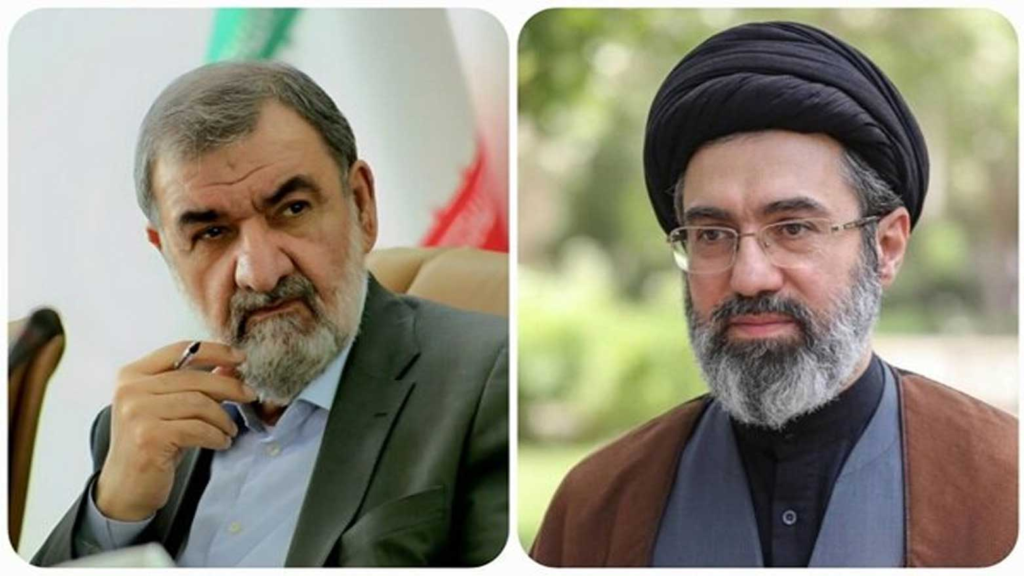
TEHRAN, Iran — Iran has appointed former Islamic Revolutionary Guards Corps (IRGC) commander Mohsen Rezaei as secretary of the Supreme National Security Council, the country’s highest national security body, following the resignation of Mohammad Bagher Zolghadr.
Presidential spokesman Mehdi Tabatabaei announced the appointment on Sunday, saying President Masoud Pezeshkian had named Rezaei to lead the council after Zolghadr stepped down to take up new responsibilities.
“In light of the resignation of Mohammad Bagher Zolghadr from his position as secretary of the Supreme National Security Council and his appointment to new functions, President Masoud Pezeshkian has named Mohsen Rezaei as the head of this body,” Tabatabaei said in a post on X.
Rezaei, 71, headed the Revolutionary Guards from 1981 to 1997, a period that covered most of the Iran-Iraq War. He later held several senior political positions and served as a military adviser to Iran’s Supreme Leader Ayatollah Mojtaba Khamenei.
His appointment comes at a particularly sensitive time for Iran, with tensions between Tehran and Washington centred in part on the strategically important Strait of Hormuz.
Rezaei said in July that control of the waterway was “more important than dozens of atomic bombs”, underscoring its strategic importance to Iran amid the escalating confrontation with the United States.
The Strait of Hormuz, through which a significant share of global oil shipments passes, has long been regarded by Tehran as a critical strategic asset. Any disruption to traffic through the waterway could have significant consequences for international energy markets.
Rezaei’s predecessor, Zolghadr, was also a former Revolutionary Guards commander. He was appointed secretary of the Supreme National Security Council in March and has now been reassigned as a political adviser to Supreme Leader Khamenei.
The Supreme National Security Council is responsible for coordinating Iran’s security and defence policies and advising the country’s leadership on major national security issues.
The appointment of another former Revolutionary Guards commander to the council’s top administrative position highlights the continued influence of the military establishment in Iran’s national security decision-making.
Rezaei’s extensive military and political experience is also expected to shape the council’s approach as Iran navigates its confrontation with the United States and other international powers.
His appointment comes as Tehran faces a complex security environment involving regional tensions, disputes over its nuclear programme and heightened concerns over control of strategic waterways.


