




ADDIS ABABA, Ethiopia – Ethiopia has begun operating its first 26 city buses converted from conventional fuel to natural gas, marking a new step in Prime Minister Abiy Ahmed’s push to reduce dependence on imported petroleum.
Abiy announced the development on Friday, saying the converted buses had entered service in Addis Ababa following months of work to transport locally sourced natural gas to the capital, establish refuelling stations and retrofit existing vehicles.
The Prime Minister said the transition was expected to reduce foreign currency spending on imported fuel, lower public transport operating costs and cut passenger fares by half.
He also highlighted the use of local expertise in converting the buses, describing the project as evidence of Ethiopia’s growing domestic technical capacity and technology transfer.
400 more buses expected
Abiy said another 400 natural gas-powered buses would arrive soon as the government seeks to expand the alternative-energy fleet and reduce the transport sector’s reliance on conventional fuel.
The announcement builds on a wider public transport conversion programme that had already begun earlier in 2026.
In May, Chinese energy company GCL announced that a prototype bus had successfully completed its conversion and road test in Addis Ababa. The project involved retrofitting public buses to run on natural gas as part of Ethiopia’s efforts to use domestic energy resources and reduce fuel import costs.
A separate report in May indicated that Addis Ababa was pursuing a broader plan to convert 1,200 buses, with a dedicated gas-filling station established at the Kality Depot.
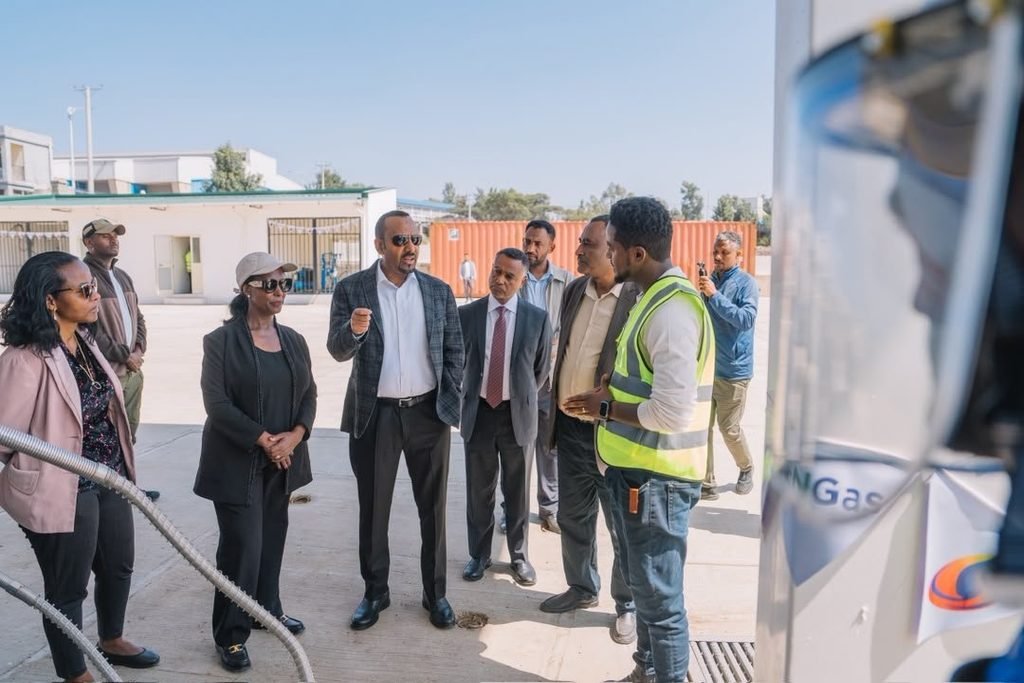
Ethiopia seeks to cut fuel import dependence
The transport initiative is part of Ethiopia’s broader effort to increase the use of locally available energy resources and ease pressure on foreign currency reserves.
The country has faced significant costs associated with importing petroleum products, making alternative energy sources an important part of its economic and transport planning.
By shifting some public buses to natural gas, the government hopes to reduce operating expenses while making public transport more affordable for passengers.
However, the scale of the benefits will depend on how quickly the refuelling network and converted fleet expand, as well as whether the promised fare reductions are implemented across the affected routes.
Abiy said the government would continue pursuing changes in food, housing and transport as part of its wider development agenda.

