




NAIROBI, Kenya — KEG President Zubeidah Kananu has raised alarm over growing threats to press freedom, warning that intimidation, legal pressure, and safety concerns could undermine credible journalism ahead of the 2027 General Election.
Speaking during the commemoration of World Press Freedom Day 2026, Kananu said Kenya must shift from hostility toward journalists to protecting their role as watchdogs in a democratic society.
“Journalism is a mirror. When you see a reflection of who you are and you don’t like it, you don’t break the mirror; you clean yourself,” she said, quoting Court of Appeal Judge Patrick Kiage.
Kananu criticised what she termed a rising trend of intimidation and “legal bullying” targeting journalists, urging state and non-state actors to use formal complaint mechanisms instead of threats or harassment.
She pointed to existing institutional frameworks such as the Media Council of Kenya and its Complaints Commission as appropriate channels for addressing grievances against the media.
“We must replace threats with dialogue and harassment with formal complaints,” she said.
Her remarks come as Kenya prepares for a high-stakes electoral cycle, with data indicating that more than 75pc of journalists covering the next election will be doing so for the first time.
Kananu warned that the influx of inexperienced reporters into a volatile political environment poses risks, particularly given concerns about journalist safety.
She cited findings by the Association of Media Women in Kenya showing that over 60pc of journalists do not feel safe in the line of duty.
“We cannot have a peaceful future if those tasked with reporting it live in fear,” she said, referencing incidents of violence against journalists, including injuries sustained during protests.
At the same time, she acknowledged the media’s responsibility in promoting peace, particularly in light of past accusations that sections of the industry—especially vernacular stations—have contributed to division.
Kananu said the Kenya Editors Guild has partnered with the Independent Electoral and Boundaries Commission to strengthen election coverage through training and capacity building.
“We are ensuring that from the newsroom to the tallying centre, there is only one version of the truth—the verified one,” she said, adding that newsrooms are increasingly adopting artificial intelligence tools to counter misinformation and foreign interference.

She also raised concern over the rise of Strategic Lawsuits Against Public Participation (SLAPPs), warning that such cases are being used to financially cripple media houses and silence critical reporting.
“These are not seeking justice; they are seeking to bankrupt newsrooms into silence,” Kananu said, calling for judicial safeguards against abuse of the legal system.
Beyond legal threats, she highlighted the welfare challenges facing journalists, including mental health pressures and financial instability, arguing that these vulnerabilities can compromise editorial independence.
“A journalist who cannot afford a meal is a journalist vulnerable to influence,” she said.
Placing Kenya within a global context, Kananu cited international data showing that press freedom is at its lowest level in over two decades, warning that weakening journalism undermines truth and, ultimately, peace.
“Where journalism is weakened, truth becomes fragile. And where truth is fragile, peace becomes impossible,” she said.
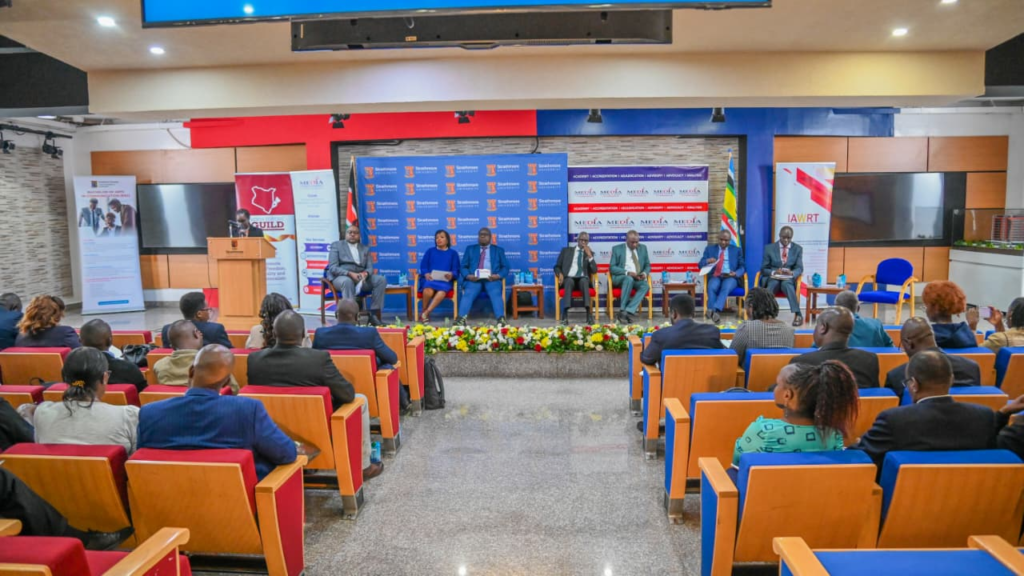
Kananu urged stakeholders—including the Judiciary, security agencies, and political leaders—to protect journalists and uphold constitutional guarantees of media freedom as the country heads into the 2027 elections.
She also announced plans for the inaugural Pan-African Media Summit scheduled for mid-May, aimed at strengthening collaboration and shaping the future of journalism across the continent.

