NAIROBI, Kenya – The National Criminal Investigations Academy (NCIA) has received specialised counter-terrorism investigations training equipment from the European Union and the United Nations to strengthen practical training for investigators.
The equipment was handed over on September 22, 2026, through the National Counter Terrorism Centre (NCTC) as part of efforts to build Kenya’s capacity to independently deliver specialised counter-terrorism investigations training.
The support was funded by the European Union and implemented by the United Nations Office of Counter-Terrorism (UNOCT) through the EU-UN Global Terrorism Threats Facility and the Global Counter-Terrorism Investigations Programme.
Equipment to strengthen practical training
The equipment is intended to enable NCIA instructors to conduct more practical and scenario-based counter-terrorism investigations exercises.
The support follows a 2025 training gaps analysis, which identified the need to strengthen the Academy’s capacity to independently design and deliver specialised investigations training.
During the handover, NCIA instructors and subject-matter experts demonstrated the equipment during a pilot delivery of the Counter-Terrorism Investigations Course (CTIC).
The exercises were designed to make training scenarios more realistic and help investigators translate classroom knowledge into practical investigative skills.
NCIA to deliver training independently
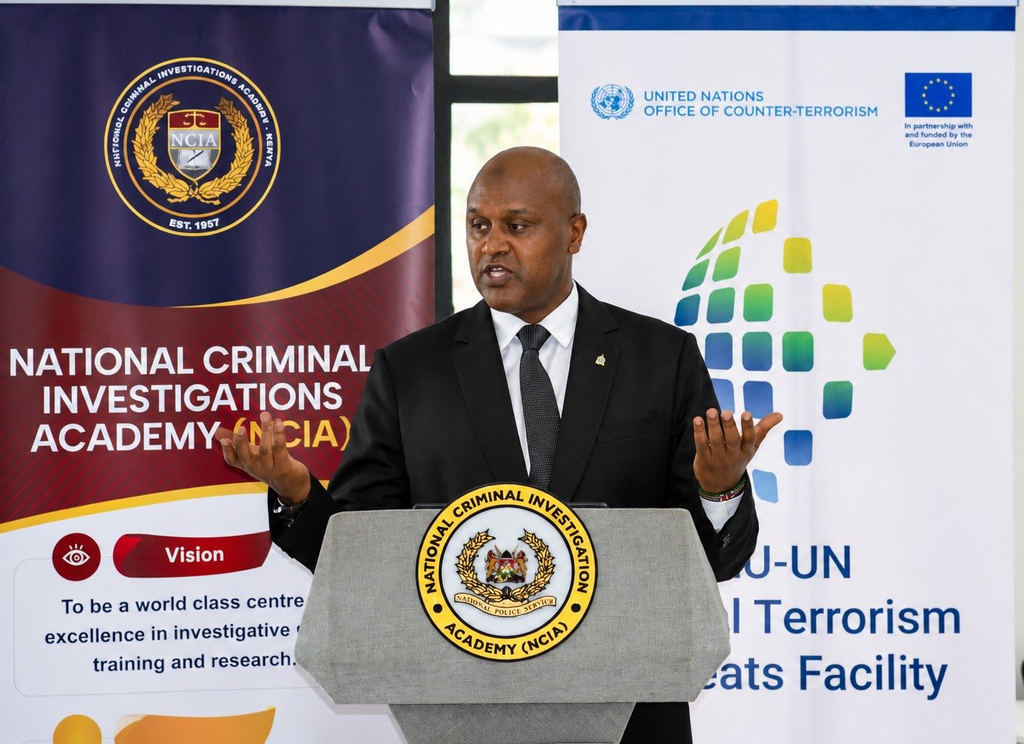
NCIA Commandant Ibrahim Jillo said the equipment would allow the Academy to deliver specialised training with greater independence.
He said the practical exercises would remain closely aligned with the challenges investigators encounter in the field.
The equipment is expected to support the Academy’s efforts to develop nationally owned and sustainable counter-terrorism investigations training.
EU, UN back Kenya’s counter-terrorism capacity
The handover brought together representatives of the EU-UN Global Terrorism Threats Facility, UNOCT and NCTC alongside senior police officers.
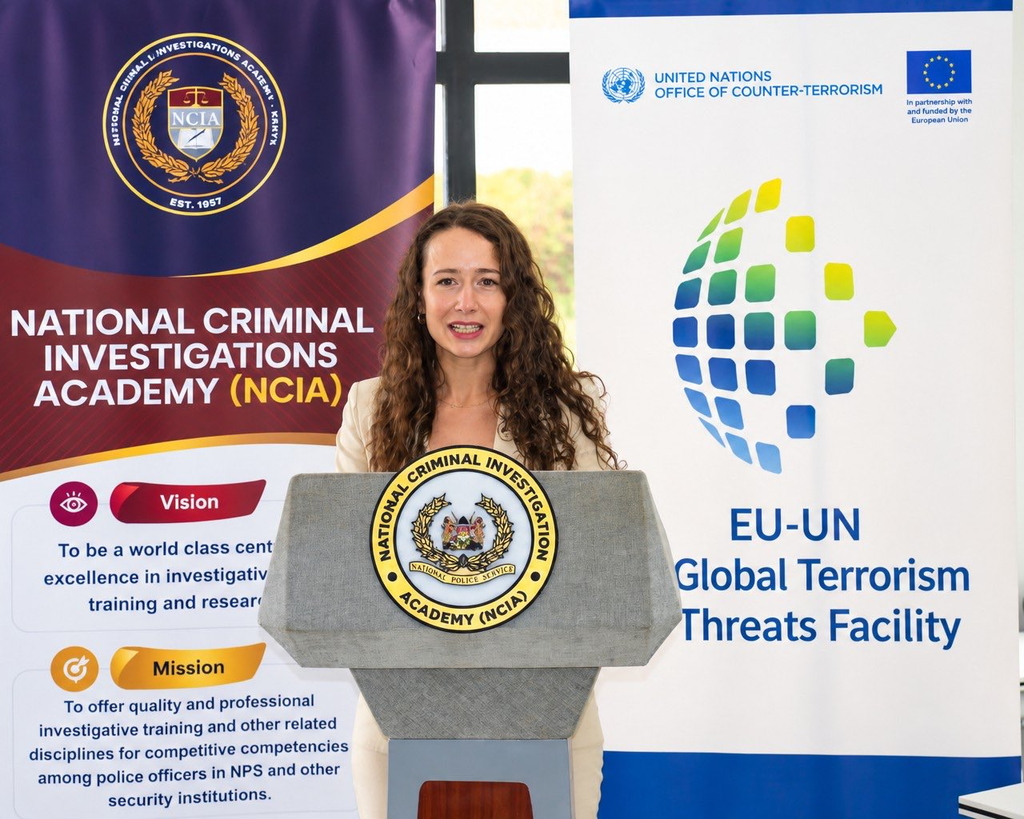
Beatrice Tesconi of the EU-UN Global Terrorism Threats Facility said the support would contribute to building sustainable national counter-terrorism investigations capacity.
Jaskiran Sandhu of UNOCT’s Global Counter-Terrorism Investigations Programme stressed the importance of translating investigative knowledge into effective practice.
NCTC Chief Liaison Officer for Analysis and Disengagement Kenneth Maucha said strong partnerships remained important in sustaining counter-terrorism investigative capacity.
Support follows training needs assessment
The equipment forms part of broader support provided through the EU-UN Global Terrorism Threats Facility and UNOCT’s Global Counter-Terrorism Investigations Programme.
The initiative followed the 2025 assessment of training gaps at NCIA and identified areas where additional resources were required to strengthen specialised investigations training.
The partners are seeking to ensure that the capacity developed through the programme can be maintained nationally rather than relying entirely on external training support.
NCIA welcomes specialised equipment
Jillo thanked the European Union, UNOCT and NCTC for the equipment, saying it would enhance the Academy’s ability to provide practical and effective training to investigators.
The new resources are expected to strengthen scenario-based learning and help NCIA instructors prepare investigators for the operational realities of counter-terrorism investigations.