




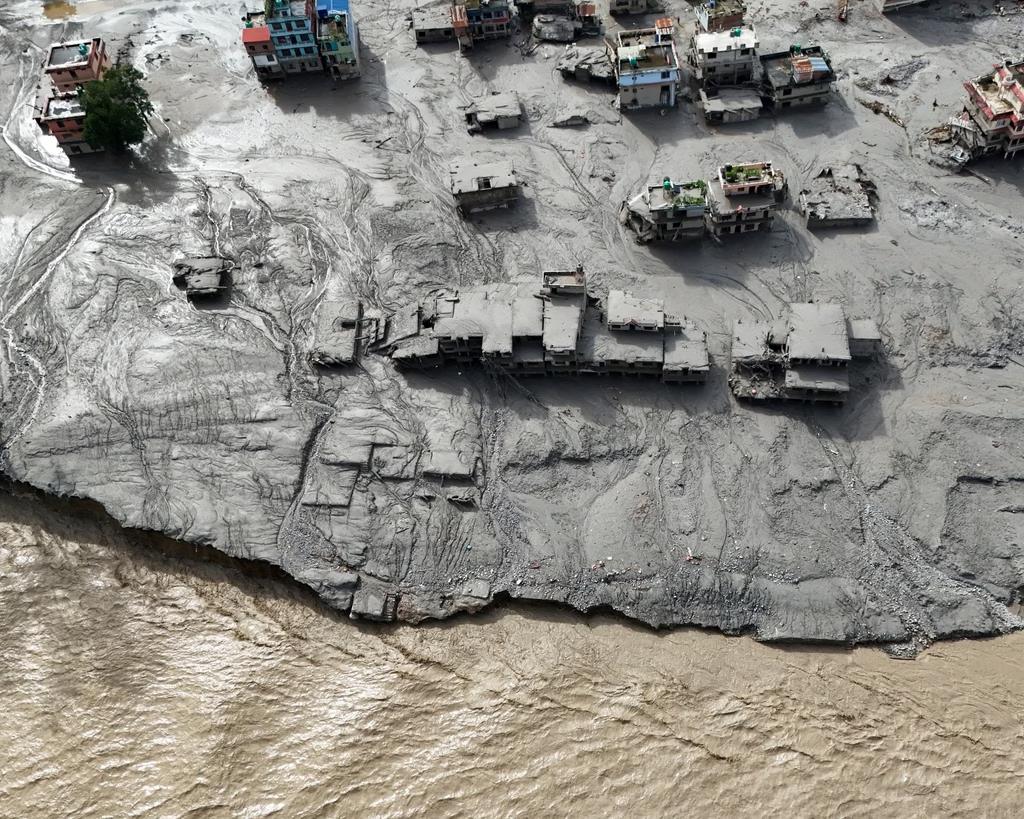
UDIN DHUNGA, Nepal — Rescue teams and military helicopters are searching for hundreds of people missing along the mountainous Nepal-Tibet border after a massive torrent of water and mud swept through communities following a glacier collapse.
More than 390 people have been confirmed dead, while at least 1,468 people remain missing on both sides of the border, according to authorities in Nepal and China.
The disaster has triggered fresh warnings of flooding across the Himalayas, with officials monitoring newly formed lakes that could burst through debris and send large volumes of water downstream.
More than 1,400 people missing
In Nepal, police and tourism officials said 826 people were missing, including more than 500 foreign nationals.
On the Chinese side, state media reported that at least 558 people were missing in Tibet, including at least 260 foreign nationals.
The large number of foreign nationals affected reflects the area’s importance as a gateway for pilgrims, tourists and other travellers moving through the Himalayas.
Fresh flood threat raises fears
Authorities in both Nepal and China have warned that the disaster may not be over.
Chinese officials said an artificial lake created after a mudslide struck the Tibet-Nepal border faces a high risk of breaching, potentially sending floodwaters downstream.
Nepal’s disaster management authorities also reported that a lake had formed after debris blocked a river at the disaster site.
The water level was rising, raising fears that the natural barrier could give way and unleash another destructive surge.
Emergency agencies have therefore been monitoring water levels while rescue teams continue searching affected communities.
Helicopters deployed as roads and bridges destroyed
The mountainous terrain and extensive infrastructure damage have complicated rescue operations.
Nepalese officials said dozens of bridges had been destroyed and almost 40 kilometres of roads damaged, cutting off some areas and making ground access difficult.
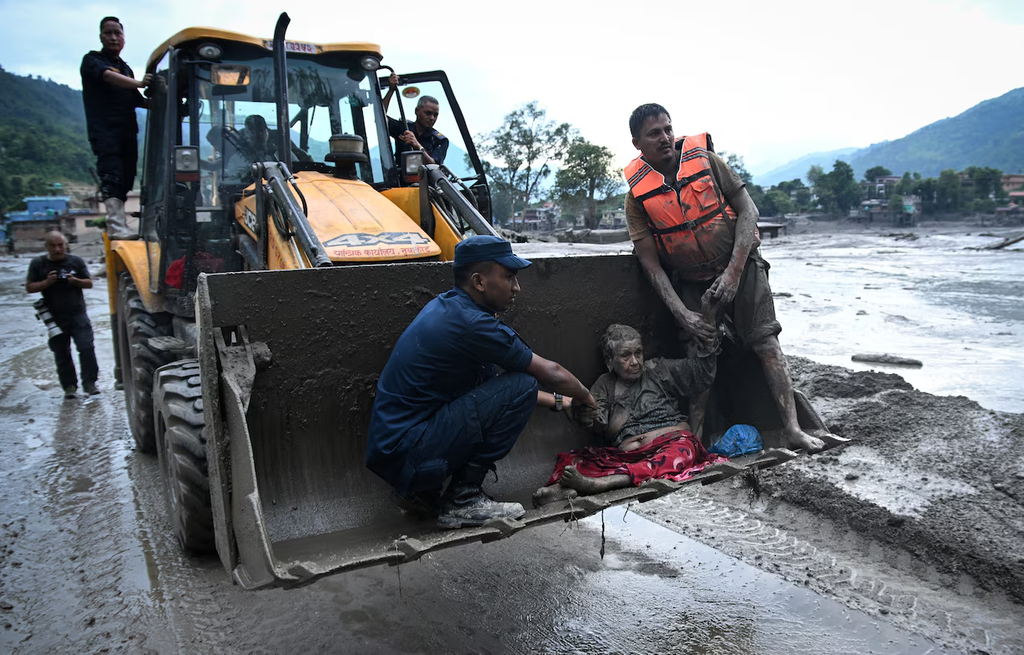
The Nepalese Army has deployed helicopters to reach isolated communities.
An army spokesperson said more than 100 people had been rescued by helicopter, while teams also evacuated people trapped in facilities associated with the Trishuli hydropower project.
Dozens of injured people were transported to Kathmandu for treatment.
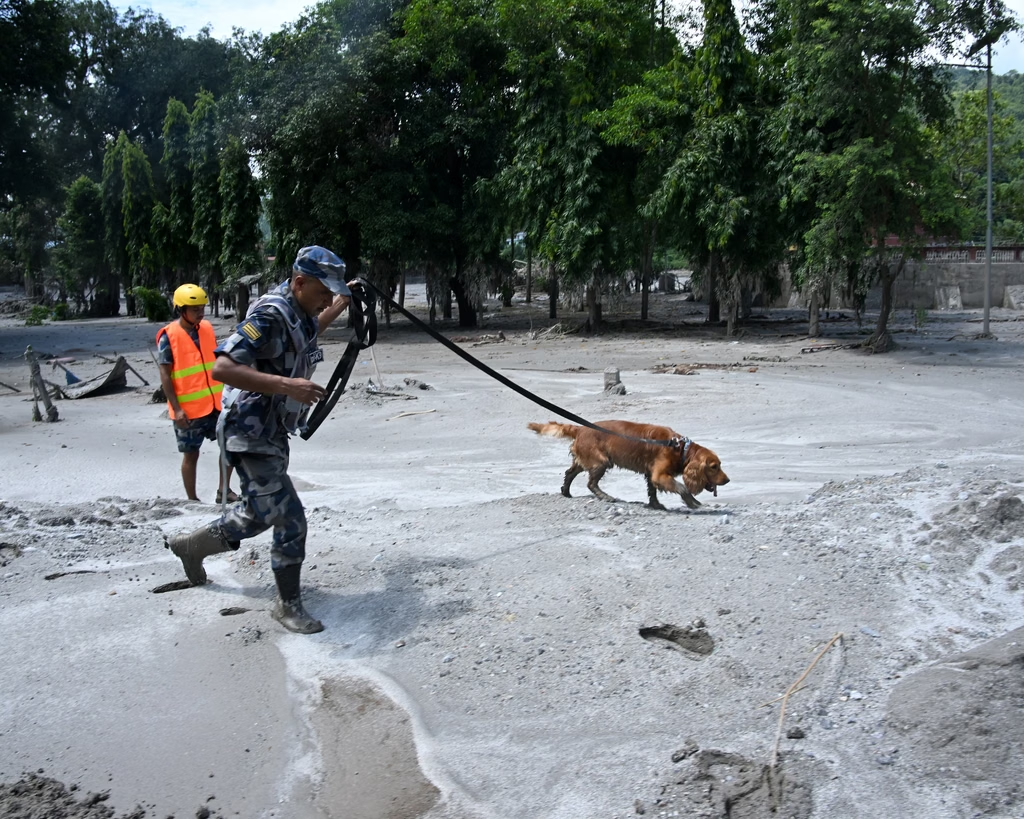
Rescue teams have also recovered bodies in Chitwan district, hundreds of kilometres downstream from the areas that suffered the worst flooding.
Red Cross launches $31 million emergency appeal
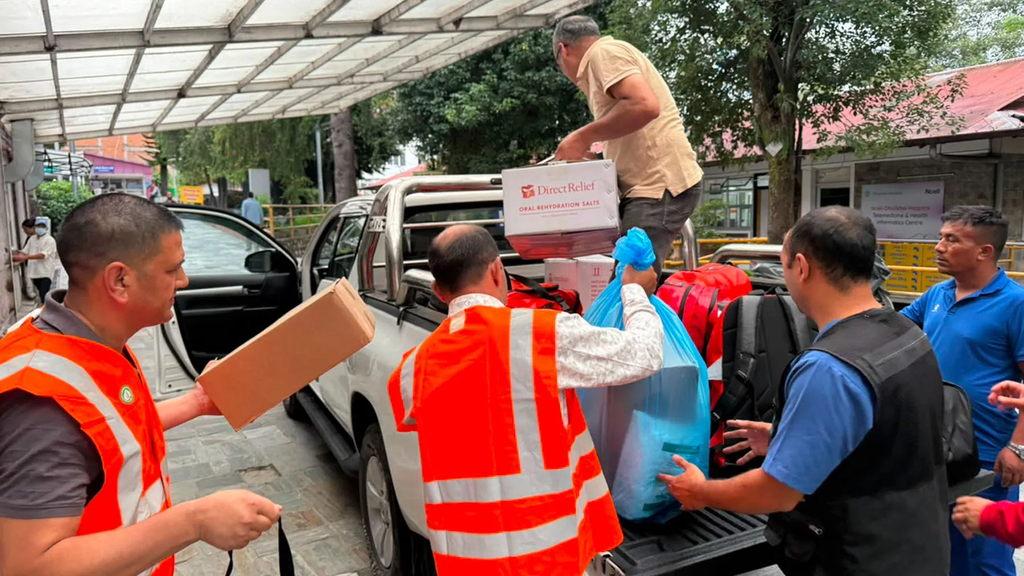
The scale of the disaster has prompted a major humanitarian response.
The Red Cross estimated that approximately 93,000 people could have been affected, although assessments were still continuing in remote and difficult-to-reach areas.
The organisation launched an emergency appeal for $31 million to support relief operations.
The Nepal Red Cross Society said it was shifting its focus from immediate rescue operations towards large-scale relief in the affected districts.
Aid agencies are expected to prioritise emergency shelter, clean water, medical assistance and other essential supplies as access to affected communities improves.
China deploys hundreds of personnel
China has also intensified its response on the Tibet side of the border.
Chinese Premier Li Qiang travelled to Gyirong on Thursday to oversee rescue operations.
About 500 military and paramilitary personnel have been deployed as authorities search for missing people and assess the threat posed by the unstable debris and newly formed lake.
The border region presents significant logistical challenges because of its steep terrain, damaged roads and continuing flood risks.
UN releases emergency funds
The United Nations has released emergency funding to support the humanitarian response.
UN humanitarian chief Tom Fletcher said he had ordered the release of $2 million from the UN Central Emergency Response Fund.
The funding will support immediate needs including medical care, shelter and water.
The UN and other humanitarian agencies are expected to continue assessments as rescuers gain access to isolated areas.
Trump describes scale of destruction
US President Donald Trump described the flooding as devastating, highlighting the destruction caused by the disaster.
He said the force of the flooding was such that strong, well-built buildings were swept away.
The destruction has left communities facing not only a humanitarian emergency but also a major reconstruction challenge as authorities assess damage to roads, bridges, homes and other infrastructure.
Search continues amid dangerous conditions
Despite the growing relief operation, rescue teams continue to face dangerous conditions.
The possibility of another lake breach means rescuers must balance the search for missing people with the risk of additional flooding.
Authorities are also working to determine the full scale of the disaster in remote mountain areas that remain difficult to reach.
With hundreds of people still missing on both sides of the border, the search is expected to continue while Nepal, China and international relief organisations coordinate efforts to provide assistance to survivors.



