


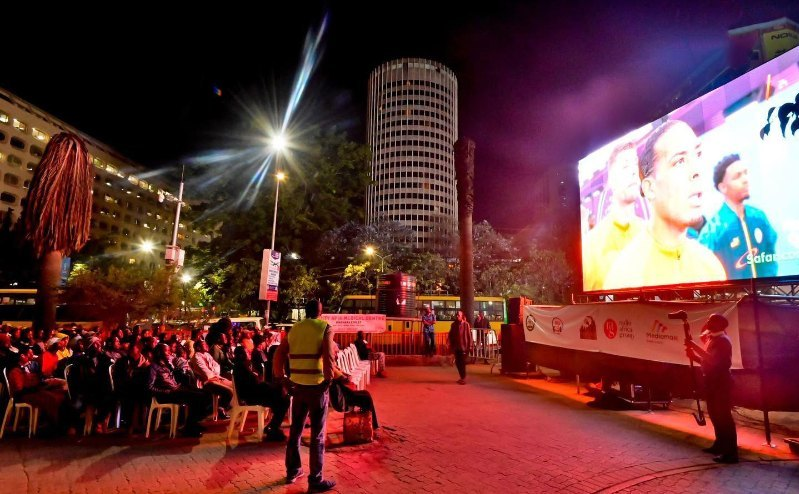
NAIROBI, Kenya — Midnight has taken on a new meaning across Kenya as millions of football fans sacrifice sleep to follow the ongoing 2026 FIFA World Cup, with late-night kick-offs reshaping daily routines, boosting businesses and creating a unique national viewing culture.
Hosted jointly by Canada, the United States and Mexico, this year’s tournament has forced Kenyan supporters to adjust to a demanding schedule, with most matches kicking off between 11 pm and 4 am due to the time difference.
From homes and entertainment joints to taxi ranks and radio studios, football has become the centrepiece of overnight activity as fans strive to balance work, family responsibilities and their passion for the game.
Fans adjust daily routines
For many supporters, the tournament has become part of their daily schedule.
Jude Otieno said he plans his evenings around the match fixtures.
“When I return home from work at around 5pm, I usually settle down for the early matches, then I wake up later so I can catch the late-night games,” he said.
Jude said he prepares coffee before the late fixtures to stay awake throughout the night.
The tournament has also altered routines for night-shift workers.
Osiru, a driver, said he watches matches whenever work allows.
“Most of the time I’m transporting things at night, so when there is no movement, I follow the match while waiting for the next trip,” he said.
“When I cannot watch, I rely on radio commentary or live updates until I get another stop.”
Journalists have also had to adapt to the unusual schedule.
Digital reporter Felix Chepkemoi said long working hours make it difficult to follow entire matches.
“Since I leave the office very late, I usually follow the tournament through live updates on my phone. Most of the time I only manage the first half because I am already very tired,” he said.
Businesses enjoy late-night boom
The World Cup has delivered an unexpected economic boost for businesses operating at night.
Hospitality venues are reporting increased customer numbers during match days.
David, a waiter in Nairobi’s Westlands area, said business has grown significantly.
“From around midnight, customers start streaming in and by 2 am the place is usually full,” he said.
“People stay throughout the entire match, and every goal triggers another round of orders.”
Entertainment venues have also adjusted their operations to match football schedules.
A DJ said football now dictates the atmosphere inside clubs.
“The crowd follows the match more than anything else. Everything else adjusts around what is happening on the screen,” he said.
Radio stations are equally experiencing higher audience engagement.
Presenter Daniel Mwangi, popularly known as Mbusii, said listeners expect constant match updates.
“They want every goal, every chance and every key moment as it happens,” he said.
Radio producer Ian Thuku noted that coverage has become more demanding.
“Information keeps coming in non-stop, and everyone has to respond quickly because listeners expect immediate updates,” he said.
Informal traders benefit
Small-scale traders are also cashing in on the football frenzy.
Tea and Kahawa vendors said sales have risen sharply during late-night matches.
“Night sales have increased, especially tea and snacks. Most of my busiest hours are now after midnight when matches are ongoing,” one of them said.
However, not everyone has been able to embrace the demanding schedule.
Football enthusiast Caroline Kweyu said family responsibilities prevent her from watching many live matches.
“I cannot stay awake late because I have to prepare my children for school the following morning,” she said.
Instead, she relies on recorded highlights whenever time allows.
As the tournament enters its decisive stages, the midnight kick-offs continue to reshape sleeping patterns and social life across Kenya. For many supporters, missing sleep has become a small price to pay for witnessing football’s biggest spectacle live.

