


Kenyan singer and songwriter Nviiri the Storyteller has sparked intense online debate after sharing a strongly worded statement criticizing African artists and creatives who have publicly associated with French President Emmanuel Macron during his visit to Kenya.
In a lengthy statement posted online, Nviiri questioned what he described as a growing trend of African artists mistaking “proximity to power for impact,” arguing that creatives who claim to stand for liberation and African unity should not comfortably align themselves with governments whose histories on the continent are tied to colonialism, exploitation and control.
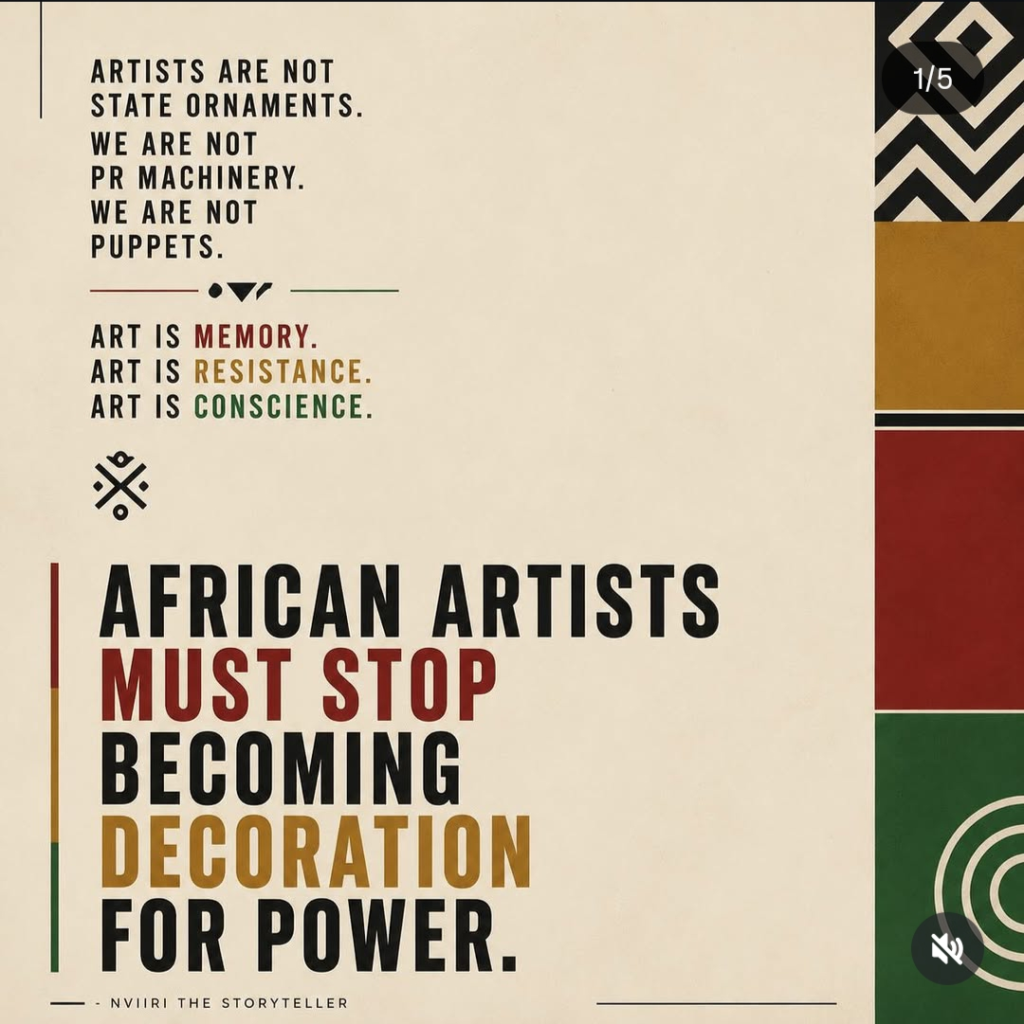
The statement is a reaction to the widespread publicity surrounding Macron’s visit to Kenya for the Africa Forward Summit held between May 11 and 12, 2026.
During the trip, Macron participated in several high-profile cultural moments that quickly went viral online, including a balcony cooking session with celebrity chef Dennis Ombachi, popularly known as The Roaming Chef, where the two prepared ugali and sukuma wiki together.
The French president was also seen jogging through Nairobi alongside marathon legend Eliud Kipchoge and participating in traditional dances with Kenyan President William Ruto during summit events.
While many social media users celebrated the lighter moments as examples of cultural exchange and diplomacy, Nviiri offered a sharply different perspective.
“There’s a dangerous trend of artists mistaking proximity to power for impact,” he wrote.
“As Africans, we cannot continuously speak about culture, liberation and community — then comfortably sit at tables with governments whose histories on this continent are rooted in exploitation, extraction and control.”
The singer specifically challenged attempts to frame France as aligned with Pan-African ideals, arguing that Pan-Africanism was historically born out of resistance against colonialism rather than partnerships with former colonial powers.
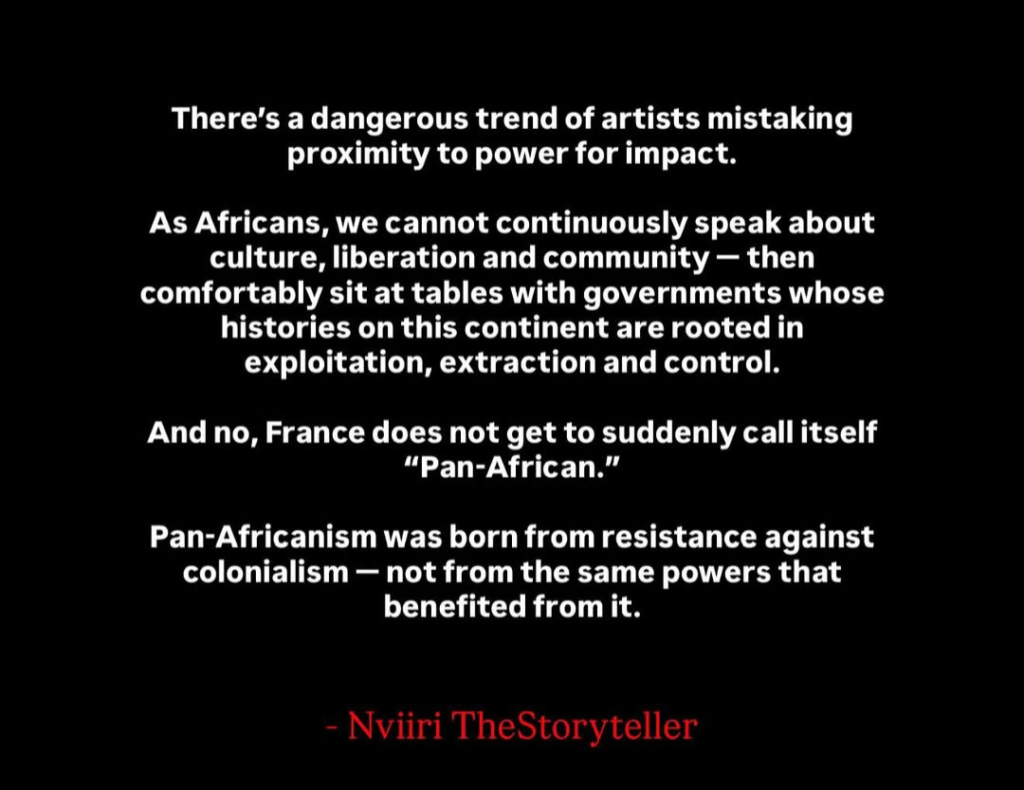
“And no, France does not get to suddenly call itself ‘Pan-African,’” he stated.
“Pan-Africanism was born from resistance against colonialism — not from the same powers that benefited from it.”
Nviiri also referenced ongoing anti-French sentiment in parts of West Africa, where protests and political movements in recent years have pushed back against French military presence and influence in the region.
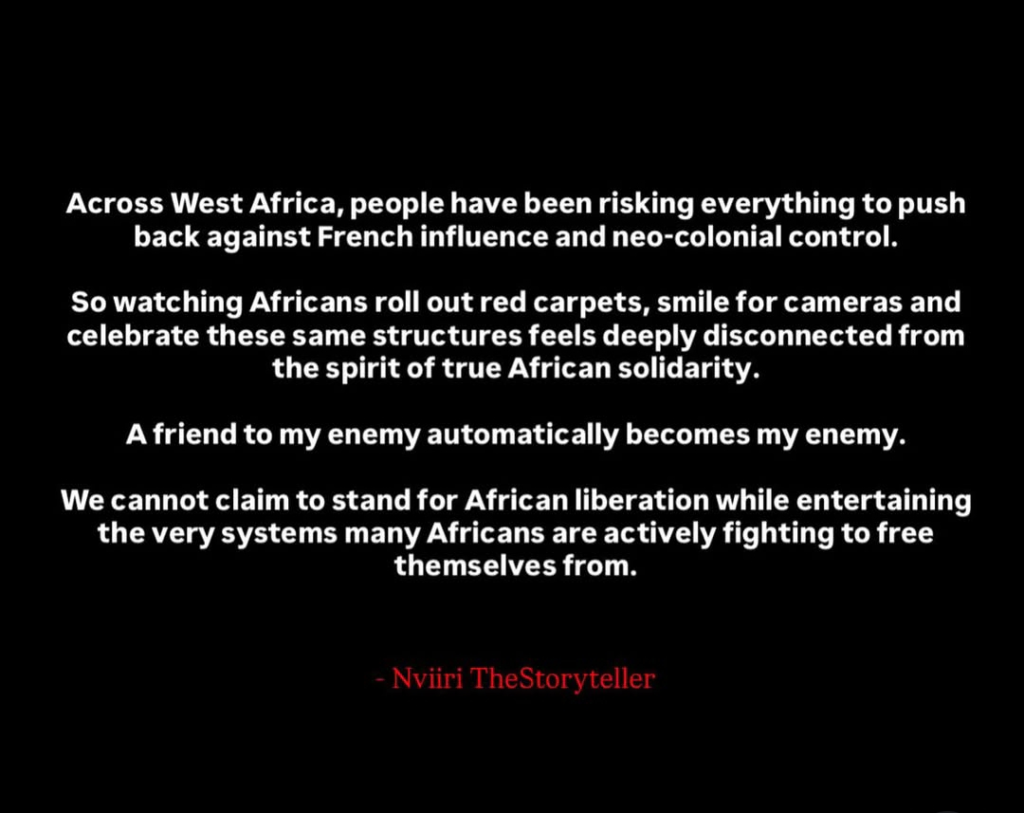
“Across West Africa, people have been risking everything to push back against French influence and neo-colonial control,” he wrote.
“So watching Africans roll out red carpets, smile for cameras and celebrate these same structures feels deeply disconnected from the spirit of true African solidarity.”
The artist further argued that creatives and influencers must remain accountable to the communities they represent rather than becoming absorbed into elite political spaces.
“A friend to my enemy automatically becomes my enemy,” he added.
“We cannot claim to stand for African liberation while entertaining the very systems many Africans are actively fighting to free themselves from.”
Still, Nviiri remained firm in his stance, emphasizing that integrity and principles should guide artists even when opportunities for visibility and access arise.
In one of the most widely shared sections of his statement, the singer reflected on how activism within communities is often dismissed until it becomes politically fashionable.
“It’s funny how speaking against harmful agendas in our communities — matters like alcoholism and exploitative brand culture — was once scoffed at and treated like ‘doing too much,’” he wrote.
“But now suddenly smiling, shaking hands and breaking bread with Macron is supposed to be called growth, diplomacy or representation?”
Nviiri concluded the statement by describing himself as a “community artist” committed to serving ordinary people rather than seeking validation from powerful institutions.
“As for me, I will continue striving to be a community artist before anything else,” he said.
“An artist for the people. An artist with principles. An artist whose voice cannot be bought by access, proximity or power.”
“Because integrity is expensive. And not everybody can afford it.”

