


A public disagreement has erupted between media personality Talia Oyando and rapper Colonel Mustafa after the former Deux Vultures member made explosive claims about events that allegedly unfolded during Kenya’s golden era of music in the early 2000s.
The clash has ignited widespread debate among fans of the Ogopa Deejays generation after Mustafa suggested that a romantic situation involving Oyando nearly caused a serious fallout between him and the late legendary rapper E-Sir.
The drama unfolded after Mustafa shared a throwback photo online and reflected on what he described as untold stories from the era that shaped Kenyan urban music.
According to Mustafa, he and Talia Oyando shared a close bond in their younger years that had the potential to become something deeper.
“We had a serious vibe,” Mustafa claimed while narrating his side of the story.
The rapper further alleged that the situation became complicated because Oyando was also involved with E-Sir, who was not only one of Kenya’s most celebrated musicians but also Mustafa’s close friend and fellow Ogopa Deejays artist.
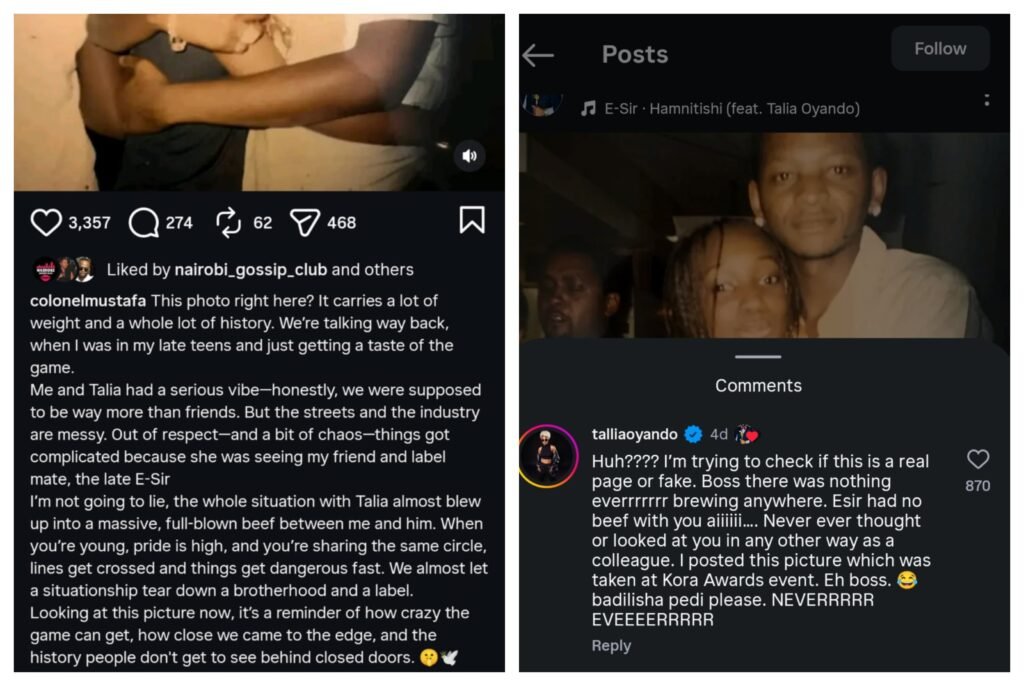
Mustafa claimed that emotions almost spiraled into a larger conflict between the two artists.
According to his account, the alleged romantic tension nearly created a serious rift that threatened both their friendship and professional relationship. He suggested that the situation came dangerously close to becoming a major industry feud.
However, Talia Oyando quickly stepped in and publicly challenged Mustafa’s version of events.
The media personality strongly denied that she and Mustafa ever had any romantic connection and dismissed his claims entirely. Responding in the comment section, Oyando stated that there had never been any “situationship” between them.
She maintained that she only viewed Mustafa as a colleague within the entertainment industry and nothing more.
“There was never anything romantic,” Oyando clarified.
She also strongly defended E-Sir’s memory and rejected suggestions that the late rapper ever had a problem with Mustafa because of her. Oyando dismissed the narrative as fabricated and insisted that the alleged conflict never existed.
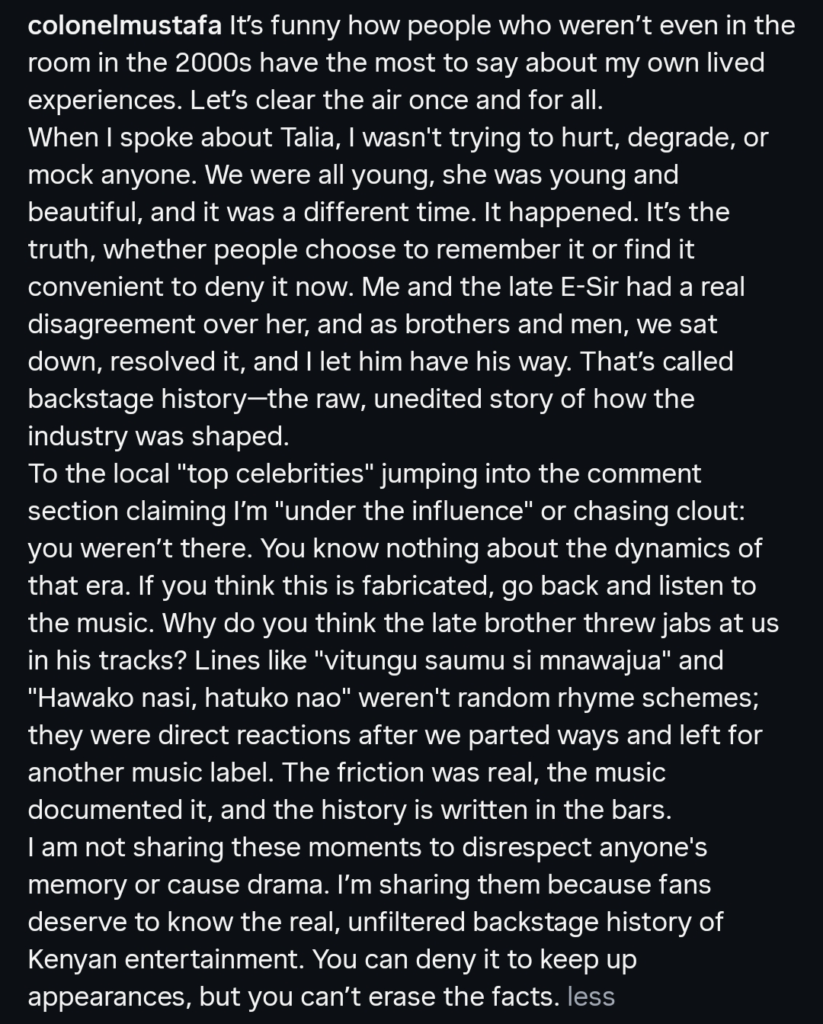
Despite criticism and skepticism, Mustafa did not retreat from his position. Instead, he doubled down on his account and insisted that he was sharing his personal experience.
He defended himself against critics and suggested that clues to the alleged tension could even be found in music from that period.
According to Mustafa, some lyrics released during that era reflected emotions and situations surrounding the relationships between artists.
“I am just telling my truth,” he maintained.
The disagreement has now reopened conversations about the hidden stories behind the rise of Kapuka and Boomba music, genres that dominated Kenyan entertainment in the early 2000s.
The Ogopa Deejays era remains one of the most influential periods in Kenya’s music history, producing stars who shaped urban culture and built the foundation for many modern artists.
For many Kenyans, E-Sir especially remains an untouchable figure whose musical legacy still resonates decades after his death.
As a result, any discussion involving the late rapper often sparks strong emotional reactions from fans. With E-Sir no longer alive to share his perspective, fans are left with two conflicting narratives and unanswered questions.

