




NAIROBI, Kenya – Human rights activist Bob Njagi has accused the Democracy for Citizens Party (DCP) of maintaining a secret working relationship with the ruling United Democratic Alliance (UDA), despite presenting itself as an opposition party.
Njagi made the claims during an interview with a local media station on Friday, August 28, 2026, alleging that DCP and UDA could be cooperating behind the scenes while portraying themselves as political rivals.
“I believe that there is a conspiracy between DCP and the UDA party. They are birds of the same feathers,” Njagi said.
The allegations come as Kenya’s political parties intensify realignments and recruitment ahead of the 2027 General Election, with opposition formations seeking to consolidate their support bases and challenge President William Ruto.
Njagi questions emergence of DCP
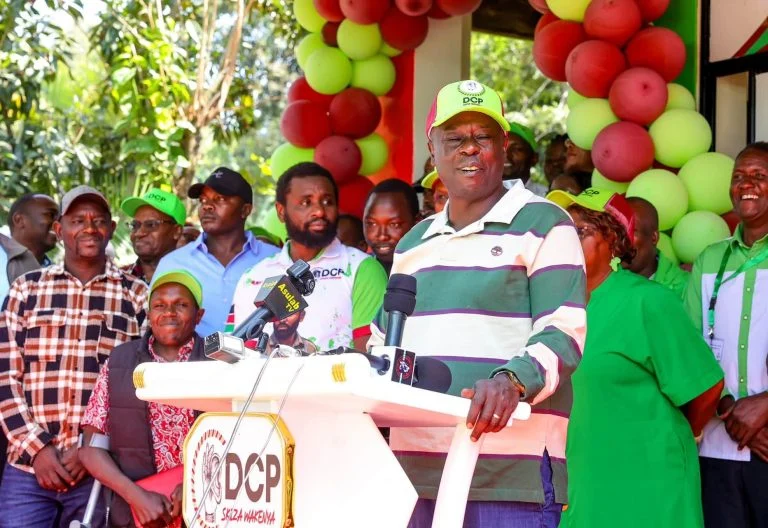
Njagi also questioned the circumstances surrounding the formation of DCP, pointing to its emergence after the impeachment process involving former Deputy President Rigathi Gachagua, who is now the party’s leader.
He suggested that some parties operating under the opposition banner could be part of what he described as “the system”, potentially working to frustrate efforts to achieve political change.
According to Njagi, such parties could publicly position themselves as opponents of the government while privately cooperating with political actors within the ruling establishment.
“Does it mean we are enemies? No. We can be allies, but pretending to be enemies…” he said.
Njagi argued that such political arrangements could confuse voters by creating the impression that parties are genuinely opposed to one another when they may have shared interests.
He further suggested that such manoeuvres could help explain why some Kenyans continue to support parties they regard as opposition outfits, even as younger voters increasingly question traditional political alliances and party structures.
Ole Kenta raises similar concerns
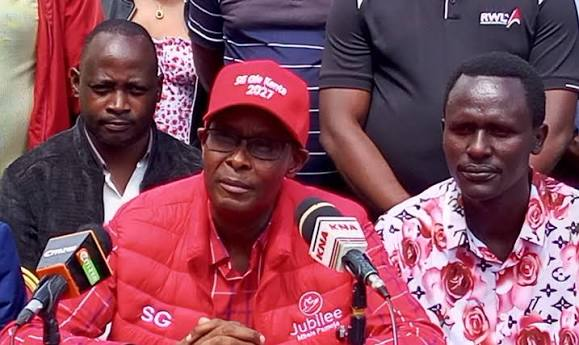
Njagi’s allegations come against the backdrop of separate claims by Jubilee Party Secretary-General Moitalel Ole Kenta, who has also questioned the motives of some opposition leaders.
Kenta has accused unnamed principals within the United Opposition of potentially working with UDA to weaken the opposition from within.
Speaking during a media interview aired on Thursday, August 27, 2026, Kenta criticised opposition politicians for recruiting members from Jubilee instead of focusing on parties aligned with the government.
His remarks followed a series of defections from Jubilee, including the departure of Kamukunji MP Yusuf Hassan, who joined the DCP.

Jubilee protests opposition defections
Kenta argued that genuine opposition parties should concentrate on expanding their collective support by recruiting politicians from UDA and other government-aligned formations.
He questioned why opposition leaders would target parties that are already part of the opposition coalition.
“Some of the so-called party leaders are behaving in a way that raises questions, because why would a party leader say that he is in the opposition and, instead of poaching people from UDA, which is our common enemy, he destroys a sister party? So, even some of us will not want to work with such people because what will be the difference between them and UDA?”
The comments reflect growing tensions among opposition parties as they attempt to build a united political front ahead of the 2027 election.
Opposition unity faces internal tensions
The allegations by Njagi and Kenta highlight a growing concern within opposition circles over competing political interests and accusations of infiltration or cooperation with the government.
The opposition has publicly pushed for unity, with several leaders supporting efforts to field a common candidate against Ruto in 2027.
However, defections, competing recruitment drives and disagreements over party leadership continue to test the strength of that unity.
DCP has emerged as an increasingly visible political force under Gachagua, attracting elected leaders from established parties and seeking to expand its grassroots presence.
UDA, meanwhile, remains the governing party and is expected to defend its political influence as the 2027 contest takes shape.


