


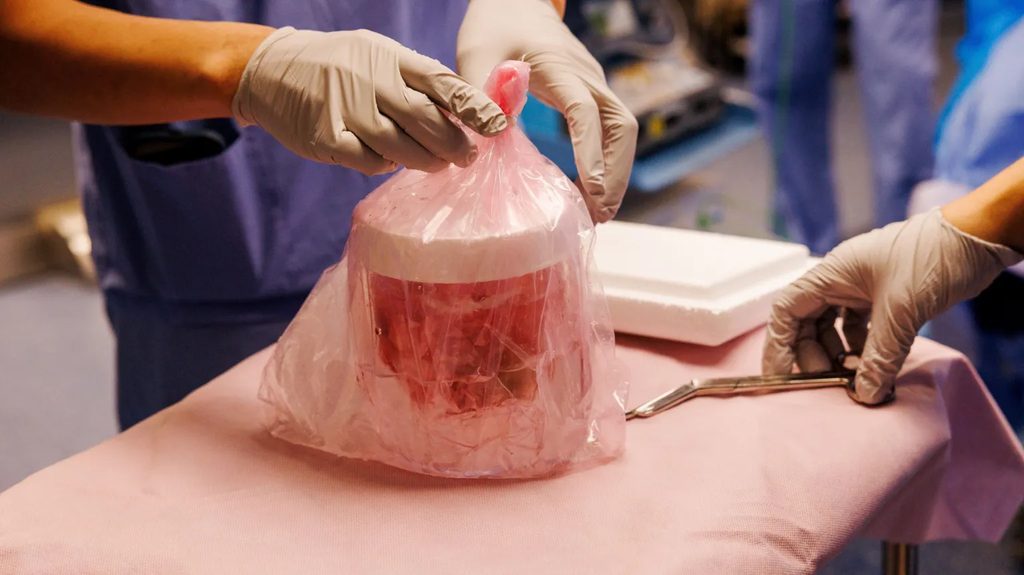
BOSTON, United States — A kidney transplanted from a genetically modified pig functioned inside a US patient for 271 days, marking the longest recorded period a pig kidney has worked in a human body, doctors at Mass General Brigham say.
The milestone offers fresh evidence that xenotransplantation — the use of organs from animals in humans — could one day help address the severe shortage of kidneys available for transplant.
The patient, Tim Andrews, received the pig kidney on January 25, 2025, when he was 66 and suffering from end-stage kidney disease linked to type 2 diabetes.
The transplanted organ began functioning immediately and continued working for 271 days before it was removed in October 2025, according to the medical team. Andrews subsequently underwent dialysis for 82 days before receiving a kidney from a human donor in January 2026.
His human donor kidney is reported to be functioning well.
Pig kidney spared patient months of dialysis
Before receiving the experimental transplant, Andrews faced the prospect of spending years on dialysis while waiting for a suitable human kidney.
He said the pig kidney gave him hope and allowed him to avoid months of treatment in which a dialysis machine filters waste and excess fluid from the blood.
“I had a little bit of a shortage of time… it becomes very depressing,” Andrews said, describing the prospect of remaining on dialysis.
He said the experimental transplant represented “hope” and a chance to be free from the dialysis machine.
“Hope is the biggest thing, the chance to be free from the [dialysis] machine and live your life,” he said.

Kidney shortage drives xenotransplant research
Doctors and scientists are increasingly investigating xenotransplantation because the number of patients requiring organs far exceeds the supply of human donors.
In the United States, about 100,000 people are waiting for a kidney, while roughly 25,000 kidney transplants are performed each year.
More than 7,000 people in the UK are also on the kidney transplant waiting list.
Andrews had been told that he could potentially wait as long as seven years for a transplant. His doctors considered that timeline particularly concerning because patients on dialysis face significant health challenges over time.
Dr Leonardo Riella of the Mass General Brigham Center for Transplantation Sciences said the shortage had created a major crisis.
“We are working really hard to bring hope and we truly feel that xenotransplantation can be an alternative for patients who don’t have a living donor where we could potentially bypass dialysis and get them to a transplant,” Riella said.
Why pig kidneys are being studied
Pigs are considered promising donors for xenotransplantation because their organs are broadly similar in size to human organs and pigs can be bred under controlled conditions.
However, simply transplanting an ordinary pig kidney into a human would trigger a powerful immune response.
The human immune system recognises the pig tissue as foreign and can rapidly attack the transplanted organ, causing severe rejection and potentially destroying it.
To overcome this problem, researchers have developed genetically modified Yucatan miniature pigs whose organs have undergone extensive genetic engineering.
The pig used for Andrews’ transplant had 69 genomic modifications, according to the research team.
The modifications are designed to make the pig organ more compatible with the human body.
Some changes remove features on pig cells that are targeted by the human immune system, while others introduce selected human genes intended to reduce immune recognition.
Additional genetic modifications are aimed at disabling viruses embedded within pig DNA, reducing concerns about the potential transmission of pig-derived infections.

Immune rejection was initially controlled
Doctors observed early signs that Andrews’ immune system was beginning to reject the transplanted pig kidney.
The rejection was successfully managed by adjusting his medication, allowing the organ to continue functioning.
However, about six months after the transplant, doctors began observing damage to the kidney’s blood vessels.
The organ subsequently became inflamed and its function deteriorated.
The precise cause of the eventual failure remains unclear.
Doctors said there were no signs of antibodies attacking the pig kidney, suggesting that the failure was not explained by the type of antibody-mediated rejection they had been monitoring for.
The kidney was eventually removed after functioning for 271 days.
Record highlights promise and limitations
Although the pig kidney ultimately failed, researchers say the length of time it functioned represents an important step in the development of xenotransplantation.
For Andrews, the experimental organ served as a bridge between dialysis and a successful human kidney transplant.
After the pig kidney was removed, he underwent dialysis for 82 days before receiving a human donor kidney in January 2026.
That kidney has continued to function well, according to the medical team.
The case therefore does not demonstrate that pig kidneys can yet replace human donor kidneys permanently. Instead, it provides evidence that a genetically modified animal organ can potentially provide meaningful kidney function for an extended period while a patient waits for a human transplant.
In their report published in the Lancet, the doctors described the case as illustrating both the promise and the remaining challenges of clinical kidney xenotransplantation.

Xenotransplantation could become a bridge to transplant
Researchers are now seeking to determine why the pig kidney eventually failed and how future genetic modifications, immune-suppressing treatments and transplant techniques could extend organ survival.
The ultimate goal is to provide patients without living donors with an alternative source of organs and potentially reduce or eliminate the period they spend on dialysis while waiting for a human donor.
The 271-day record is therefore significant not because it marks the end of the scientific challenge, but because it demonstrates how far xenotransplantation has progressed.
For patients such as Andrews, the technology could eventually offer an additional route to transplantation at a time when the shortage of human donor organs continues to leave thousands waiting for treatment.
Source/BBC

