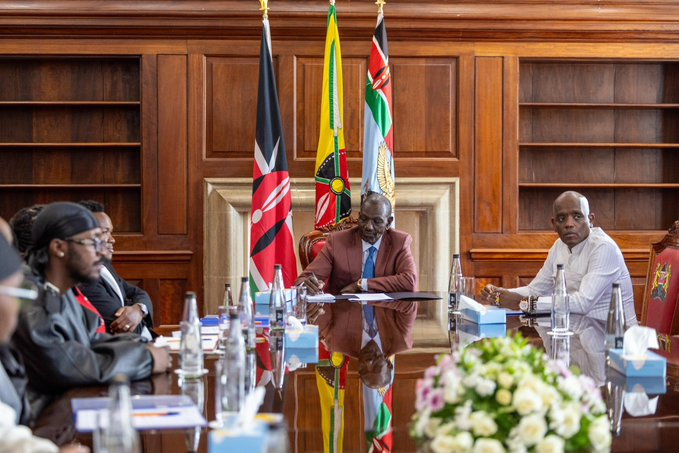
NAIROBI, Kenya — President William Ruto has pledged legal support for Gengetone and Urbantone artistes fighting to reclaim rights to over 700 songs lost through questionable contracts with foreign entities, including the hit ‘Sipangwingwi’ by Exray.
The Gengetone copyright battle surfaced after artists shared troubling experiences of exploitation with the President on Wednesday.
Despite their immense talent and contribution to Kenya’s cultural identity, young creatives continue facing predatory contractual arrangements that strip them of intellectual property rights.
“I have facilitated legal support to ensure they are adequately represented in court,” President Ruto stated.
The Gengetone copyright battle has exposed systemic gaps in protecting Kenyan artists from foreign exploitation.
Gengetone Copyright Battle Legislative Response
President Ruto announced practical measures to safeguard artists’ interests and ensure fair reward for their work. He has asked the National Assembly, through the Majority Leader, to fast-track the Creative Economy Bill 2026 alongside critical copyright reforms.
“These measures are necessary to protect our artistes, strengthen intellectual property rights, and secure the future of Kenya’s creative economy,” he said. The Gengetone copyright battle has become a catalyst for broader policy intervention.
The President also revealed that the Government has established a digital portal on e-Citizen to aid royalty collection and distribution, addressing longstanding grievances about opaque payment systems.
Gengetone Copyright Battle Constitutional Context
The Gengetone copyright battle raises fundamental constitutional questions under Article 40, which protects property rights, including intellectual property, and Article 44, which safeguards cultural rights.
The case highlights how weak enforcement of copyright law undermines Kenya’s creative economy and allows foreign entities to extract value from local talent.
The proposed Creative Economy Bill 2026 and copyright reforms represent a governance test of whether legislative action can reverse decades of artist exploitation.