




LAMU, Kenya – Lamu Port has received another major consignment of heavy construction machinery for the planned Sh2.2 trillion Dangote East Africa Refinery, reinforcing its emerging role as a logistics gateway for one of the region’s largest proposed industrial investments.
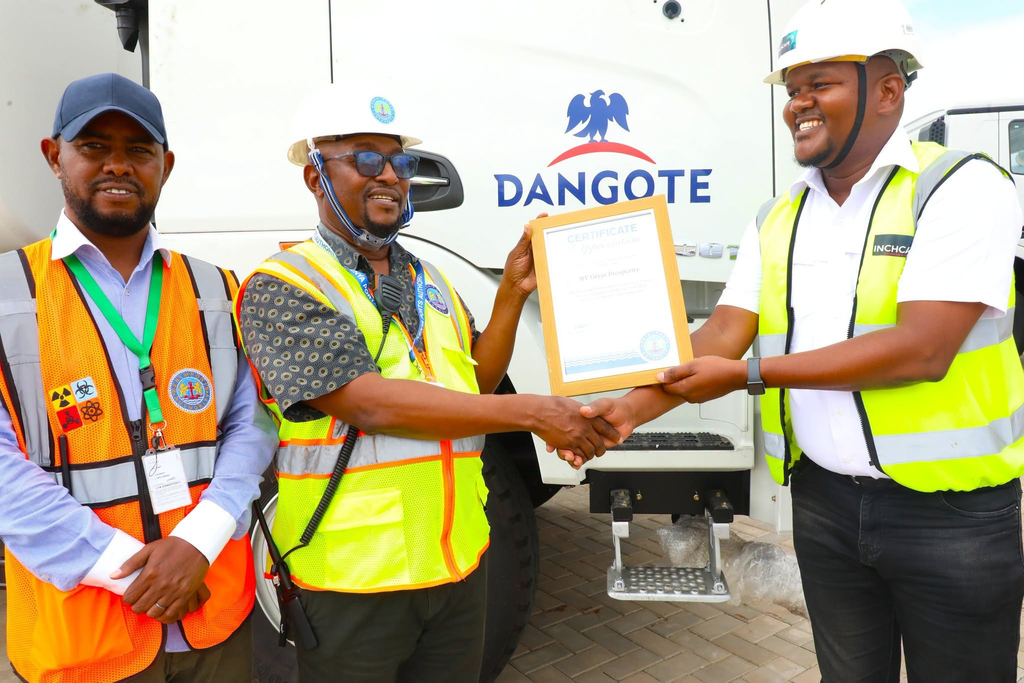
The vessel MV Great Prosperity completed offloading 154 units of heavy machinery weighing 8,213 metric tonnes, according to the Kenya Ports Authority (KPA).
The cargo includes articulated dump trucks and other specialised equipment intended to support construction of the refinery in Lamu County.
The latest delivery follows an earlier shipment of approximately 2,930 metric tonnes of construction machinery brought to Lamu aboard MV Da Yang in late September, shortly before the refinery’s groundbreaking ceremony on September 30.
More Equipment Shipments Expected
Caleb Nthusi, an operations executive at Inchcape Shipping and the vessel’s local agent, said the latest consignment was the first phase of a broader logistics pipeline supporting the project.
Additional vessels carrying construction equipment are expected to call at Lamu Port in the coming months as work on the refinery progresses.
The successive deliveries are putting the port’s capacity to handle heavy project cargo in focus, with the refinery expected to generate demand for shipping, cargo handling, transport and other supporting services.
The Lamu Port-South Sudan-Ethiopia Transport (LAPSSET) Corridor is also expected to benefit from increased industrial and commercial activity linked to the development.
Sh2.2 Trillion Project Targets 700,000 Barrels Daily
The planned refinery is designed to process up to 700,000 barrels of crude oil per day, potentially making it one of the largest refining facilities in Africa once completed.
The integrated development is expected to extend beyond fuel processing, with plans for associated petrochemical industries, power generation and supporting logistics infrastructure. Project officials have positioned it as a potential driver of manufacturing, trade and industrial investment in Kenya and neighbouring markets.
The estimated Sh2.2 trillion investment was formally launched in Lamu on September 30 by President William Ruto and Dangote Group chairman Aliko Dangote.
The project is expected to serve regional markets and strengthen local capacity to process petroleum products, potentially reducing reliance on imported refined fuels. Those benefits, however, will depend on the refinery being completed and becoming commercially operational.
Lamu’s Role in Regional Trade
The refinery is expected to increase demand for maritime services, including the handling of construction materials and, eventually, petroleum-related cargo.
If the development proceeds as planned, Lamu could see sustained growth in vessel traffic and related commercial activity, strengthening its position within the LAPSSET Corridor, which is intended to connect Kenya with South Sudan and Ethiopia.
The project is also expected to create opportunities for businesses in transport, engineering, equipment supply and industrial services.
However, the refinery continues to face legal scrutiny over land and project disclosures. On October 14, the Malindi Environment and Land Court declined to extend earlier restrictions affecting the disputed land after identifying problems with the parcel cited by residents challenging the project. The wider dispute remains subject to further court proceedings.
The arrival of the latest machinery shipment marks another step in the project’s construction mobilisation.

