




KATHMANDU, Nepal — The death toll from catastrophic floods and landslides across Nepal and Tibet has surpassed 1,000, while rescue teams continue to search for hundreds of workers trapped at hydropower projects and police have asked relatives of missing people to provide DNA samples to help identify victims.
About 600 people remain trapped at several hydropower stations that have become the main focus of rescue operations, according to Nepalese authorities.
Prime Minister Balendra Shah said more than 11,000 people had been rescued across the affected areas, while electricity and communications had been restored in some locations.
“Thousands of citizens have lost their homes, families, loved ones and property,” Shah said.
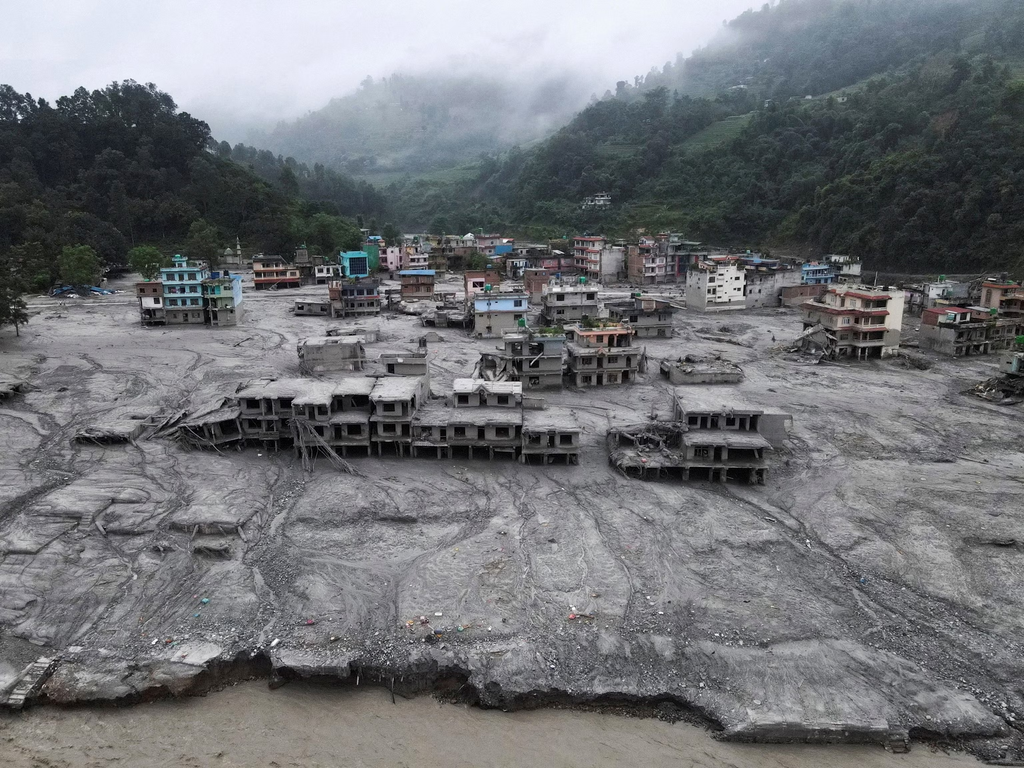
Six days after the disaster struck the Himalayan border region, about 4,400 people were still reported missing across Nepal and Tibet, underscoring the scale of the catastrophe and the difficulties facing rescuers in remote mountain areas.
Nepal police seek DNA from relatives
Nepal Police have asked relatives of missing tourists and other victims to provide biological samples to help identify bodies recovered from the disaster.
In a statement posted on social media, police asked relatives to provide a fresh blood sample for DNA profiling and two passport-sized photographs to the pathology laboratory at Nepal Police Hospital in Kathmandu or the nearest district police office.
Relatives living outside Nepal have been advised to undergo DNA profiling at an authorised laboratory and send a digital copy of the DNA profile to Nepal Police.
The request comes as authorities struggle to identify bodies recovered from some of the worst-hit areas.
Hundreds of unidentified bodies have reportedly already been buried in parts of Nepal because of decomposition and limited space in hospitals and morgues.
At the police hospital in Kathmandu, more than 100 people were reportedly waiting to provide blood samples as authorities stepped up efforts to match victims with missing relatives.
Foreign tourists among the missing
The missing foreign nationals include people from countries such as India, the United States, the United Kingdom, Australia and Canada.
The scale of the foreign casualty and missing-person figures has added urgency to the identification process, with families abroad being encouraged to work with authorised laboratories to provide DNA information.
Families struggle to reach devastated villages
For families in remote communities, locating relatives has been made more difficult by damaged roads, destroyed infrastructure, power cuts and disrupted communications.
Prakaiti Jurnj, whose parents were in a village in Nuwakot when the floods struck, said her father had been identified from a photograph posted outside a teaching hospital, while her mother remained missing.
“Both my father and mother, they were in the village in Nuwakot. They were both swept away by the flood,” she said.
The family had not heard from them since the disaster.
Jurnj said she was waiting for siblings living in the UK to arrive so they could attempt to travel to the village together.
She said other relatives might have survived because their homes were higher up the mountain, but the village remained without electricity and communication was impossible.
“I can’t go there; the situation is very bad,” she said. “I can’t go up there alone. I am not sure if we’ll be able to get them.”
Rescuers race to reach hydropower workers
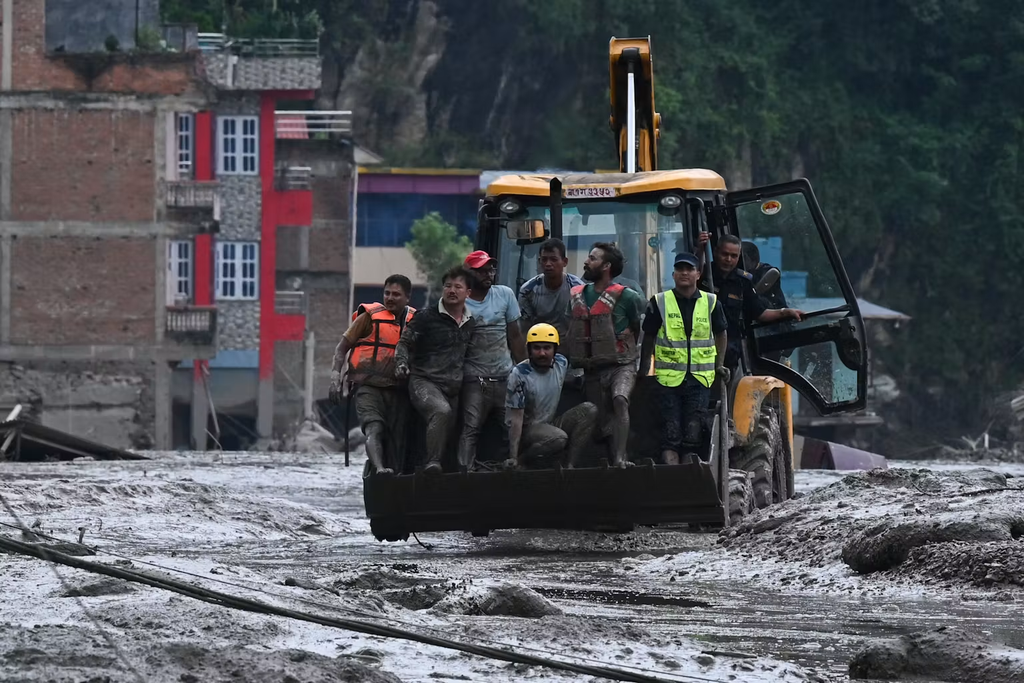
Rescue operations have focused heavily on hydropower facilities where hundreds of workers became trapped following the floods.
Shah said 279 workers had so far been rescued, while authorities estimated that close to 1,000 people had initially been trapped at hydropower projects.
Rescuers have constructed temporary bridges and used heavy machinery to clear mud, rocks and debris blocking access to the facilities.
Images released by rescue teams showed earth-moving equipment operating through the night as soldiers used torchlight to search for access points into tunnels.
The prolonged rescue operation has raised concerns about the chances of finding workers alive, particularly those believed to be trapped inside tunnels and underground structures.
Glacier collapse triggered disaster
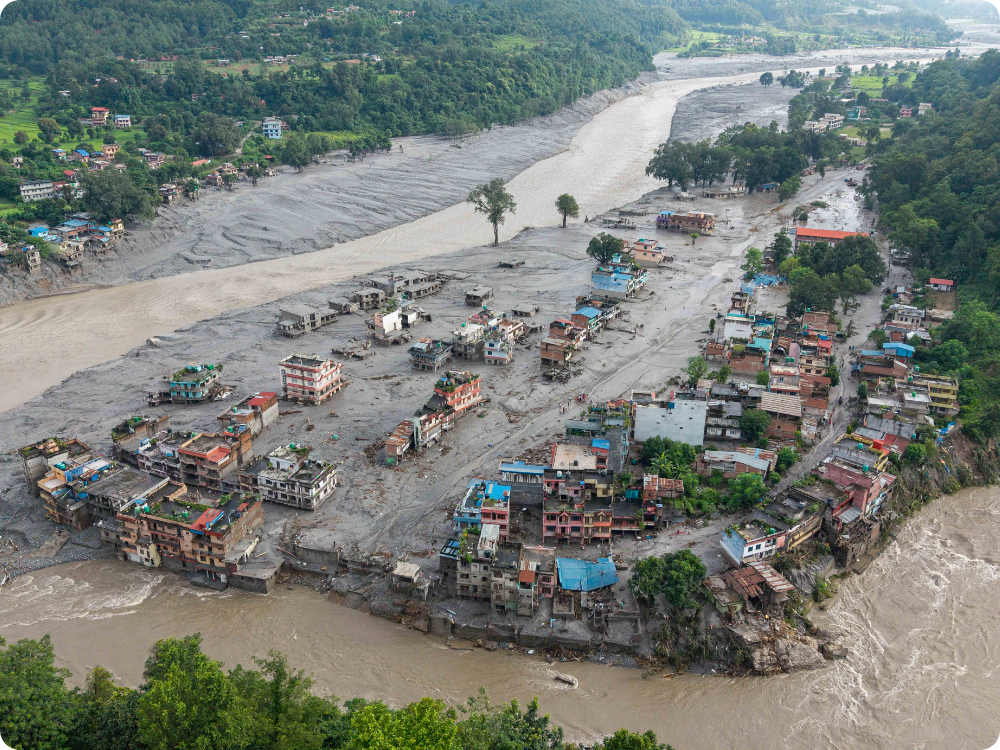
The disaster was triggered by a glacier collapse that sent a powerful surge of ice, rock and mud through Nepal’s border region with China.
The resulting floods and landslides swept through valleys, settlements and infrastructure, leaving isolated communities difficult to reach.
The Himalayan region is particularly vulnerable to floods and landslides, while scientists have warned that rising temperatures are contributing to glacier instability and changing the region’s weather patterns.
China’s state broadcaster said the flooding was caused by glacier instability linked to the long-term effects of global warming.
The disaster has renewed concerns about the vulnerability of Himalayan communities and infrastructure to extreme weather events.
Nepal faces enormous recovery challenge
The catastrophe presents a major challenge for Shah’s six-month-old government, which must coordinate rescue operations while dealing with widespread destruction of homes, roads, bridges, power infrastructure and communications networks.
Shah said more than $42 million in aid had already reached Nepal as the government sought to provide emergency assistance to affected communities.
“The government understands the immense pain they are enduring,” Shah said, adding that the priority would be to support survivors and help communities return to normal life through rehabilitation.
The prime minister also called for greater international attention to the growing risks facing the Himalayan region.
He said Nepal needed to raise awareness internationally about disasters that the country is experiencing as a consequence of climate change.
China response and limited information
On the Chinese side of the border, state media has focused largely on the official response, including the deployment of firefighters and People’s Liberation Army personnel.
Relatively little information has emerged about victims on the Chinese side, making the overall human toll difficult to establish independently.
The disaster has nevertheless highlighted the cross-border nature of risks facing the Himalayan region, where glaciers, rivers and settlements span national boundaries.



