




NYERI, Kenya — President William Samoei Ruto on Thursday defended his frequent visits to Nyeri County, asserting that no other Kenyan leader has engaged the region as extensively as he has, amid growing political tensions in the Mt Kenya bloc.
Speaking during the AIPCA Holy Oil Consecration Ceremony, Ruto said his relationship with Nyeri residents predates his presidency and dismissed rivals seeking to challenge his influence in the region.
“I have a relationship with the people of Nyeri, and it did not start yesterday. I have been here, and there is no Kenyan leader who has visited Nyeri more than I have,” he said.
The President took aim at political opponents, arguing they lacked grassroots familiarity with the county.
“All those who are now purporting that they want to compete with me, they don’t know where the church or road is,” he added.
Ruto said he would continue touring Nyeri, citing ongoing development projects, and signalled readiness for the 2027 electoral contest, framing it as a performance-based judgment.
“The one who loves insults should be tested on insults. Those who love drama will be tested on drama, and someone who loves work as I do will be evaluated on the work that they have done,” he stated.
He further dismissed criticism directed at him, saying political slogans and attacks would not deter him from engaging with his support base.
“They can call me ‘Must Go’ or ‘Kasongo,’ but I will soon face them… They think that they can make a little bit of noise to make me abandon the people who made me the President? Do I look like a madman?” he posed.
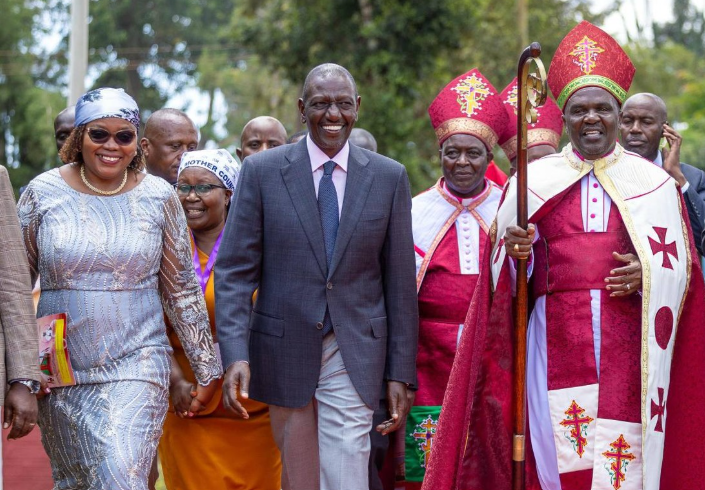
The remarks come against the backdrop of an escalating fallout with his former deputy, Rigathi Gachagua, who accused the President of attempting to influence voters through his visit.
Gachagua told clergy who hosted the Head of State that the trip would not sway the electorate, alleging it was aimed at bribing voters, claims that further deepen divisions within the region that was instrumental in Ruto’s 2022 electoral victory.
The political contestation was further compounded by comments from former President Uhuru Kenyatta, who cautioned religious leaders against involvement in partisan politics in the Mt Kenya region.
Uhuru’s remarks reflect growing concern over the role of the church in political mobilisation, a sensitive issue in Kenya’s governance landscape where religious platforms often intersect with political messaging.
The developments highlight an intensifying battle for influence in Mt Kenya, a region that remains pivotal in national elections due to its significant voting bloc.


