




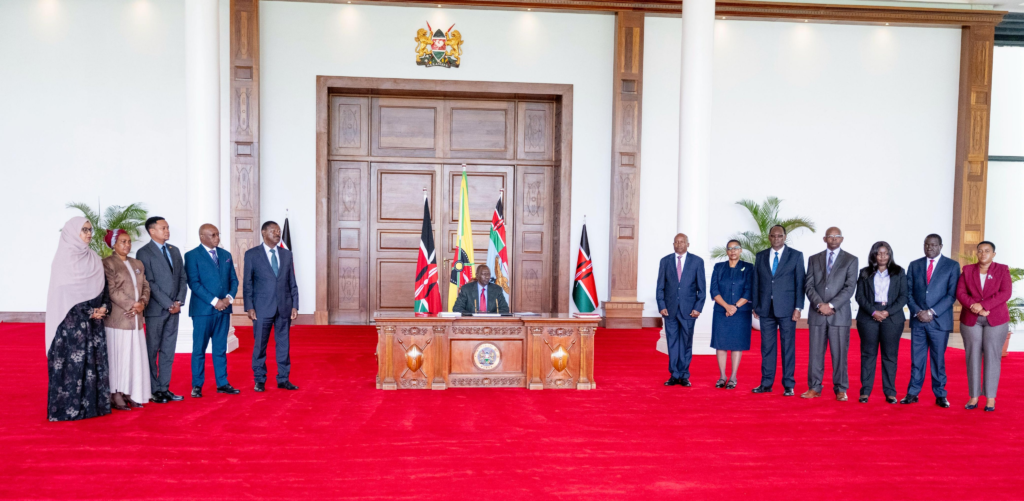
NAIROBI, Kenya — President William Ruto has signed into law the Central Bank of Kenya (Amendment) Bill, 2026 and the Parliamentary Pensions (Amendment) Bill, 2023, introducing reforms aimed at strengthening financial sector oversight, modernising monetary policy and aligning parliamentary pension laws with the Constitution.
Announcing the assent on Monday, President Ruto said the amendments will enhance the Central Bank of Kenya’s capacity to safeguard financial stability, improve banking regulation and strengthen governance at the country’s monetary authority.
New framework for emergency lending
A key reform under the amended law establishes a clear legal distinction between the Central Bank’s routine monetary policy operations and Emergency Liquidity Assistance (ELA).
According to the President, the new framework is intended to improve Kenya’s preparedness to respond to financial crises while protecting taxpayers and maintaining confidence in the banking sector.
Under the law, emergency liquidity support will only be available to financial institutions that satisfy strict conditions relating to solvency, long-term viability and systemic importance.
The amendments also elevate financial system stability and sound banking regulation as secondary objectives of the Central Bank of Kenya, while retaining price stability as its primary constitutional mandate.
The legislation further formally recognises the CBK’s role in promoting the integrity, resilience and proper functioning of Kenya’s financial system.
Stronger governance at CBK
The new law introduces additional parliamentary oversight by requiring nominees for the positions of Deputy Governor of the Central Bank to undergo vetting and approval by the National Assembly before appointment.
Previously, parliamentary approval primarily applied to the Governor.
The legislation also gives statutory recognition to the Central Bank of Kenya Institute of Monetary Studies, providing a legal framework for training, research and collaboration with national, regional and international institutions.
In addition, the amendments replace references to the former Deposit Protection Fund Board with the Kenya Deposit Insurance Corporation, aligning the Act with the current deposit protection framework.
The law also clarifies the CBK’s authority to hold and transact in gold and other precious metals as part of the country’s foreign reserve management strategy.
According to the President, the provision is expected to support the growth of Kenya’s mining sector while aligning the country’s reserve management practices with those adopted in several African economies.
Parliamentary pension reforms
President Ruto also assented to the Parliamentary Pensions (Amendment) Bill, 2023, updating legislation enacted before the 2010 Constitution established Kenya’s bicameral Parliament.
The amendments formally recognise both the National Assembly and the Senate in the administration of parliamentary pensions, extending the same pension framework to senators.
The law also aligns the definition of a child with the Constitution by increasing the age threshold from 16 to 18 years.
In addition, it reconstitutes the Parliamentary Pensions Management Committee and the Appeals Committee to include representation from both Houses of Parliament.
The amended law retains gratuity payments only for legislators who serve for less than five years, maintaining the existing public service pension policy.


