




NAIROBI, Kenya – Kenya’s property market remained resilient during the first half of 2026, with investors, developers and occupiers increasingly prioritising quality, convenience, sustainability and institutional-grade assets, according to Knight Frank Kenya’s latest market update.
Knight Frank Kenya released its Kenya Market Update H1 2026 on August 27, highlighting developments across the country’s office, residential, retail, hospitality, industrial and property capital markets.
The report comes amid continued global economic uncertainty but notes that Kenya’s real estate sector has maintained momentum, supported by economic growth, infrastructure investment, rising tourism activity and increasing demand for high-quality property.
Mark Dunford, CEO of Knight Frank Kenya, said the market was becoming more selective as investors and occupiers focused on assets supported by strong demand fundamentals.
“Kenya’s real estate market has demonstrated considerable resilience through a period of uncertainty. What is particularly notable is that the market is becoming more selective, with investors, occupiers and developers increasingly prioritising quality, efficiency, sustainability and assets supported by clear demand fundamentals,” Dunford said.
Kenya economy supports property market
Kenya’s economy grew by 4.6 per cent in 2025 and is projected to expand by 4.4 per cent in 2026, according to the report.
The construction sector also rebounded strongly, growing by 6.8 per cent in 2025, signalling continued activity across the built environment.
The economic performance provides a foundation for continued investment in property despite pressure from financing costs, household spending constraints and broader global uncertainty.

Real estate capital markets deepen
Kenya’s property capital markets continued to develop during the first half of 2026, with increasing interest in structured and institutional investment vehicles.
A key development was the launch of the USD-denominated TRIFIC I REIT, which is targeting USD29.8 million to finance certified green real estate developments.
As of March 2026, Kenya had five operational REITs, with combined market capitalisation exceeding Sh30.3 billion.
The country also recorded the listing of its first industrial REIT on the Nairobi Securities Exchange during the review period.
Tax reforms introduced during the period are expected to support the sector by reducing transaction costs associated with transferring qualifying property into REIT structures.
Kenya also recorded USD3.2 billion in foreign direct investment inflows in 2025, representing a 38 per cent increase and making the country the seventh-largest FDI destination in Africa.
Prime office occupancy rises
Nairobi’s prime office market recorded one of the strongest improvements during H1 2026.
Prime office occupancy increased by 4.05 per cent, rising from 81.58 per cent in December 2025 to 84.88 per cent in June 2026.
The improvement was largely driven by continued absorption of existing prime office stock at a time when limited new supply has constrained the availability of high-quality buildings.
The shortage of large Grade A office spaces is increasingly influencing corporate decisions. Some major occupiers are extending existing leases, while others are committing to developments expected to come onto the market.
However, the Grade B and C segments remain more favourable to tenants. Higher vacancies in secondary office stock are allowing occupiers to negotiate attractive lease terms and move into better-quality buildings without significantly increasing their occupancy costs.
Dunford said the improvement in prime office occupancy pointed to a growing flight to quality in Nairobi’s commercial property market.
“The improvement in prime office occupancy is an important signal for Nairobi’s commercial property market. We are seeing a clear flight to quality, with occupiers increasingly focused on buildings that offer the right combination of location, quality, sustainability and workplace experience,” he said.
Prime residential prices rise 6.2pc
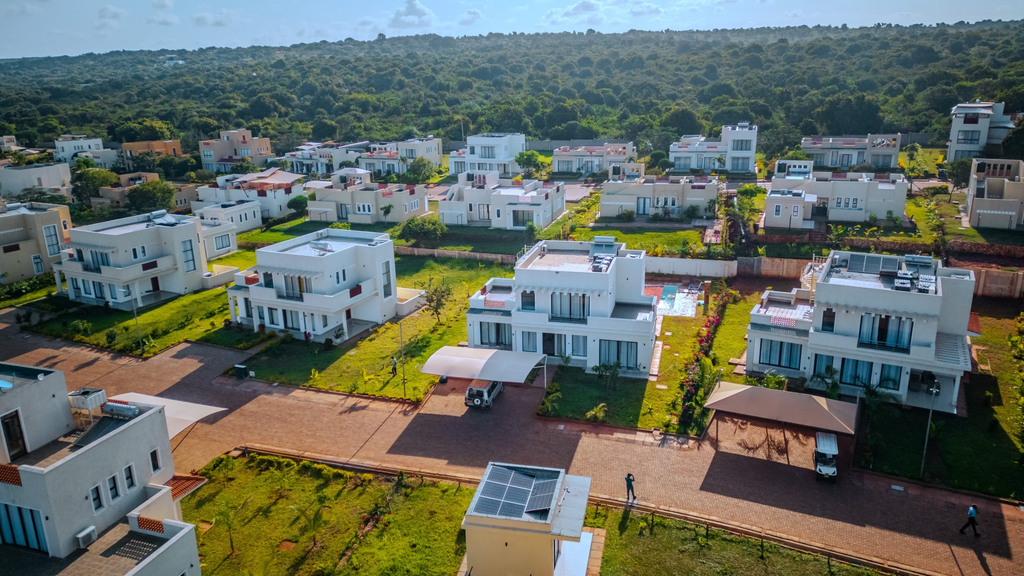
Kenya’s prime residential market also recorded growth during the first half of 2026.
Prime residential sale prices increased by 6.2 per cent, while monthly rents rose by 0.73 per cent compared with December 2025.
Knight Frank attributed the increase largely to a shortage of quality prime housing amid sustained demand from both owner-occupiers and renters.
Buyer preferences are also changing, with growing interest in gated communities, green spaces and lifestyle-focused developments.
Emerging locations such as Tilisi and Limuru continue to attract buyers, supported by infrastructure improvements, proximity to Nairobi and master-planned developments.
Tarquin Gross, Head of Residential at Knight Frank Kenya, said the performance reflected strong demand for well-located, high-quality homes.
“The 6.2 per cent increase in sale prices reflects the imbalance between available quality stock and sustained demand,” Gross said.
He added that buyers were increasingly prioritising security, community, green spaces and lifestyle amenities.
Convenience reshapes retail sector
Kenya’s retail property market is increasingly being shaped by convenience.
Developers and retailers are prioritising neighbourhood and community-based formats rather than relying exclusively on large regional shopping malls.
Smaller convenience centres located within residential neighbourhoods and at petrol stations continued to expand during H1 2026.
Healthcare retail also emerged as one of the fastest-growing occupier categories, with pharmacies and outpatient operators accelerating branch expansion.
Prime Grade A malls continued to attract international retailers, demonstrating resilience among middle- and upper-income consumers.
However, demonstrations, security concerns and constrained household spending continued to weigh on footfall at many shopping centres.
Hospitality sector continues recovery
Kenya’s hospitality industry maintained its recovery, supported by stronger international visitor numbers and increased activity in accommodation and food services.
International arrivals through Jomo Kenyatta International Airport (JKIA) and Moi International Airport (MIA) increased by 13.1 per cent to 506,622 passengers in Q1 2026.
This compared with growth of only 0.8 per cent during the corresponding period of 2025.
The accommodation and food services sector subsequently expanded by 14.7 per cent in Q1 2026, significantly above the 8.0 per cent growth recorded during the same period in 2025.
The recovery has not been uniform across the country, with the Coast and Nairobi continuing to outperform other hospitality markets.
Investor confidence has nevertheless remained strong, with international hotel operators entering the market and further investment flowing into coastal hospitality and serviced accommodation.

Industrial property gains momentum
Kenya’s industrial property sector also maintained positive momentum despite elevated energy and transport costs.
Manufacturing gross value added increased by 4.4 per cent in Q1 2026, compared with 2.8 per cent during the same period in 2025.
The growth was supported by stronger activity in vehicle assembly, steel and cement production, while the logistics industry also expanded.
Port of Mombasa cargo throughput increased by 3.7 per cent to approximately 11 million tonnes, while freight transported through the Standard Gauge Railway (SGR) rose by 12.7 per cent to 2.05 million tonnes.
The increase in cargo and freight volumes is supporting demand for modern logistics facilities, inland distribution centres and last-mile warehouses.
Charles Macharia said the growth in freight volumes strengthened the case for investment in strategically located logistics and distribution facilities.
“As infrastructure and industrial activity becomes more geographically diversified, strategically located facilities will become increasingly important,” Macharia said.
The continued development of Special Economic Zones and new industrial parks is also helping decentralise industrial activity beyond Nairobi and Mombasa.
Quality becomes key theme
Across the various segments, Knight Frank’s H1 2026 findings point to a property market where demand is becoming increasingly selective.
In offices, occupiers are seeking Grade A buildings with strong locations and better workplace environments. In residential property, buyers are prioritising security, green spaces and lifestyle amenities. Retailers are increasingly favouring convenient neighbourhood locations, while industrial users are seeking strategically positioned logistics facilities.
The report suggests that Kenya’s real estate sector remains capable of attracting investment, but success increasingly depends on delivering assets that respond directly to changing consumer, occupier and investor needs.
With economic growth continuing, tourism recovering, infrastructure expanding and institutional investment vehicles developing, the property market is expected to remain an important component of Kenya’s broader economic growth story.


