




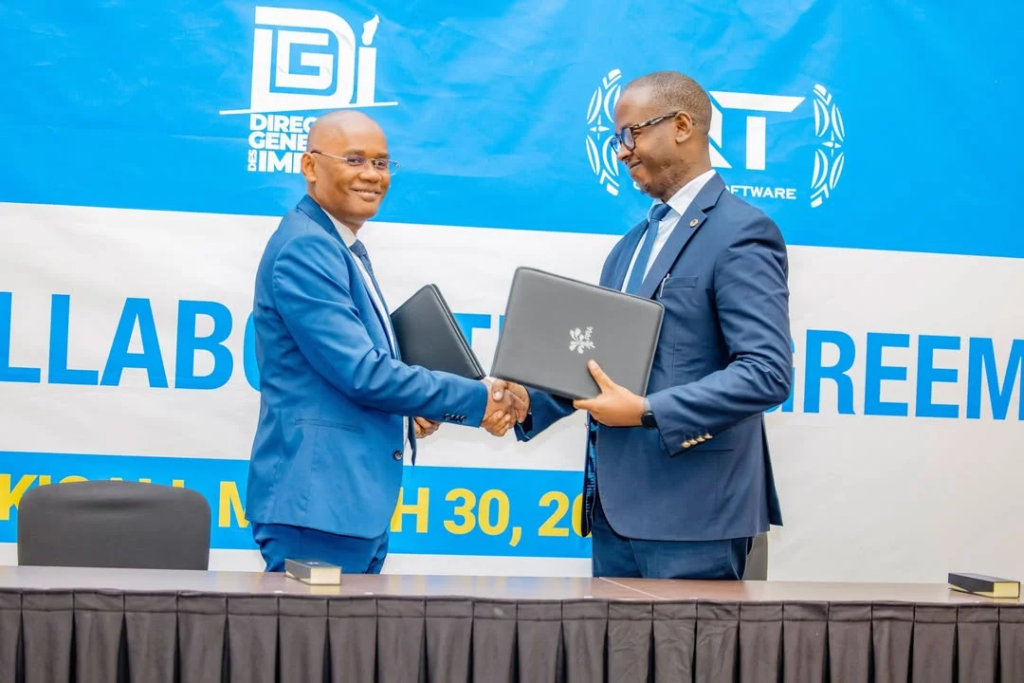
KIGALI, Rwanda — The Rwanda Revenue Authority has signed a memorandum of understanding with Madagascar’s Directorate General of Taxes to transfer its electronic invoicing system technology, deepening regional cooperation in digital tax administration.
The agreement, signed in Kigali on March 30, brings together RRA Commissioner General Ronald Niwenshuti and Madagascar’s Director General of Taxes Edmond Rafaralahy.
Under the deal, Rwanda will share software, technical expertise, and operational knowledge behind its Electronic Billing Machine (EBM) system.
Officials said the partnership aims to strengthen domestic resource mobilisation, improve compliance, and modernise Madagascar’s tax administration through digital tools.
Niwenshuti noted that Rwanda’s electronic invoicing system, introduced in 2013, has become a central pillar of tax collection.
He said more than 94 per cent of VAT-registered taxpayers in Rwanda now use the system, contributing about 31.4pc of total revenue collection in the 2024/2025 financial year.
The platform captures transaction data in real time, enabling tax authorities to monitor VAT compliance, detect fraud, and improve transparency.
Rwanda also complemented the rollout with taxpayer education, audits, data analytics, and a consumer incentive programme dubbed “VAT Reward”.
“We are pleased to share our experience and technological solutions. This marks an important milestone in our partnership, paving the way for collaboration in deployment and use of the EBM system,” Niwenshuti said.
Rafaralahy described Rwanda’s model as a major inspiration for African tax administrations seeking to modernise revenue collection. He said Madagascar’s reform will focus on three pillars: skills transfer, knowledge sharing, and technology adoption tailored to local conditions.
“This initiative is not only about technology transfer; it is about capacity building and strengthening institutional ties,” he said.
The deal underscores Rwanda’s growing influence in digital tax systems across Africa. Kenya’s electronic Tax Invoice Management System (eTIMS), rolled out by the Kenya Revenue Authority, also borrowed heavily from Rwanda’s EBM framework, particularly in real-time invoicing, VAT tracking, and compliance monitoring.
Tax experts say electronic invoicing systems help widen the tax base by reducing underreporting, improving audit trails, and linking business transactions directly to revenue authorities.
Governments across Africa are increasingly adopting such platforms as they seek to boost domestic revenue without raising tax rates.
The Rwanda–Madagascar agreement is expected to include technical training, system deployment support, and policy advisory during implementation.
Officials say the collaboration could accelerate Madagascar’s digital transformation, strengthen tax compliance, and reinforce regional cooperation on revenue administration reforms.


