




NAIROBI, Kenya- Sunday’s dramatic security breach involving President William Ruto in Kilifi County has triggered serious questions about the effectiveness of Kenya’s presidential protection system after a man managed to break through multiple security layers and get dangerously close to the Head of State.
The incident occurred during a Thanksgiving service for Youth Affairs Principal Secretary Fikirini Jacobs in Ganze, where the man suddenly rushed towards the President while he was addressing the crowd before being restrained by members of the Presidential Escort Unit (PEU).
Security experts now say the breach exposed several operational weaknesses within the President’s close protection structure.
1. Failure of the Outer Security Ring
One of the biggest concerns raised after the incident is how the man managed to penetrate the outermost security perimeter.
Under standard presidential security arrangements, the first protective layer is designed to identify suspicious movements long before anyone gets near the President.
This ring usually consists of crowd-control officers, advance security teams, intelligence officers and event marshals tasked with screening movement around restricted areas.
However, in the Kilifi incident, the intruder appeared to move with relative ease towards the main dais before officers reacted.
Security analysts argue this suggests a breakdown in crowd profiling and perimeter enforcement.
2. Delayed Reaction by Close-Protection Officers
Another major lapse highlighted by analysts was the reaction timing of officers closest to the President.
Footage from the event showed the man getting within touching distance of President Ruto before he was subdued by security personnel.
According to VIP protection experts, the innermost presidential security ring is supposed to neutralise potential threats before physical contact is made.
Citizen Digital quoted security expert George Musamali warning that the outcome could have been catastrophic if the individual had carried a weapon.
“If this person had ill intentions, automatically, he would have launched on the President,” Musamali said.
3. Risky Open-Dais Set-Up
Security experts have also pointed fingers at the increasingly open and crowd-facing presidential rally arrangements.
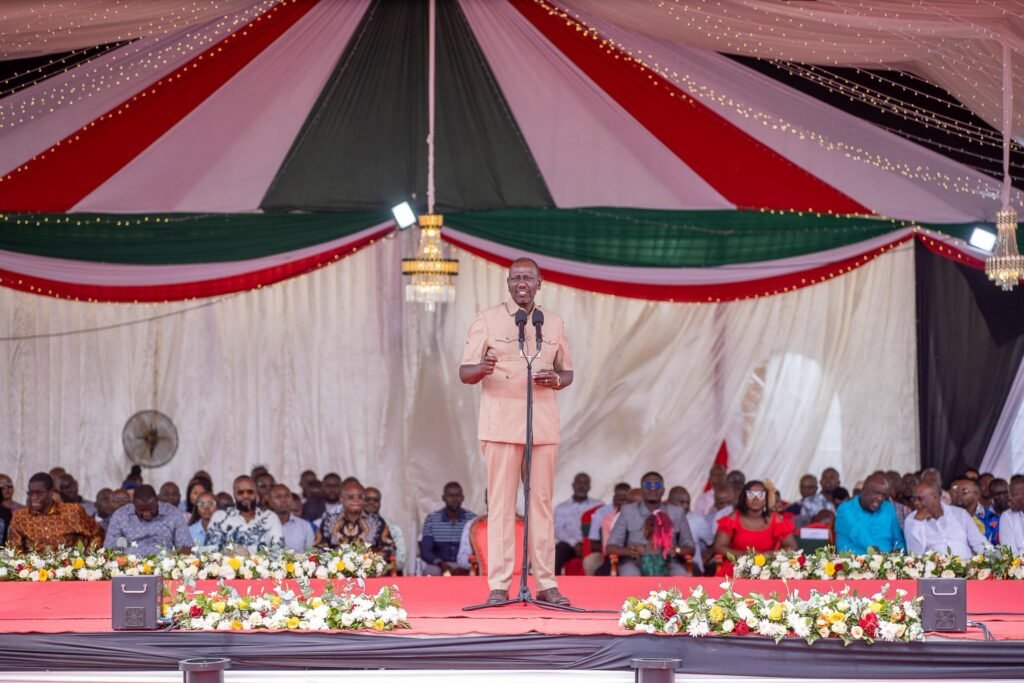
President Ruto has in recent months embraced campaign-style public engagements where podiums are positioned close to crowds and supporters surround the stage from multiple directions.
Citizen Digital reported that the 360-degree dais formations currently used during many presidential functions may be complicating security operations and exposing the President to greater risk.
Analysts say such arrangements make it difficult for officers to maintain proper visual coverage and protective formations around the Head of State.
4. Overexposure During Public Engagements
President Ruto’s highly interactive leadership style has also become a growing concern within security circles.
The President frequently walks into crowds, shakes hands, allows supporters onto podium areas and engages closely with members of the public during rallies and church services.
While the approach has boosted his public image as a “people’s president,” security experts argue it significantly increases vulnerability.
Citizen Digital quoted analysts saying the President’s desire to maintain campaign-like interactions may be stretching protective operations beyond safe limits.
5. Repeated Warning Signs Ignored
Sunday’s incident was not isolated.
In recent months, several other security scares involving President Ruto have occurred during public engagements.
In February, a man breached security during a NYOTA event in Wajir County and attempted to approach the President before being intercepted.
Earlier incidents in Migori, Kisumu and Mombasa also exposed weaknesses in crowd control and perimeter security around presidential functions.
Security analysts now believe the repeated incidents should have triggered earlier reviews of operational protocols surrounding presidential events.
6. Breakdown in Advance Threat Assessment
Experts say the breach also points to possible weaknesses in advanced intelligence gathering and event risk assessment.
Presidential security operations normally involve extensive reconnaissance before the Head of State arrives at a venue.
This includes identifying possible escape routes, screening attendees, evaluating crowd behaviour and establishing rapid-response positions.
The Kilifi incident has now raised questions about whether the threat environment was adequately assessed before the President addressed the gathering.
7. No Protective Shield Around the President During the Breach
Another glaring lapse observed during the incident was the apparent absence of a protective shield around the President after the breach occurred.
Security analysts note that once the man rushed towards the President, most officers appeared to focus entirely on restraining the intruder instead of immediately forming a human shield around the Head of State and evacuating him from the exposed position.
In elite VIP protection operations globally, close-protection teams are trained not only to neutralise threats but also to immediately “cover and extract” the principal from danger zones.
Analysts now argue that the Kilifi incident exposed a dangerous vulnerability because the President remained exposed even as officers grappled with the intruder.
Some security experts warn that the breach could easily have been used as a diversionary tactic.
“What if that individual was merely a distraction?” one retired security officer told local media following the incident.
Analysts say in high-level protection operations, attackers can sometimes use one person to divert attention while another threat emerges from a different direction.
The fact that officers appeared heavily concentrated on the intruder while leaving the President relatively exposed has therefore become one of the most worrying observations from the incident.
Fallout Already Visible
The breach has already triggered major consequences within the presidential protection system.
Inspector General of Police Douglas Kanja has since formed a special investigations team to probe the incident, while changes have already been effected within the Presidential Escort Unit.
Presidential Escort Commander Noah Maiyo was moved to Vigilance as senior officer William Sawe took over command of the elite unit.
Security experts now expect a major review of presidential public engagement protocols, crowd management procedures and stage arrangements as authorities attempt to prevent another embarrassing breach involving the Head of State.


