




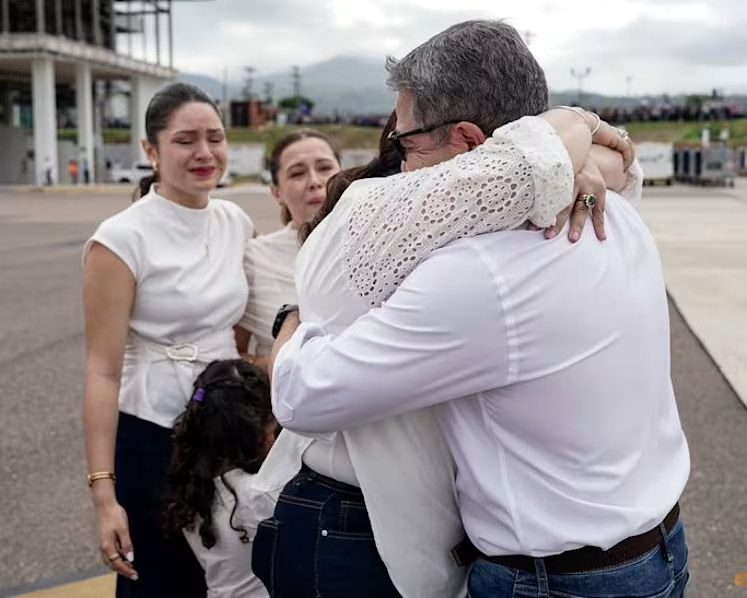
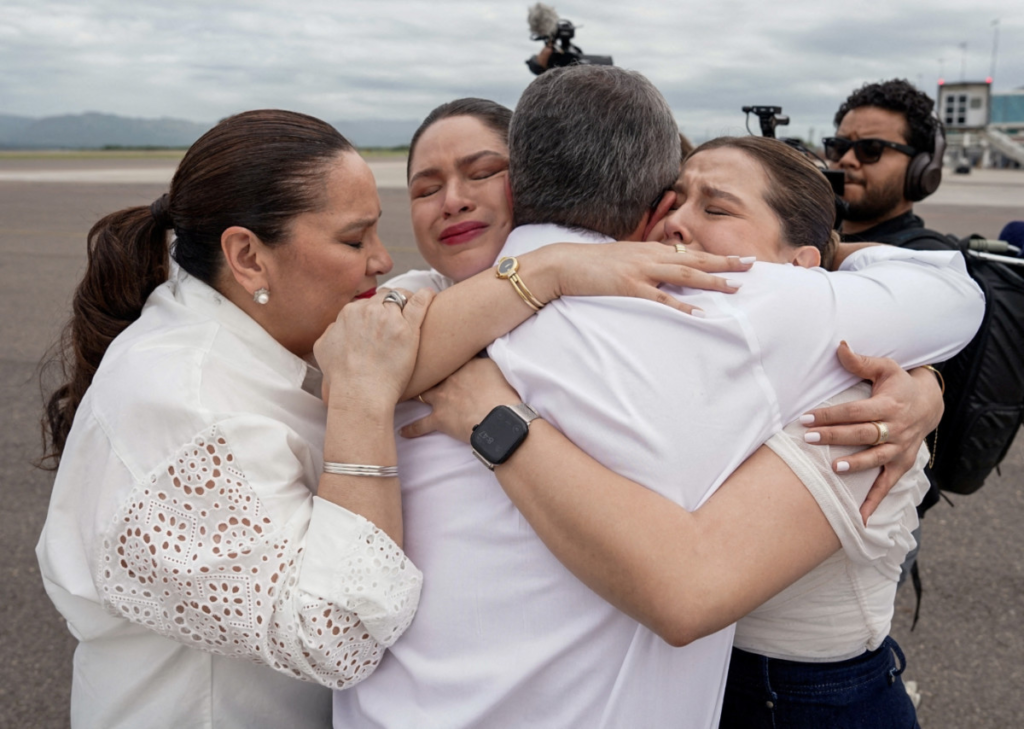
TEGUCIGALPA, Honduras — Former Honduran President Juan Orlando Hernandez returned to Honduras on Sunday after being pardoned by United States President Donald Trump, ending a prison sentence in the U.S. for drug trafficking and setting the stage for a fresh legal battle in his home country.
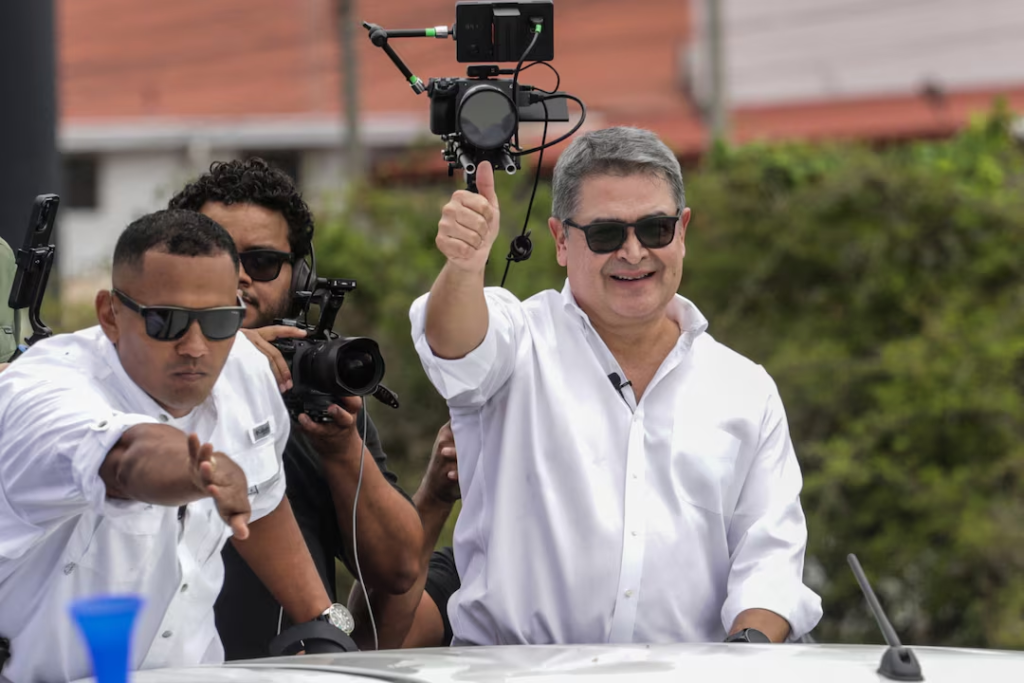
Hernandez, who had been serving a 45-year sentence in the United States after his 2024 conviction on drug trafficking charges, arrived aboard a private aircraft before travelling to the town of Comayagua, where hundreds of supporters gathered to welcome him.
Addressing the rally, the former president thanked Trump for granting him clemency, insisting he had been the victim of political persecution.
“The most well-informed president in the world said: ‘I reviewed it — my team and I reviewed it in detail — and a tremendous injustice has been committed here; it is a witch hunt, it is the use of the justice system as a political weapon,'” Hernandez told supporters.
Despite his return, Hernandez remains embroiled in legal proceedings in Honduras.
He is scheduled to appear in court on August 3 to answer fraud and money laundering charges related to allegations that he diverted US$2 million in public funds to finance his first presidential campaign.
Hernandez has denied the accusations, maintaining that he continues to face politically motivated persecution.
“The last thing I’m going to do is hang my head when the truth is on my side,” he said.
A Honduran judge suspended an arrest warrant issued against the former president after he agreed to appear voluntarily before the court.
Hernandez served as Honduras’ president from 2014 until 2022 before being extradited to the United States shortly after leaving office under the administration of his successor, President Xiomara Castro.
A U.S. federal court convicted him of conspiring to traffic hundreds of tonnes of cocaine into the United States, finding that he had worked with major drug trafficking organisations, including associates of Mexican cartel leader Joaquin “El Chapo” Guzman.
However, in a move that sparked widespread international attention, Trump pardoned Hernandez just days before Honduras held its presidential election last year.
Trump also warned that U.S. aid to Honduras could be withheld if conservative presidential candidate Nasry Asfura, a political ally of Hernandez, failed to win the election.
The comments prompted accusations of foreign interference from President Castro and her allies, although Asfura ultimately emerged victorious in the election.
Trump defended the pardon by claiming, without providing evidence, that Hernandez had been unfairly targeted by the administration of former U.S. President Joe Biden.
Although Hernandez told supporters he was returning “without any electoral ambitions,” he left open the possibility of re-entering politics should what he described as “radicalism” return to Honduras.
His presidency remains one of the most controversial in the country’s recent history.
His re-election in 2017 followed a Supreme Court ruling that allowed him to seek a second consecutive term despite a constitutional prohibition, a decision that triggered widespread protests and allegations of electoral fraud.
The demonstrations were met with a security crackdown that left around 30 people dead.
Legal analyst Joaquin Mejia criticised Hernandez’s return, saying victims of past abuses had been denied justice.
“His return with complete impunity and without punishment for those crimes is a tremendous slap in the face to the victims,” Mejia said.


