




NAIROBI, Kenya — Kenya has reaffirmed its commitment to immunisation as a cornerstone of public health, with the government maintaining an annual allocation of approximately Sh4.6 billion for vaccine procurement as part of efforts to achieve Universal Health Coverage (UHC).
Health Cabinet Secretary Aden Duale said the investment is complemented by an additional Sh2.6 billion set aside to meet the country’s co-financing obligations with Gavi, the Vaccine Alliance, underscoring Kenya’s domestic commitment to sustaining immunisation programmes.
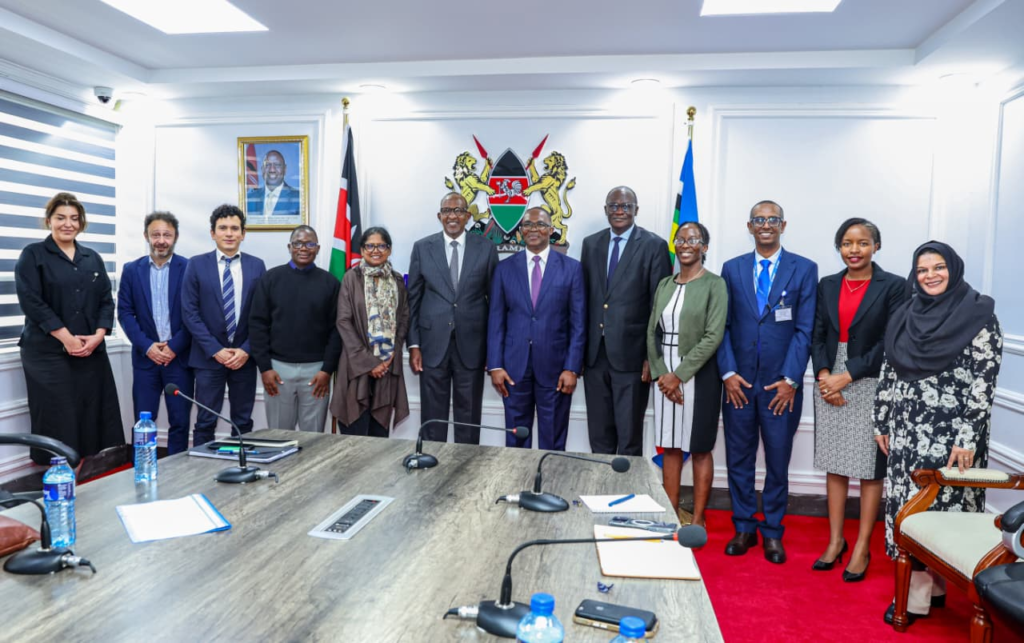
Duale spoke after holding a consultative meeting with a Gavi delegation led by Thabani Maposa, during which both sides agreed to deepen collaboration to expand access to vaccines and strengthen healthcare delivery systems.
“The discussions reaffirmed our commitment to Primary Health Care as the foundation of Universal Health Coverage, with a deliberate shift from curative care to sustained investment in preventive services at the community level,” Duale said.
The meeting comes as Kenya continues to prioritise Primary Health Care (PHC) as a central pillar of its health reforms, aligning with broader government policy to reduce long-term healthcare costs by preventing disease rather than focusing primarily on treatment.
Officials said the funding framework includes ring-fenced allocations designed to ensure uninterrupted vaccine supply, even as global health financing landscapes evolve.
The talks also emphasised transparency and accountability in managing partnerships, with both Kenya and Gavi agreeing to resolve any emerging issues through dialogue without disrupting immunisation services.
“We reaffirmed our commitment to transparency and accountability, agreeing to resolve partnership matters through constructive dialogue,” Duale noted.
Kenya’s immunisation programme is supported by key global health partners, including the World Health Organization (WHO) and UNICEF, both of which were represented at the meeting alongside Ministry of Health officials.
Director-General for Health Patrick Amoth also attended the session, alongside UNICEF Country Representative Shaheen Nilofer and WHO representatives.
Beyond financing, the discussions highlighted Kenya’s push to strengthen its pharmaceutical and regulatory capacity.
The country is working toward achieving World Health Organization Maturity Level 3 (ML3) status — a benchmark indicating a stable, well-functioning regulatory system for medical products.
Kenya has also ratified the African Medicines Agency (AMA) Treaty, a move expected to enhance regional cooperation in medicine regulation and support local manufacturing of vaccines and other health products.
The meeting further noted the upcoming Africa-France Summit 2026, which is expected to shape broader economic and diplomatic partnerships, including in the health sector.

