




NAIROBI, Kenya — Motorists, commuters, and transport operators are reeling after the Energy and Petroleum Regulatory Authority (EPRA) pushed fuel prices to historic highs, triggering immediate fare increases and widespread public anger.
Under the latest monthly review, diesel rose sharply by Sh46.29 to retail at Sh242.92 per litre, while petrol increased by Sh16.65 to Sh214.25 in Nairobi. Kerosene remained unchanged at Sh152.78. The new prices will remain in effect until 14 June.
Within hours of the announcement, the impact had already begun filtering into public transport.
Some matatu operators adjusted fares upward, with Super Metro increasing the Nairobi CBD–Westlands route from Sh40 to Sh50, while the CBD–Kikuyu fare rose to Sh70.
Industry players expect broader fare revisions as operators adjust to higher diesel costs, which form the backbone of public transport operations.
The Matatu Owners Association is expected to issue a formal response, but early indicators point to a sector bracing for sustained cost pressure. Diesel, which powers most public service vehicles, freight trucks, and agricultural machinery, remains the most sensitive fuel in Kenya’s transport and supply chain ecosystem.
The timing of the increase has intensified public concern. Households are already facing elevated living costs amid broader global economic instability, including oil market volatility linked to geopolitical tensions involving the U.S., Israel, and Iran.
These external shocks have added pressure to already strained domestic prices.
Immediately after EPRA’s announcement, fuel stations across the country were overwhelmed as motorists rushed to purchase fuel before the midnight price adjustment.
Long queues were reported in Nairobi, Kisumu, Naivasha, and Eldama Ravine, with drivers scrambling to avoid the higher rates. Images and videos circulating online showed congested stations as panic buying set in.
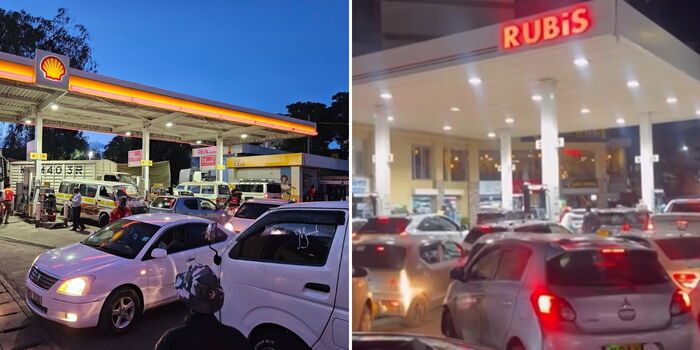
In Naivasha, motorists along the Naivasha–Nakuru Highway queued late into the night, while several stations reported running low on stock due to the sudden surge in demand.
Similar scenes played out in other towns, reflecting the immediate behavioural response to frequent fuel adjustments.
Political reactions followed swiftly, with critics accusing the government of failing to shield citizens from repeated economic shocks. Some leaders described the increases as unsustainable for ordinary households already stretched by high food and transport costs.
“EPRA has officially declared war on struggling Kenyans,” said Amemba Magufuli, Secretary-General of the NRA Party, reflecting growing public frustration over rising living costs.
The latest adjustment is expected to cascade beyond transport into food prices, manufacturing costs, and basic services, as diesel remains central to freight and agricultural production.



